
Ricky Tam Wai-kit’s pet-friendly Uluru Cafe in Wan Chai was recently issued a grim ultimatum by Hong Kong food hygiene officers – a week-long closure if officers spotted one more dog in his restaurant, with another offence meaning losing his licence forever.
“We like pets and animals, but this has made us a target for attack,” Tam said, adding that a neighbour had frequently complained to environmental authorities about pets in his restaurant.
“I don’t understand why they have to weaponise the law to punish us when we are just trying to run a business.”
To save his business, Tam was forced to ban regular customers from bringing their pets, some of whom travelled from as far as Tuen Mun in the New Territories.
While an online post announcing the difficult decision sparked an outpouring of sympathy, it could not pay the bills.
“We announced on Facebook and Instagram that we no longer allow dogs, so pet owners stopped coming,” he said.
“Our business dropped by 20 to 30 per cent. I can’t tell if the government is trying to help small businesses like us or not.”
But some relief could be in sight for businesses such as Uluru Cafe, with the government set to develop Hong Kong’s “pet economy”.
The aim is to make the city more accommodating to furry friends so their owners are more likely to spend locally, rather than following the trend and heading to mainland China at weekends to spend their money.
Some restaurant operators, however, have questioned the plan’s cost-effectiveness.
Chief Executive John Lee Ka-chiu announced the government’s plan to promote the pet economy in his policy address last year, saying it would “generate an enormous consumption market”. Figures from the latest census showed that nearly 10 per cent of Hong Kong households, or 240,000, kept more than 400,000 cats and dogs as pets.
The Environment and Ecology Bureau on Tuesday announced that up to 1,000 restaurants could apply for a permit for HK$140 (US$18) to allow dogs to enter their premises by mid-2026 in the initial phase of the pet-friendly scheme.
It aimed to submit the proposed amendments to the Food Business Regulation, which currently prohibits dogs on food premises, to the Legislative Council within the first quarter of this year.
Heeding Lee’s call, parts of Hong Kong have progressively adopted pilot projects in the hope of cultivating a pet-friendly society.
Owners who register with the Society for the Prevention of Cruelty to Animals (SPCA) will be allowed to carry their dogs on the MTR on March 1 as part of a charity event, while public hospitals have started allowing pet visits for palliative care patients.
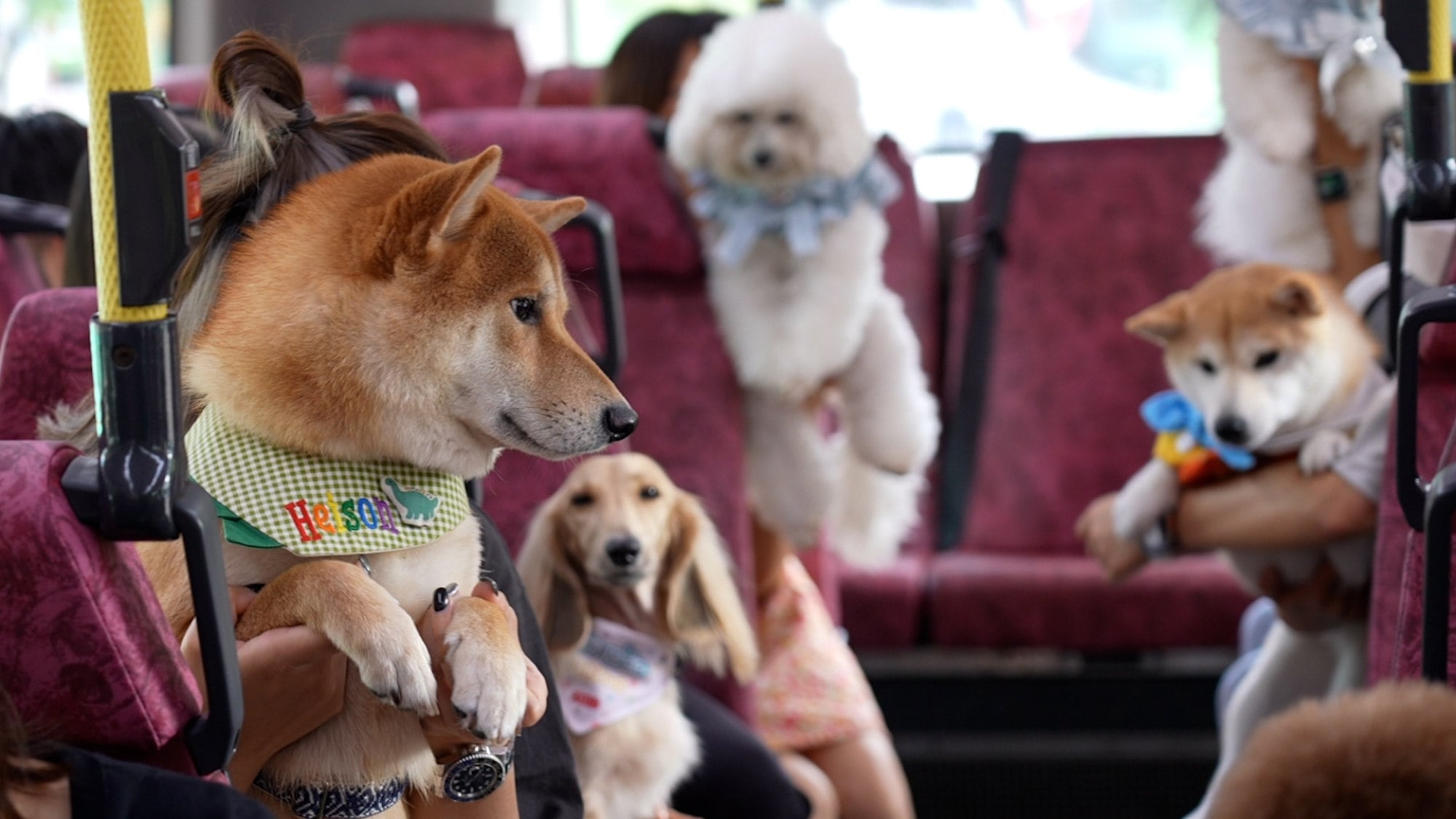
Starting on February 9, bus operator KMB’s public coach service for pets and their owners will run daily, instead of only at weekends and on public holidays. The firm said the service had carried more than 20,000 passengers since its launch in October 2024.
The MTR Corporation has also allowed passengers to travel with their dogs and cats on Light Rail trains in the New Territories since last March.

‘Paw parents’
Several shopping centres have become popular among “paw parents” for their pet-friendly policies. K11 Musea in Tsim Sha Tsui allows pets in designated zones, while The Mills in Tsuen Wan allows dogs on leashes on the grounds.
Angela Chan Nga-chi, president of non-profit group the Hong Kong Pet Trade Association, said allowing dogs into restaurants would benefit the broader pet economy.
She cited the example of how grooming and veterinary services and the retail, entertainment and transport sectors would see higher demand if a shopping centre or neighbourhood established itself as a hub with pet-friendly restaurants that attracted owners.
Chan said the market was already substantial, with more than HK$6 billion spent on pet food and HK$800 million on services.
She added that owners spent at least HK$2,000 a month on average on their pets, even without accounting for insurance premiums, which could cost an additional HK$1,000.
“Ten years ago, pet owners might just buy basic kibble, but now they buy higher-premium products for their pets,” she said.
“They truly treat their pets as family members, and judging by product trends, pet ownership is becoming increasingly sophisticated. People are focused on how to improve their pets’ quality of life.”
Although officials have been promoting the pet economy as a way to revitalise local commerce, critics said existing laws remained rigid – leaving pet-friendly businesses such as Uluru Cafe stuck in the middle and struggling to survive a legal framework that treats their competitive advantage as a liability.
Under the Food Business Regulation, customers cannot bring dogs onto any food premises, and operators are also not allowed to permit dogs on their premises, with a breach incurring a penalty of up to three months in jail and a maximum fine of HK$10,000.
Operators could also face administrative action, such as the suspension of their food business licence for seven days for a first major offence, or the accumulation of demerit points.
The ban stems from legislation introduced in the 1990s aimed at preventing rabies and improving public health and hygiene, especially in Hong Kong’s cramped urban environment.
The FEHD said that between 2021 and 2025, it had received 1,781 complaints and prosecuted 17 operators for allowing dogs into restaurants.
In response to queries from the South China Morning Post, the environment bureau said it had conducted a series of consultations with the catering trade and other stakeholders, with “broad support” to lift the ban on dogs in eateries.
It added that it had developed proposed regulations on safety and hygiene considerations while giving operators flexibility in other areas, including clearing and displaying signage outside restaurants allowing dogs and excluding hotpot and barbecue restaurants from the scheme.
Who pays clean-up costs?
In Singapore, restaurants with outdoor refreshment areas can allow pets to enter without requiring an additional licence from the Singapore Food Agency, but animals must be kept on a leash or in a carrier and must not be placed on tables and chairs.
Taiwan is one of the few places in Asia where animals can legally ride in pet-friendly carriages on public transport, and the municipal governments of Taipei and Kaohsiung have passed local regulations to issue official pet-friendly stickers to restaurants.
Allowing pets in restaurants and coming up with house rules is up to the business’s discretion, while eateries can also prohibit pets by putting up a sign at the door.
However, catering industry representatives in Hong Kong have questioned whether the pet economy push can really drive profit, especially when operators have to iron out many details related to animal welfare and environmental hygiene.
They argue that the new measure, which should be on a voluntary basis, will only benefit a small number of businesses and appeal more to cafes and brunch spots rather than Chinese restaurants.
Michael Leung Chun-wah, chairman of the Association for Hong Kong Catering Services Management, said he and other operators last met authorities more than a month ago to propose the terms and legal issues to be addressed in the new measure.
“For example, if pets defecate on the carpeted floors, who will be liable for the cost of cleaning?” he said.
“Time is also needed for the clean-up, and that might make other diners feel it is unhygienic and affect the reputation of the eatery.”
Leung, who ran the Lucky Dragon Palace Restaurant until its closure last October, also warned that the new measure could cause a greater divide between customers who liked animals and those who did not.
“While I believe that allowing dogs will bring more business, the extent of its success is still up in the air,” he said.
Simon Wong Ka-wo, president of the Hong Kong Federation of Restaurants and Related Trades, said allowing dogs into restaurants was the least of the industry’s priorities right now, as caterers were more concerned with livelihood issues.
“The government needs to balance this with clear application protocols, costs and regulation in the future while maintaining food safety and hygiene,” he said.
Wong questioned whether the purchasing power of pet owners was strong enough to convince operators to make the leap.
“The new measure could backfire and turn away customers who are allergic to or dislike dogs,” he said, adding that restaurateurs would have to evaluate the cost and risk of pleasing neither side.
Jonathan Leung Chun, the newly elected lawmaker for the catering industry, said the sector was diversifying its offerings and exploring different ways to draw consumers.
“Allowing pets in restaurants, or encouraging more eateries to offer halal food, these are options for restaurants to consider to tap into the different markets,” he said.
When it came to balancing the cost and profitability of allowing dogs, Leung said it was up to individual operators to decide how they should strike a balance.
Training pets – and owners
Pet trade representative Chan said animals and humans coexisted quite well in other parts of the world, and Hong Kong was slowly learning the ropes of living harmoniously with pets.
Both pet owners and members of the public needed to learn etiquette and how to interact with animals, she added.
“For example, most owners in other countries actually take their pets to training school for basic socialisation classes and clean up after their pets,” she said.
“These are fundamental responsibilities that pet owners must handle well. If not, it will cause a lot of resentment among those who are unreceptive.”
Teaching children how to interact properly with animals and treat them with compassion should be included in the civic education syllabus in Hong Kong schools, she said.
“I believe this is crucial because Hong Kong is moving towards a culture of human-pet integration,” Chan said.
At the West Kowloon Art Park on a Friday afternoon, dozens of dog owners were seen walking their pets and taking photos against the sunset.

Pet owner Samantha Ng, who was walking her two-year-old toy poodle Lum Lum, said she looked forward to the day she could bring her pet on public transport to visit different parts of the city to dine.
The 32-year-old, who works at a pet salon, said she would spend HK$200 on a single taxi ride at weekends from her home in Prince Edward to Peak Galleria, a pet-friendly shopping centre.
While she spends a few thousand dollars a month on her pet, travelling and dining remain a challenge as current regulations limit the number of catering businesses willing to accommodate pets.
“Usually, the pet-friendly restaurants have very limited outdoor seating, and they’re always very crowded,” she said.
“It’s as if all pet owners in Hong Kong congregate in the same areas at weekends.”
With the proposed permit, Ng said she hoped a greater variety of eateries would become pet-friendly.
“Now, most of the pet-friendly businesses are coffee shops and cafes serving Western food. I want to have more options, like Japanese cuisine,” she said.
“I want to sit down and dine together with Lum Lum, so we get to spend more time together instead of only bringing him out after I eat.”
Over at Uluru Cafe, owner Tam said his restaurant had never turned away anyone with their dogs or encountered major conflicts arising from the pets.
“Everyone welcomed the pets, and they created a vibrant and happy environment,” he said.
“For the small minority who are afraid of dogs, we would arrange for them to sit in a separate area.”
With 20 staff to support and a monthly rent for the 4,000 sq ft space topping HK$100,000, the ban in early January has been devastating for Tam, who has been racking his brain over ways to attract customers to keep his business afloat.
For now, Tam is left waiting for the law to catch up with culture, hoping his business can survive the transition from a “legal liability” back to a community space for pet owners.
“We can only take it one step at a time,” he said, glancing around his empty restaurant. - SOUTH CHINA MORNING POST