SINGAPORE: When hospital worker Surendran Vijay lifted the kavadi onto his shoulders in the early hours of Sunday (Feb 1), the physical strain was familiar, but what weighed heavier was gratitude.
This was the fourth consecutive year the 42-year-old has carried the kavadi at Thaipusam, a vow he began fulfilling since the birth of his daughter, Lakshmika, following eight years of marriage without children.
“My first kavadi experience was unforgettable. Since then, I have continued to carry it. Now, it has become a routine,” he noted.
He returns each year, not to seek new blessings, but to give thanks, he said.
Surendran was among the thousands who took part in Thaipusam this year, which saw a record turnout.
More than 19,000 devotees carried paalkudams (milk pots) offered to Lord Murugan, the Hindu god of courage and virtue, while 349 devotees bore kavadis, according to the Hindu Endowments Board (HEB). This exceeded the previous high of almost 16,000 devotees in 2025.
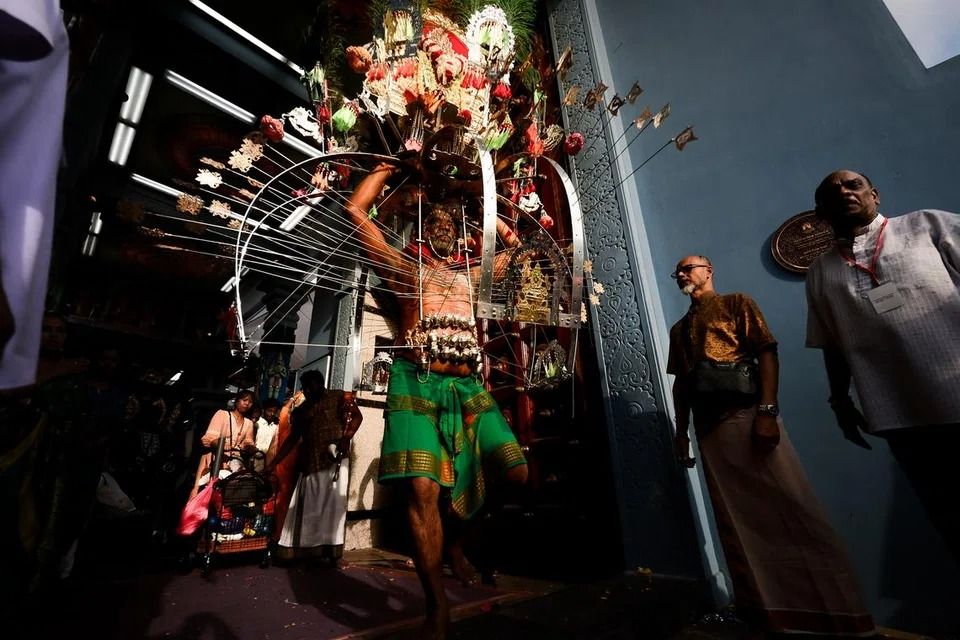
Observed annually by Hindus, Thaipusam is a deeply spiritual festival where devotees carry milk offerings on their heads, while others bear kavadis.
Kavadis are elaborately decorated metal structures attached to the body with hooks and needles – symbolising devotion, sacrifice and gratitude.
The festival began at around 11.20pm on Jan 31, when devotees carrying paalkudams set off on the 3.2km procession route from Sri Srinivasa Perumal Temple in Serangoon Road towards Sri Thendayuthapani Temple in Tank Road.
Devotees carrying alagu (spike) kavadis followed at about 3.15am.
The festival ends at about 11.30pm on Feb 1.
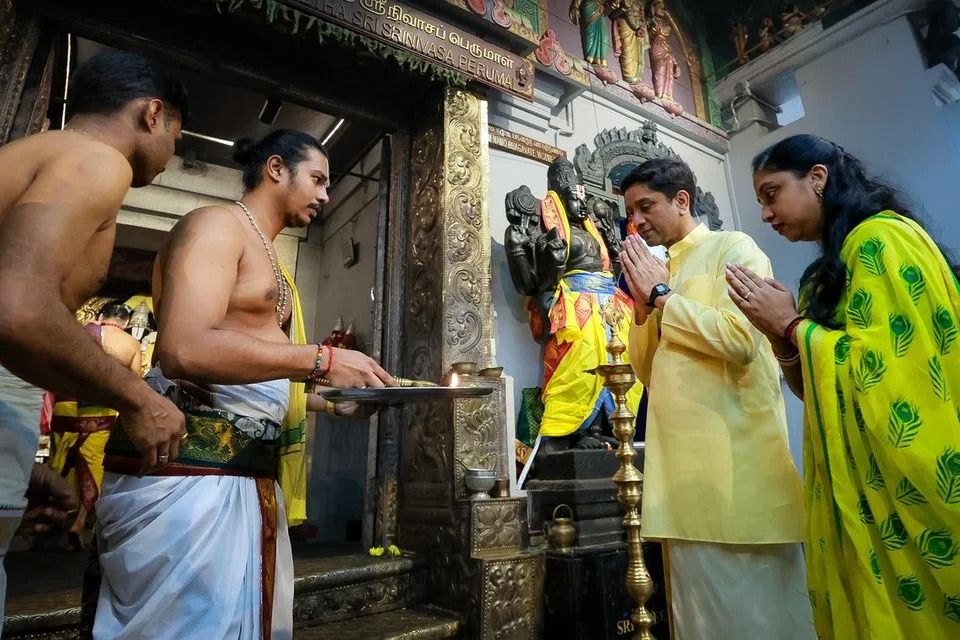
Among those who joined the procession was Dinesh Vasu Dash, Minister of State for Culture, Community and Youth, and Manpower. Arriving at Sri Srinivasa Perumal Temple at around 8am on Feb 1, he and his wife, Dr Rathiga Velaithan, carried paalkudams alongside other devotees.
“Walking with them gave me a deeper sense of their experience,” Dinesh told reporters on the sidelines, noting that participation had increased by about 20 per cent to 30 per cent this year.
He said improvements in crowd and queue management had made a noticeable difference, resulting in smoother arrangements compared with previous years.
“Naturally, there will be certain areas with queues, but this year, both temples have done extremely well to accommodate a larger number of people,” he added.
One key change was the introduction of additional entry and exit points at Sri Thendayuthapani Temple. In the past, devotees could enter only through the main sanctum entrance, resulting in longer queues and delays. This year, side entrances were used to better facilitate the movement of devotees carrying paalkudams.
The changes were implemented through joint efforts by HEB and the two temple managements, partly owing to feedback from devotees.
“We were determined to ensure that no devotee should return without fulfilling their vows,” said HEB chief executive officer Sarojini Padmanathan.
Devotees who wanted to participate in the procession could register online from Dec 10. After the slots were fully booked, walk-in registrations and extended time slots were introduced on Jan 30, in response to public requests.
Mrs Padmanathan noted that although the slots allocated for walk-in registration were not fully utilised, this measure still provided reassurance to the devotees.
Faith across generations
Along the procession route, Serangoon Road was awash in yellow and orange – colours associated with Lord Murugan. Instrumentalists added to the festive atmosphere, their beats inspiring spontaneous dancing among kavadi bearers, while volunteers stationed along the route offered water and managed the flow of devotees.
Thaipusam is a deeply personal occasion for Mrs Karuppayi, 85. Despite limited mobility and the use of a wheelchair, the retiree came specifically to witness her grandson fulfil his vow of carrying the kavadi.
Karuppayi, who declined to give her full name, expressed gratitude to festival volunteers who assisted her throughout the day, pushing her wheelchair and ensuring she could safely navigate the temple grounds to see her grandson complete his offering.
Primary 6 pupil G.K. Yugan, 12, carried a paal kavadi with a specific prayer in mind – to do well in his upcoming Primary School Leaving Examination.
A paal kavadi typically consists of a small wooden or decorated structure with pots of milk tied to each end. It does not involve piercings.
The decision, Yugan said, was entirely his own, inspired by seeing his grandfather’s prayers answered over the years. “My grandfather takes kavadi, and whatever he asks for, he gets,” he said. Beyond academic success, he also prayed for a good life and a strong future.
For another participant, who wanted to be known only as Kanna, Thaipusam is a family affair. It has become a tradition in his extended family to carry the kavadi, with the responsibility rotating among family members each year.
This year, the 70-year-old retiree took his turn. He has been participating in Thaipusam since his school days.
“The true happiness lies in the whole family coming together to witness and support the one carrying the burden,” he said. - TAMIL MURASU