
China may have led a Stone Age technological race as early as 160,000 years ago, by crafting sophisticated stone tools for cutting, piercing and sawing, according to a new study.
An international team of scientists said the discovery of hafted tools – the earliest evidence for composite tools in eastern Asia – had reshaped the understanding of human evolution in the region.
They said the find showed that hominins in China were much more inventive and adaptable than previously thought, challenging the widely held belief that “hominin technologies in eastern Asia lack signs of innovation and sophistication” in the later part of the Middle Pleistocene.
The researchers from institutions in Australia, China, Norway, Spain and the United States published their findings in the peer-reviewed journal Nature Communications on Tuesday.
“Earlier records, such as the evidence from Xigou, challenge this dominant paradigm and show that hominins in China from the Middle to Late Pleistocene possessed the cognitive and technical abilities to produce complex and diversified items of material culture, compatible with their counterparts from other regions of Africa and Eurasia,” the team wrote.
Xigou, an archaeological site discovered in 2017 and excavated from 2019 to 2021, is in the central Chinese province of Henan.
It is located along a river that flows into Danjiangkou reservoir, Asia’s largest artificial freshwater lake, and along the southern edge of the Qinling mountain range.
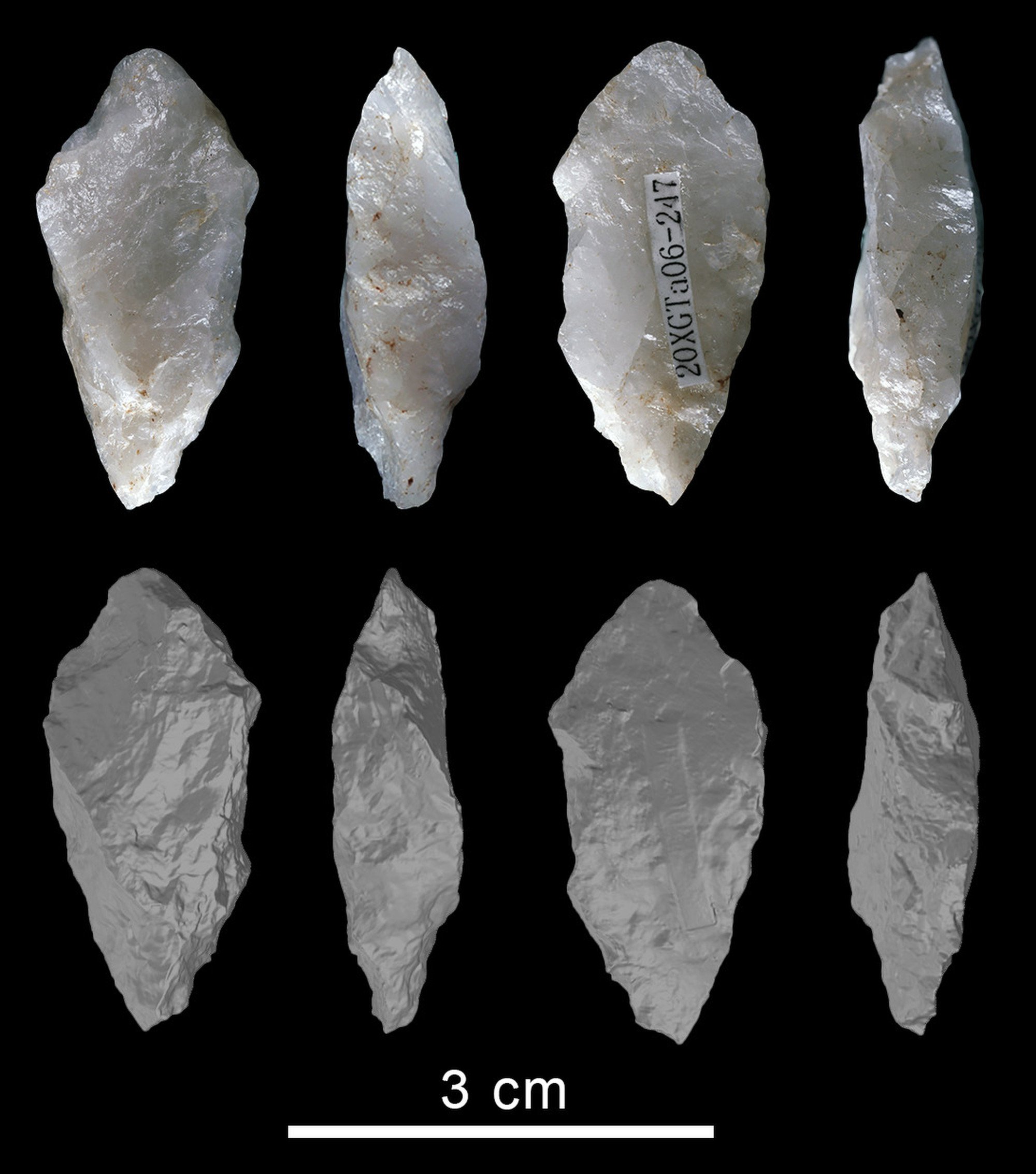
The team said it had discovered 2,600 stone tools dated between around 160,000 and 72,000 years ago, mainly made of quartz and quartzite from local riverbeds.
More than two-thirds of the artefacts were smaller than 5cm (2 inches).
Most of the tools were made by retouching working edges to turn flakes into tools, including scrapers, borers, notches and denticulates, they wrote.
Due to its hardness and rigidity, quartzite was a key raw material for tools and is frequently discovered at Paleolithic archaeological sites, according to a 2017 study on quartzite tools in China.
In the new study, the discovery that stood out to the archaeologists was hafted stone tools, which combine stone parts with handles or shafts.
As the earliest evidence for composite tools in eastern Asia, these tools showed “complex planning, skilled craftsmanship and an understanding of how to enhance tool performance”, the team said.
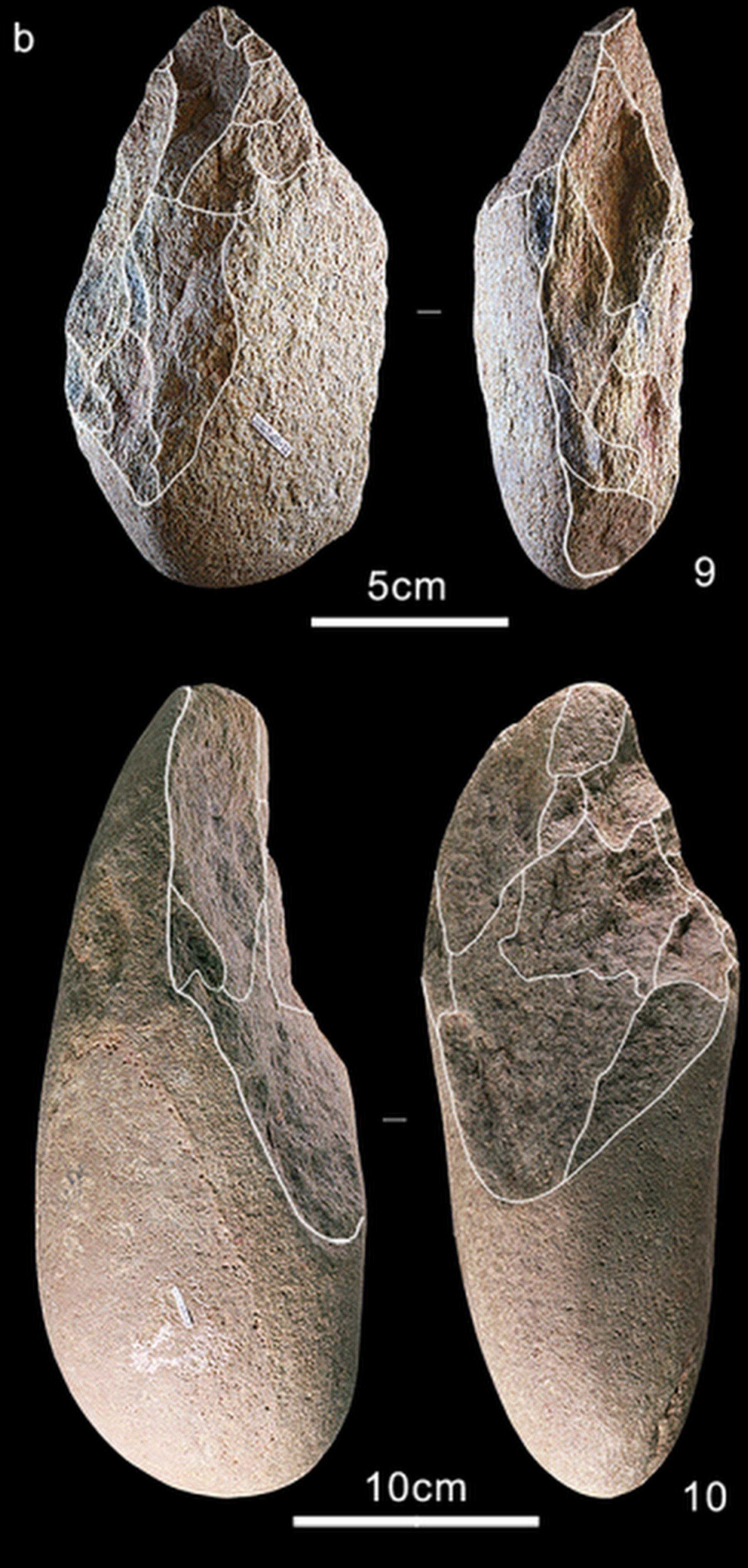
The hominins also made larger cutting tools by sculpting the raw material to their desired form, creating three hand-axes and two picks.
Expedition leader Yang Shixia, an associate professor at the Institute of Vertebrate Palaeontology and Palaeoanthropology (IVPP) in Beijing, said “researchers have argued for decades that while hominins in Africa and western Europe demonstrated significant technological advances, those in East Asia relied on simpler and more conservative stone-tool traditions”.
“Emerging evidence from Xigou and other sites shows early technologies in China included prepared-core methods, innovative retouched tools, and even large cutting tools, pointing to a richer and more complex technological landscape than previously recognised,” she said.

Lead author of the study, Yue Jianping, an associate professor at IVPP, said the presence of these tools “indicates the Xigou hominins possessed a high degree of behavioural flexibility and ingenuity”.
These technological innovations also correspond with recent evidence of larger brain sizes in hominins in China at the time, such as Homo longi and Homo juluensis, and possibly Homo sapiens.
The team said the presence of Homo juluensis, named after the Chinese words for huge head (ju lu), could provide biological context for the behavioural complexity reflected by the tools. -- SOUTH CHINA MORNING POST