BANGKOK: The People’s Party has forecasted securing 150+ seats in the 2026 Thai general election, with key strategies focused on Bangkok, central areas, the north and regions with significant swing voters.
The party has signalled it will pursue a coalition government, potentially partnering with Pheu Thai and Thai Sang Thai, expecting to achieve 260-270 seats collectively, thus increasing its bargaining power for post-election negotiations.
The strategy includes reassuring voters by distancing from sensitive topics like Section 112 (Lèse-majesté law) and policies like “pushing the ceiling” on constitutional reforms, ensuring broader appeal across various voter demographics, particularly swing voters who have yet to make up their minds.
Party insiders are optimistic about achieving a single-party government or a strong coalition. The final weeks before the election will see further efforts to mobilise voters and clarify economic policies, which have been an ongoing area of criticism in previous campaigns (2019–2023).
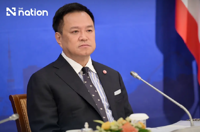
Key to the party’s strategy is the return of Pita Limjaroenrat (pic) on Jan 25, who is expected to help drive the “Orange Wave” in Bangkok, which was instrumental in their past success.
The party is also focusing on attracting younger voters, including those from Generation Z, many of whom have shown strong support for People’s Party.
Recent internal polling confirms that Bangkok remains a stronghold for the party, with substantial support also coming from the north and central provinces.
However, some swing vote areas remain uncertain and are prompting the party to ramp up campaigning in these constituencies.
Poll results and voter preferences
The latest KPI Poll, conducted between 8–11 January 2026, revealed key insights:
26.2 per cent of respondents said no candidate was “suitable” for the new prime minister position.
Nuttaphong Ruengpanayawut, leader of the People’s Party, came in second with 18.8 per cent of the vote, followed by Anutin Charnvirakul of Bhumjaithai Party at 16.9 per cent.
Yodchanan Wongsawat from Pheu Thai took 10.9 per cent, with Abhisit Vejjajiva of Democrat Party earning 10.2 per cent.
When broken down by age group, support for prime minister candidates shifted as follows:
Baby Boomers (60+ years) and Generation X (44-59 years) favoured Anutin the most, with 20.4 per cent and 21.2 per cent support respectively.
Generation Y (28-43 years) preferred Nuttaphong, with 19.6 per cent.
Generation Z (18-27 years) overwhelmingly supported Nuttaphong, with 33.8 per cent, outpacing both Anutin and Yoschanan by a large margin.
Additionally, Generation Z represents a significant share of first-time voters, around 3.2–3.4 million, or six per cent of the electorate. This demographic shows strong support for the People’s Party.
Party’s strategy and future outlook
People’s Party has developed a detailed election strategy for the final stretch of campaigning, focusing heavily on swing voters in contested areas.
The party expects 150+ seats in the 2026 election, based on internal projections, and aims for a coalition with Pheu Thai, Thai Sang Thai, and other allies to secure 260-270 seats in total.
In this final stretch, Pita will once again lead the charge in Bangkok from Jan 25, hoping to recreate the momentum of past campaigns, where the party dominated 32 constituencies in 2023, with only one loss to Pheu Thai by a narrow margin of four votes.
Additional strategy focus
Economic policies will also take centre stage. To explain the party's economic and technological plans, Mai Sirikanya Tansakun and Ton Veerayooth Kanchoochat will appear on media to simplify complex policies and make them more relatable to voters.
Social media influencers, including Ice Rukchanok, have been mobilised to boost the party’s digital presence in areas where local rivals are strong.
Swing votes remain a crucial factor, with the party’s final outreach targeting these voters to solidify its position. Some “grey votes” (undecided voters) could shift outcomes, and the party is keen to improve on past weaknesses, particularly on economic messaging.
Finally, the People’s Party is assessing risks from potential attacks by opponents, including issues with candidates from the “grey” zone who may face challenges related to past affiliations.
The final election results on 8 February 2026 will determine whether the party's coalition strategy succeeds and whether they can form a majority government or coalition in the coming years. - The Nation/ANN