SINGAPORE: Dormitory operators that house some 200,000 migrant workers are expected to receive more than S$100 million of government funding to defray the cost of enhancing the livability of about 900 existing dormitories to meet stricter requirements.
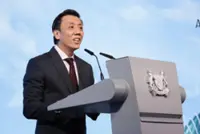
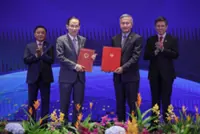
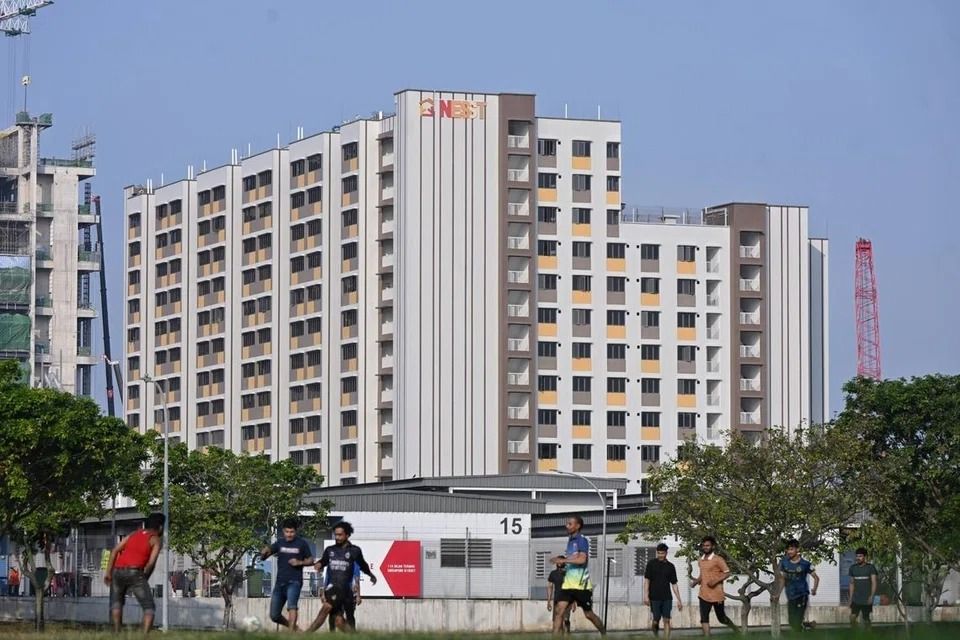
On Saturday (Jan 17), Manpower Minister Dr Tan See Leng unveiled details of the Dormitory Transition Scheme (DTS) grant for select retrofitting works at the official opening of the NESST Tukang Dormitory - the first dormitory built by the manpower Ministry that meets the full New Dormitory Standards (NDS) introduced in September 2021.
The living conditions of migrant workers in dormitories came under intense scrutiny following the massive outbreak of Covid-19 infections in foreign workers’ living quarters in 2020.
“Migrant workers play an essential role in building Singapore, as they construct our homes and infrastructure, and contribute to our economy,” said Dr Tan.
But for many years, Singapore’s approach towards housing migrant workers had been focused on meeting basic accommodation needs, he said.
“The Covid-19 pandemic reminded us the importance of strengthening our dormitory ecosystem. It also underscored our belief that when workers are well-housed and well-cared for, they are better able to give their best at work, and our society benefits,” he said.
Since the pandemic, the Government has been working closely with industry partners to raise dormitory standards, he said.
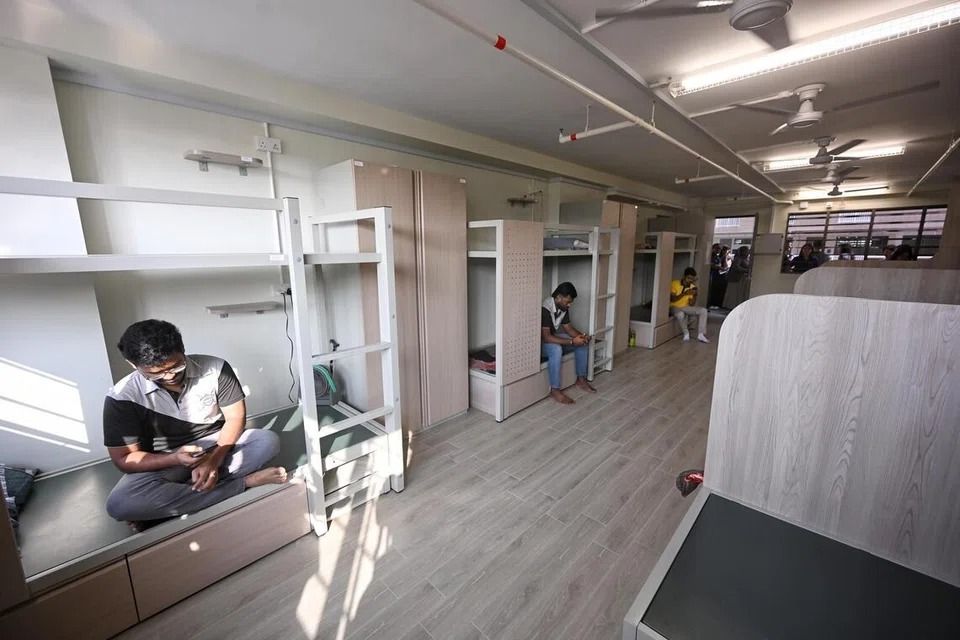
For instance, the NDS addresses previous shortcomings by setting a cap on the number of residents in each room at 12 residents. There is currently no occupancy cap and most dormitories have 16 or even more residents sharing one room.
The NDS also ensures ensuite toilets and isolation facilities are provided, for a start. A minimum living space of 3.6sqm per resident has also been spelt out.
Existing dormitories have until 2030 to meet some of the NDS, which also include enhancements to strengthen infection control. It is not until 2040 that existing dormitories have to comply with the full DNS, which include other requirements such as setting the minimum living space at at least 4.2sqm per resident and providing a spacing of at least 1m between beds.
“This phased approach will minimise disruption to the dormitory industry, while moving to higher standards as soon as practically possible for public health reasons,” said Dr Tan.
Turning to the grant, Dr Tan said that eligible dormitory operators will receive between $3,000 and $8,800 for each type of retrofitting work completed per unit.
The quantum of funding for each dormitory will be determined by the type and extent of retrofitting works required. The Straits Times understands there is no cap on the maximum funding that an operator can receive for all retrofitting works in one dormitory, as it depends on the extent of works required and whether the works can be completed by 2028 or later.
To encourage dormitories to make the transition earlier to avoid a bed supply crunch due to the bunching of dormitories undergoing retrofitting, those who complete their works by the end of 2028 will be eligible for a higher grant.
For instance, the grant for the installation of a room partition will be $4,200 if completed by 2028, compared with $3,000 if completed between 2029 and 2030. The grant for building a room with an ensuite toilet as an isolation facility will be $12,300 if done by the end of 2028, and reduced to $8,800 if completed in 2029 or 2030.
The Ministry of Manpower (MOM) will exempt dormitories with leases expiring by 2033 from retrofitting as their remaining lease durations are short.
“Today’s official opening of NESST Tukang Dormitory demonstrates the Government and MOM’s commitment to transform the entire migrant worker landscape by enhancing the lived experiences of migrant workers and ensuring that Singapore will be better prepared for future health crises,” said Dr Tan.
The facility at Tukang Innovation Lane in the western part of Singapore is the first dormitory built and owned by MOM. It is operated by NESST Singapore.
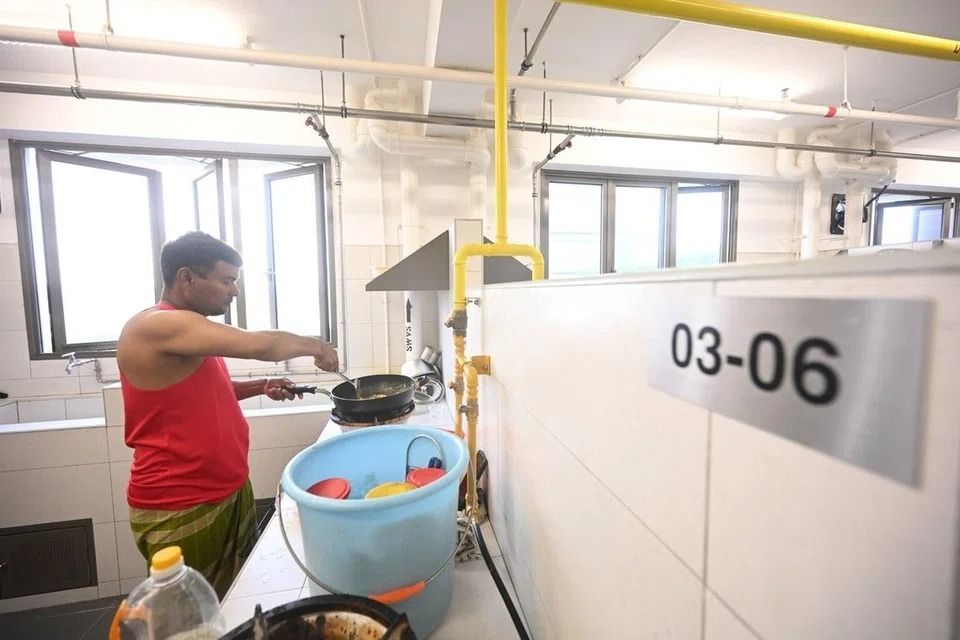
NESST Tukang will house up to 2,400 migrant workers across 210 rooms. As of January 2026, the dormitory is almost fully booked. Full occupancy is expected by May.
It incorporates several first-of-its-kind loft bed design to minimise sleep disturbance for lower bunk occupants. The rooms are north-south facing with larger windows for more daylight and to improve natural airflow. There are also communal dining spaces on every floor to encourage social interactions and bonding.
Other key features include automated thermal scanners at entry points for the timely detection of unwell residents, as well as wastewater surveillance for early health monitoring.
Other pandemic readiness features include colour-coded access pathways for crowd segregation during a pandemic. Curbless carpark and recreational spaces are also designed to be quickly repurposed to support healthcare operations.
MOM had said that a total of six new dormitories with a combined capacity of around 45,000 beds will be built over the next few years.
The ministry’s second dormitory at Sengkang West began construction on January 17 and will operate by the end of 2028. It will be three times the size of Tukang Dormitory with 7,200 beds. - The Straits Times/ANN