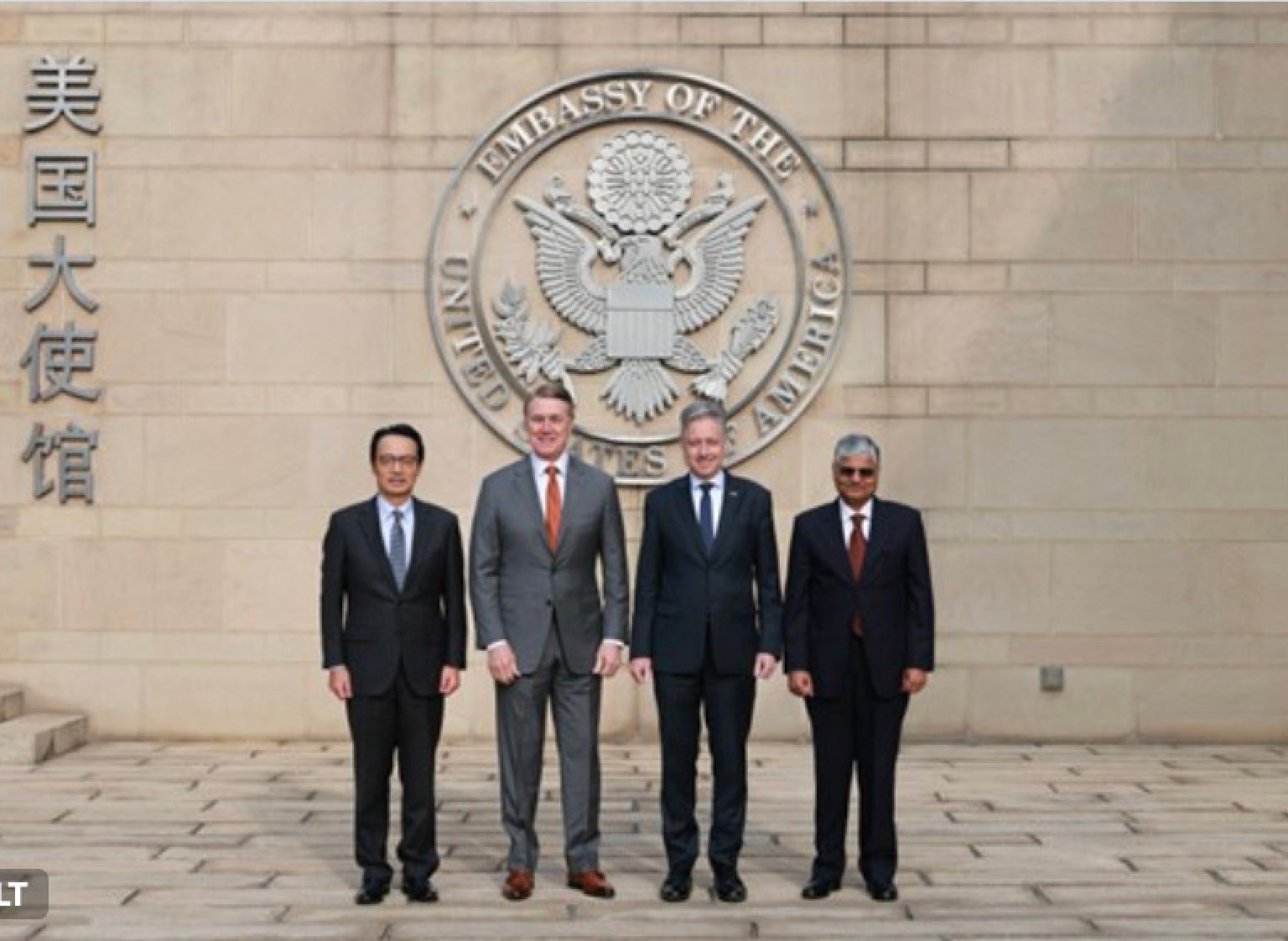
In a pointed display of diplomatic unity, the ambassadors of the Quadrilateral Security Dialogue (Quad) nations – the United States, Australia, India, and Japan – convened in Beijing on Tuesday, just as the People’s Liberation Army (PLA) conducted live-fire exercises during its large-scale military drills around Taiwan.
“The Quad is a force for good, working to maintain a free and open Indo-Pacific. It is always great to meet with the Quad Ambassadors here in Beijing,” said US Ambassador to China David Perdue in a social media post along with a group photo.
Perdue, a businessman and former senator from Georgia appointed earlier this year by US President Donald Trump to manage the most delicate bilateral relationship, added that relations among the four countries “continue to be strong”.
The Quad is an informal strategic forum aimed at promoting a free, open and rules-based Indo-Pacific, according to its members.
Since 2021, the bloc has held leader-level summits and focused on issues such as maritime security, infrastructure development and countering what it calls coercive actions. While not a formal military alliance, the grouping is widely seen as a counterweight to China’s growing assertiveness in the region.
Chinese officials regularly label the Quad as an “exclusionary clique” and an “Indo-Pacific version of Nato” designed to contain China’s rise. China’s embassy in Washington did not immediately respond to a request for comment on the latest meeting.
The bloc’s ambassador-level meetings in Beijing are not new. Similar coordination sessions have occurred since mid-2024 under Nicholas Burns, Perdue’s predecessor, and continued into 2025. Experts noted that the timing of Tuesday’s meeting stands out, even though they remain divided on its strategic significance and messaging.
Analysts said that holding and publicising the ambassadorial meeting during the active phase of China’s drills, including live-fire on Tuesday, the Quad partners appear to project unity and deterrence.
Experts divided on meeting’s significance
However, other experts said the bloc is struggling to remain relevant, with its unity buffeted by delays to a planned Quad leaders’ meeting originally scheduled for the autumn of 2025, amid shifting priorities in the Trump administration’s China policy.
Lisa Curtis, who served as deputy assistant to the president and senior director for South and Central Asia during Trump’s first term from 2017 to 2021, said: “The timing of the Quad Ambassadors meeting in Beijing is significant as it is aimed at signaling Beijing that the four nations stand unified in their opposition to China’s aggressive live-fire military exercises near Taiwan.”
Curtis, now director of the Indo-Pacific Security Programme at the Centre for New American Security (CNAS) in Washington, added that while the Quad ambassadors have met in Beijing in the past, Perdue’s post about the meeting “makes clear he wished to draw global attention to it to show that the four nations are ready to cooperate to counter China’s military aggression”.
Sarang Shidore, director of the Global South Programme at the Quincy Institute, a Washington-based think tank, described the Quad ambassadors’ meeting in Beijing as a “way to show some resolve” as Beijing conducted the drills.
But he pointed out that the “symbolism is at a lower level” and the “bigger story is the attempt to keep things stable in the few months running up to the Xi-Trump meeting”.
“At this point, the Quad is on life support. It was mentioned just once in the US National Security Strategy; its leaders’ summit in India did not take place,” Shidore said.
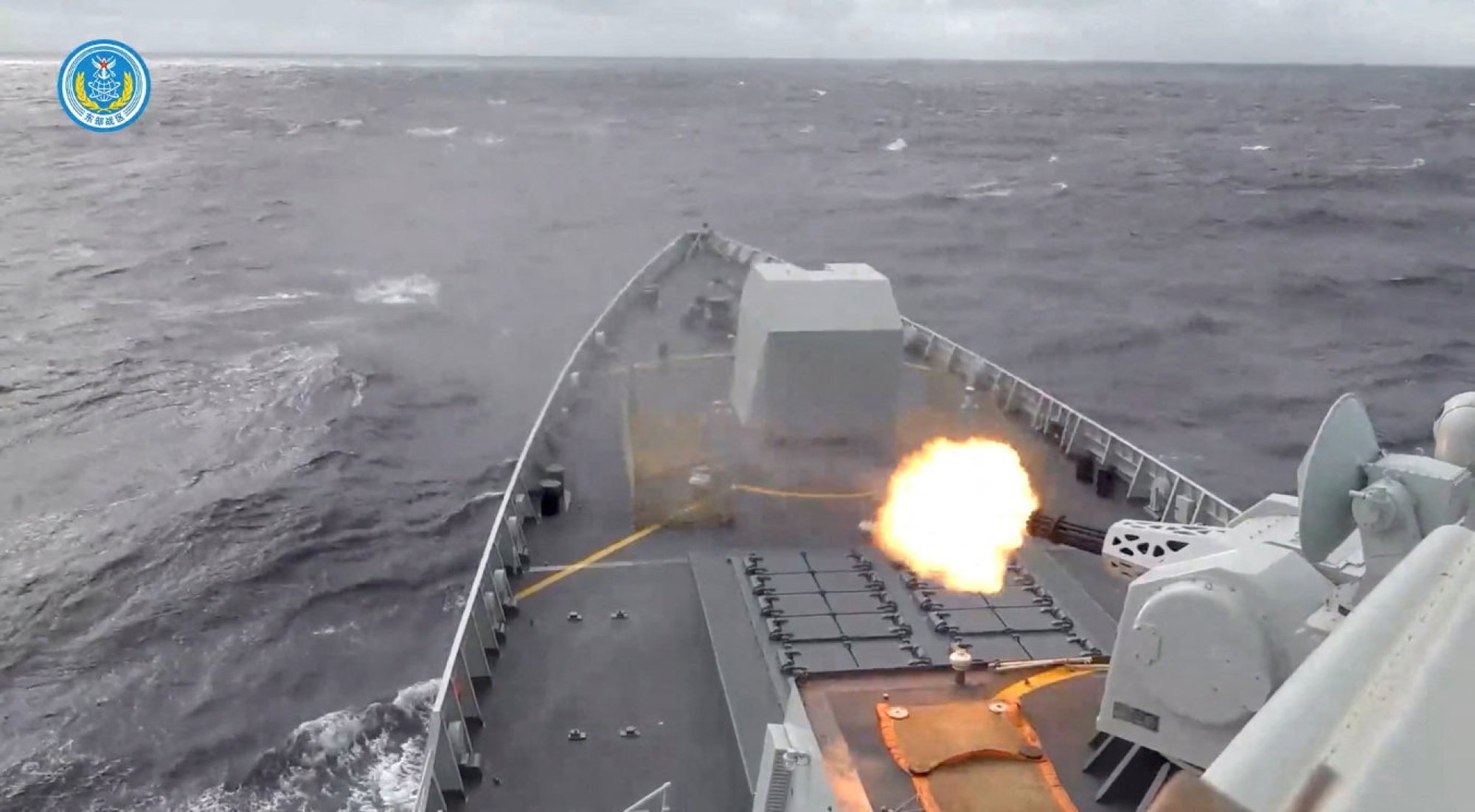
Beijing launched the two-day “Justice Mission 2025” exercises on Monday, mobilising army, navy, air, rocket and coastguard forces in a simulation of blockading Taiwan’s key ports, conducting precision strikes and deterring “external interference”.
The PLA Eastern Theatre Command described the drills as testing joint combat capabilities, including live-fire in designated zones around the island.
On Monday, US President Donald Trump downplayed concerns over the drills, stating he was “not worried” and highlighting his “great relationship” with Chinese leader Xi Jinping, who “hasn’t told me anything about it”. Trump noted that China has conducted similar naval exercises around Taiwan for years.
After holding a bilateral meeting with Xi in October in Busan, South Korea, Trump announced that he would visit the mainland in April 2026. The Busan summit saw the two global powers reach a trade truce after high tensions over tariffs. Beijing has yet to confirm Trump’s planned visit to China for next year.
Henrietta Levin, senior fellow at the Centre for Strategic and International Studies (CSIS), a think tank in Washington, said that the US and its partners “must signal a clear commitment to the maintenance of peace and stability across the Taiwan Strait” as Beijing attempts to “erode the cross-Strait status quo”.
“Instead, President Trump’s comment that he is ‘not worried’ about Beijing’s military exercise effectively endorses and normalises its reckless actions,” she added.
US lawmakers stand by Taiwan
In contrast, the hawkish US House Select Committee on Competition with China on Tuesday issued a statement by Chairman John Moolenaar, a Republican from Michigan, and Ranking Member Raja Krishnamoorthi, a Democrat from Illinois, saying the drills were “intended to intimidate Taiwan and other democracies in the region and to undermine peace and stability across the Indo-Pacific”.
“The United States stands with Taiwan and fellow democracies and will continue to work with partners to preserve Taiwan’s security and uphold a free, open and stable Indo-Pacific,” the lawmakers added.
Beijing sees Taiwan as part of China, to be reunited by force if necessary.
Most countries, including the Quad countries, do not recognise Taiwan as an independent state, but Washington has expressed its opposition to any attempt to take the self-governed island by force and says it’s committed to supplying it with weapons.
The exercises, among the most extensive in recent years, followed closely after the US approved an $11.1 billion arms package for Taiwan, the largest ever, prompting Beijing to frame them as a “stern warning” against “Taiwan independence separatist forces” and foreign support for the self-ruled island.
Since November, tensions between Beijing and Tokyo have also risen after Japan’s newly elected Prime Minister, Sanae Takaichi, said an attack on Taiwan would pose an “existential crisis” for her country.
The development comes against a backdrop of uneven high-level Quad engagement under the second Trump administration.
Will Quad Leaders’ Summit take place in 2026?
The planned 2025 Quad Leaders’ Summit, initially scheduled for India, has been delayed and remains uncertain amid US-India trade frictions.
Trump did not attend or prioritise a full summit this year, fuelling questions about whether the Quad is being used primarily for diplomatic messaging rather than deeper institutionalisation.
Levin of the CSIS contended that Trump’s attacks on the US-India relationship have placed the entire Quad framework under “considerable strain”.
“Whether the four partners can hold a successful summit in 2026 will be a key indicator of the grouping’s continued cohesion and relevance,” she said.
However, some experts saw the working-level coordination, like Tuesday’s meeting, as evidence that the partnership remains active and resilient.
According to Curtis of the CNAS, the meeting also sent a “broader message to the region on the Quad’s continued relevance for peace and security in the Indo-Pacific”.
She said that despite the postponement of the 2025 Quad summit, the bloc has remained “operational”.
“For instance, the Malabar naval exercise among the four nations took place in November, and the first-ever Quad coast guard observer mission took place in July,” she highlighted.
Ankit Bhuptani, a senior fellow at VishwaMitra Research Foundation, a think tank based in Mumbai, India, in a social media post observed that “Quad’s durability stems from structural factors that persist regardless of American domestic politics”
“China’s military modernisation, its territorial assertions, its economic statecraft. These create incentives for democratic cooperation that no American election can erase.” -- SOUTH CHINA MORNING POST