
HONG KONG (SCMP): Ambiguous rules, lax supervision and uncoordinated policies involving at least four departments are among some deep-rooted problems contributing to the inferno that killed 160 residents in Hong Kong, analysts have said, as the Post reviewed what went wrong.
Some industry insiders also questioned whether housing authorities, who oversee a lesser-known independent checking unit, should have played a bigger role in supervising the renovation of Wang Fuk Court, a subsidised housing estate in Tai Po, where the city’s worst blaze in seven decades struck.
“[The departments responsible for site safety] could have been just doing their own jobs, but the fire demonstrated that the departments need to have clearer coordination among themselves,” an industry insider, requesting anonymity, said.
A preliminary investigation by authorities uncovered a range of problems. Fire alarm systems in most of the eight blocks in the estate did not ring when the blaze broke out on November 26.
Some scaffolding net samples also failed to meet fire-retardant standards, and subsequent investigations found that contractors at other estates had allegedly faked their net testing certificates.
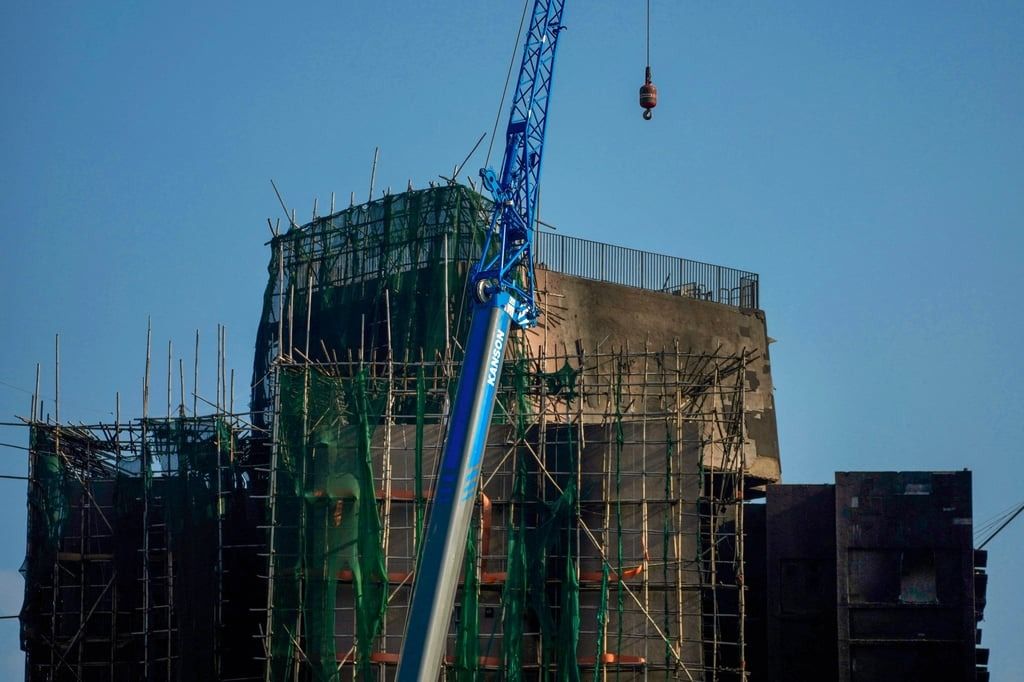
The investigations also found that the use of styrofoam boards to cover windows at Wang Fuk Court by the workers caused the panes to burst, drawing flames inward.
There were also missed opportunities. In the aftermath of the fire, affected residents told the media that they had previously complained about workers smoking on site.
They also once requested that the contractor remove the styrofoam boards and raised their concerns to the government’s housing, buildings and labour departments about whether the new protective nets replaced after Super Typhoon Ragasa were safe.
The Labour Department also confirmed with the Post earlier that it had inspected the estate 16 times between July 2024 and November this year. It issued six improvement notices and took three prosecution actions against the contractor for unsafe work at a height.
A construction sector insider said that while the on-site management was problematic, there was possible oversight involving three departments handling the maintenance site safety of the estate.
The source said the Labour Department usually examined whether the scaffolding nets were broken rather than their fire-retardant performance, as its job was to focus on occupational safety.
He added that the Buildings Department, which is responsible for overseeing structural integrity, would have checked the compliance of approved plans and construction materials, such as concrete and steel bars.
The Fire Services Department, according to the insider, might deem the nets as construction materials, as it focuses on fire evacuation and safety equipment, such as fire extinguishers and alarms.
“The government should learn from this catastrophe. The departments should discuss their duties and carry out joint inspections on maintenance sites,” the insider said, adding that the departments were currently working in silos.
The current regime also relied heavily on self-certification, experts said.
Under the mandatory building inspection scheme, owners are required to appoint a registered professional to inspect and supervise the necessary repair works conducted by a registered contractor.
The professional then submits papers to the Buildings Department, including documents on the inspection and work completion.
What functions do the 4 departments serve?
Mandatory Building Inspection Scheme
* Buildings Department supervises private buildings
* Housing Bureau’s independent checking unit oversees renovation works on public and subsidised estates
Site safety
* Labour Department focuses on occupational safety. It issues a code of practice on the safety and technical requirements for bamboo scaffolding, including protective nets
* Buildings Department oversees structural integrity, including guidelines on scaffolding design
Fire safety
* Buildings Department oversees structural components, such as fire rated doors
* Fire Services Department manages fire safety risks, such as obstruction of escape routes and ensuring equipment to fight blazes are operational
* Labour commissioner is empowered to prohibit smoking at construction sites that use flammable materials
If professionals and contractors carry out unauthorised building works, upon conviction, they can face a maximum fine of HK$400,000 (US$51,405) and two years of imprisonment.
The Buildings Department can also take disciplinary actions against them, such as removing them from the registered lists and issuing fines.
The Labour Department can demand rectification, suspension of work and take prosecution action only when workers’ safety is compromised during the maintenance work.
There are also two sets of scaffolding guidelines issued by two different departments.
The Labour Department has a 60-page code of practice on bamboo scaffolding, which lists related ordinances and details of managing site safety, as well as the technical requirements of the temporary structure.
The document also says protective nets should have “appropriate fire-retardant properties in compliance with a recognised standard”, with examples of the standards for reference.
It also makes reference to the Buildings Department’s 25-page guideline on bamboo scaffolding, which provides further recommendations on the design, erection, maintenance and dismantling of the structure.
The guidelines of the Buildings Department only mention that protective nets should have “appropriate fire retardant properties in compliance with a recognised standard”.
But a contractor told the Post that authorities did not require the submission of test reports for scaffolding netting.
He added that contractors usually relied on net suppliers to hand over the certificate of the test reports, which they did not verify independently.
Professor Yau Yung from Lingnan University, a professional member of Britain’s Royal Institution of Chartered Surveyors, highlighted the ambiguous legal status of the documents, especially the Labour Department’s code of practice, which states that failure to observe was not an offence but could be considered in criminal proceedings in court.
“The Labour Department takes action only when it identifies the hazard … It is a self-regulation system,” he said. “Apart from occasional inspection, no one knows whether there is any violation, as long as nothing has happened,” he said, adding that authorities should step up enforcement.
“People may gamble on impunity.”
Unlike private buildings supervised by the Buildings Department, Wang Fuk Court was under the supervision of an independent checking unit set up under the Housing Bureau.
The unit exercises statutory building control on public and subsidised housing, based on the Buildings Ordinance and related requirements.
The Buildings Department would provide expert advice and clarify policies for the unit, as well as oversee it by reviewing a report that it submits once a year, according to a memorandum.
The unit, led by the permanent secretary for housing, can also refer underperforming professionals and contractors to the department for consideration of disciplinary action.
Yau questioned whether there was confusion between the department and the unit over their site supervision duties, which could be a loophole.
A veteran engineer, who wished to remain anonymous, said that the Housing Bureau needed to play a bigger role in clarifying the duties of different departments in cases of public and subsidised housing.
“The Housing Bureau acts as the developer for public and subsidised housing projects. It can lead and guide the construction industry by establishing clear guidelines defining the roles and management responsibilities of various entities,” the professional said.
Chiu Yan-loy, founder of the Property Owners’ Anti Bid-Rigging Alliance, noted the unit’s responsibility and stressed that the broader issue of authorities entrusting professionals existed in different departments.
He said the current inspection schemes, regardless of building or fire safety, required owners to hire professionals and contractors to coordinate the work and report to the government departments.
Under the law, owners should properly maintain fire safety equipment and have it inspected at least once a year.
“In some sense, the supervisory responsibility is outsourced to the professionals. Now, there is a problem with them,” he said.
Certificates for the fire-safety tests of the mesh provided by some contractors were suspected to have been falsified, according to an initial investigation by police, triggering the removal of all scaffolding nets across the city.
Chiu said while professionals and contractors could face deregistration or even legal action, the government should step up enforcement and inspections.
“The government may question whether it is cost-effective,” he said. “However, after the tragedy, shouldn’t we devote more resources to ensure safety?” -- SOUTH CHINA MORNING POST