
Some 31.9 per cent of voters cast their ballots on Sunday in Hong Kong’s second Legislative Council election under a “patriots-only” system, beating the record low turnout of 2021 in a sombre poll held just 12 days after the tragic fire in Tai Po.
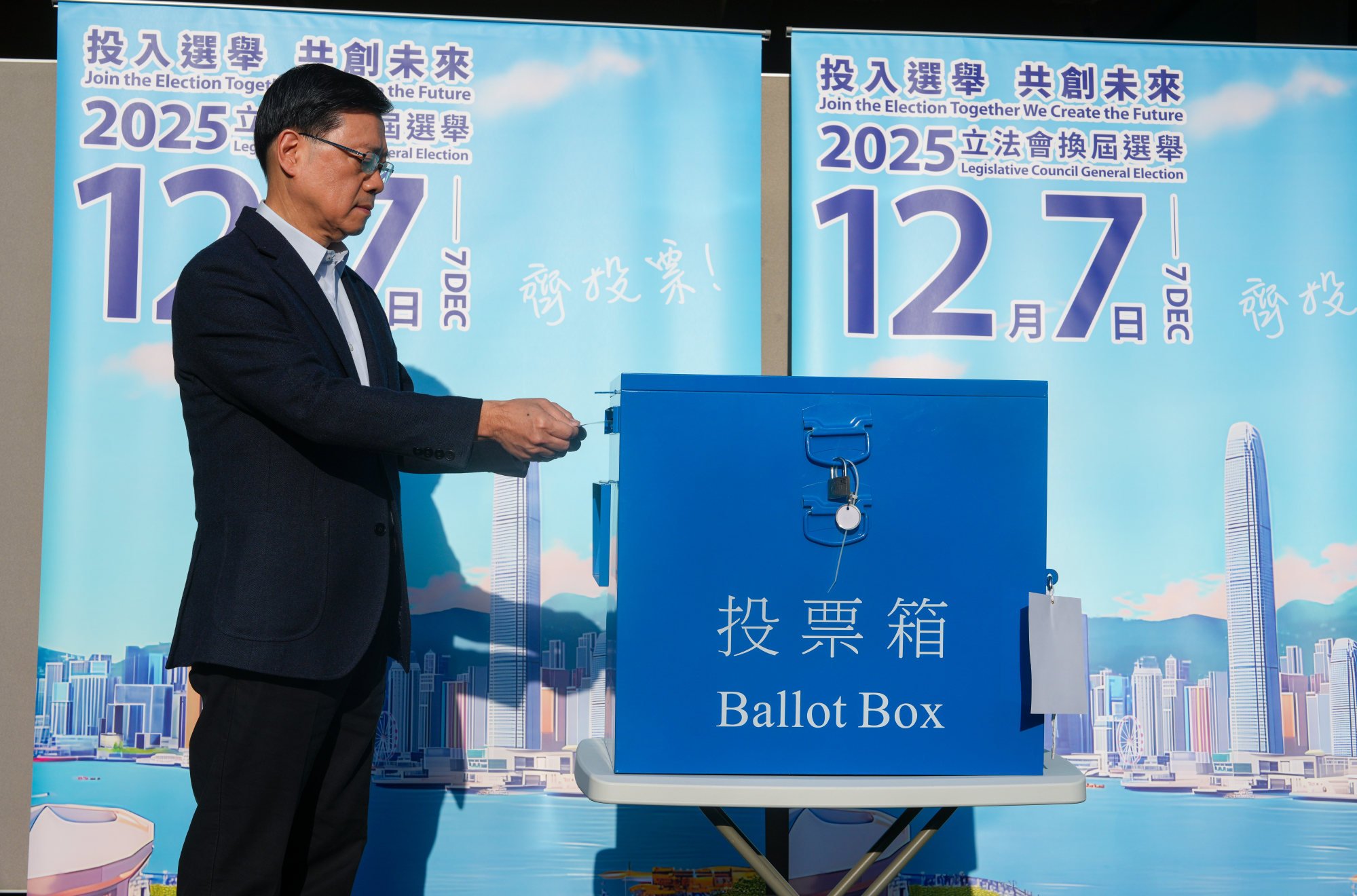
Almost as soon as polls opened, Chief Executive John Lee Ka-chiu said he would enlist the newly elected legislature to mobilise support for victims of the fire and implement robust systemic reform, beginning with a motion to be raised by the government and a law to ban smoking at all construction sites.
The legislative procedure for the smoking ban was expected to take just two months and Lee vowed to implement changes well before the full conclusions of an independent committee he has pledged to set up to investigate the blaze that claimed 159 lives.
“My goal is to find out the truth and hold those responsible accountable,” Lee said after casting his vote at 8.30am, an hour after polling opened, and urging residents to go out and “vote for reform”.
“The Legislative Council has many powers; we need to cooperate on passing public budgets and lawmaking, plugging existing loopholes, making the city safer and assuring the public,” he said.
About 1,318,000 people cast their ballots, accounting for 31.9 per cent of total voters. Despite the turnout rate being slightly higher than the 30.2 per cent in the 2021 election, the number voting fell by 33,000. There was a smaller base of registered voters.
The number of registered voters declined by 340,000, or 7.6 per cent, to about 4,131,000.
The highest rate was the 58.28 per cent turnout in the 2016 poll, the last one before a major overhaul by Beijing to allow only patriots to run for election.
However, the turnout rate for the New Territories East constituency, which encompasses the site of the deadly fire in Tai Po, only stood at 30.15 per cent, the lowest across the 10 directly elected geographical constituencies.
The 2025 poll saw 161 candidates running for 90 seats, with more new and younger faces, as about one-third of the previous legislature, primarily the veterans, chose not to seek re-election.
In the lead-up to Sunday’s poll, the authorities had promoted the election in a whirlwind of publicity, opening new designated polling stations for civil servants and hospital staff, and extending the voting period by two hours.
Some businesses also rolled out perks such as shopping coupons and half-price cinema tickets to those who voted, with some employers even offering a half-day leave for workers with a voter thank-you card.
A pause of five days of election campaigning ensued when the fire ripped through seven blocks in Wang Fuk Court and burned for 43 hours before being put out, leaving 4,900 residents homeless and now in temporary housing or shelters.
Amid a subdued atmosphere on Sunday, candidates no longer chanted slogans loudly or used loudspeakers. But sea upon sea of colourful placards bearing candidates’ numbers was seen across the districts.
Queues appeared in the early hours at some polling stations but quickly eased, allowing voters to cast their ballots in just a few minutes for the rest of the day.
At Tai Po, some residents went to the scene of the fire to lay flowers and pay tribute to the victims before casting their vote.
Some voters told the Post that they wanted to exercise their “civic responsibility”, while others felt compelled to vote after the Tai Po tragedy exposed what they saw as many loopholes in the governance of construction works.
Some others candidly confessed to being drawn by incentives such as discounted cinema tickets and goodies at shops.
Wang Fuk Court resident Christine Toa, 71, said she had paid more attention to the election and felt a stronger sense of mission to vote after the fire as she wanted to choose a lawmaker committed to supporting those affected by the inferno.
“We need to do something, to elect a lawmaker so that we can have a voice in Legco ... I hope the lawmaker will be willing to speak up for us, not just temporarily and only helping us now during the election period,” Toa said.
Voter Magus Lee lined up early outside the Hong Kong Management Association David Li Kwok Po College in Mong Kok before going to work. He was the first in line to vote when the polling station doors opened at 7.30am.
“This is our civic duty, and my friend recommended that I vote for this candidate,” he said. “In the past, certain parties have always been in charge, but I think Hong Kong should have a new image, so I voted for another party.”
Lee said he believed the second election under the “patriots-only” system was more important in determining Hong Kong’s future because the first one came after an abrupt change.
An election spotlight was the impact of the Tai Po fire on the Democratic Alliance for the Betterment and Progress of Hong Kong, after it emerged that one of its district councillors had advised the owners’ corporation of Wang Fuk Court on its renovation project. Some voters said they would stick with the party but others said change was needed.
More than 20,000 civil servants, hospital staff, care home residents and workers, and ethnic minority residents registered to vote at the 22 designated polling stations across the city.
However, some residents decided not to vote, including 48-year-old Candy Chan, who said the government should have postponed the poll after the blaze, as “holding the election feels like rubbing salt into people’s wounds”.
Tam Yiu-chung, formerly the city’s sole representative on the National People’s Congress Standing Committee, said the turnout rate was “not surprising” because people’s voting sentiment was affected by the Tai Po fire.
“It’s quite good that the turnout rate was similar to the last election, even after a major tragedy,” he said, adding that it would have been even higher without the blaze.
“A key task of the new lawmakers will be to work with the government to address the systemic problems behind the tragedy, improve people’s livelihoods, and continue facilitating Hong Kong’s integration into the overall development of the country.”