
Thousands of mourners poured into Tai Po on Sunday, forming a solemn river of remembrance for the 146 lives lost in Hong Kong’s deadliest fire in more than seven decades, while Beijing called for unity and healing as a massive rescue and recovery operation continued amid the charred ruins.
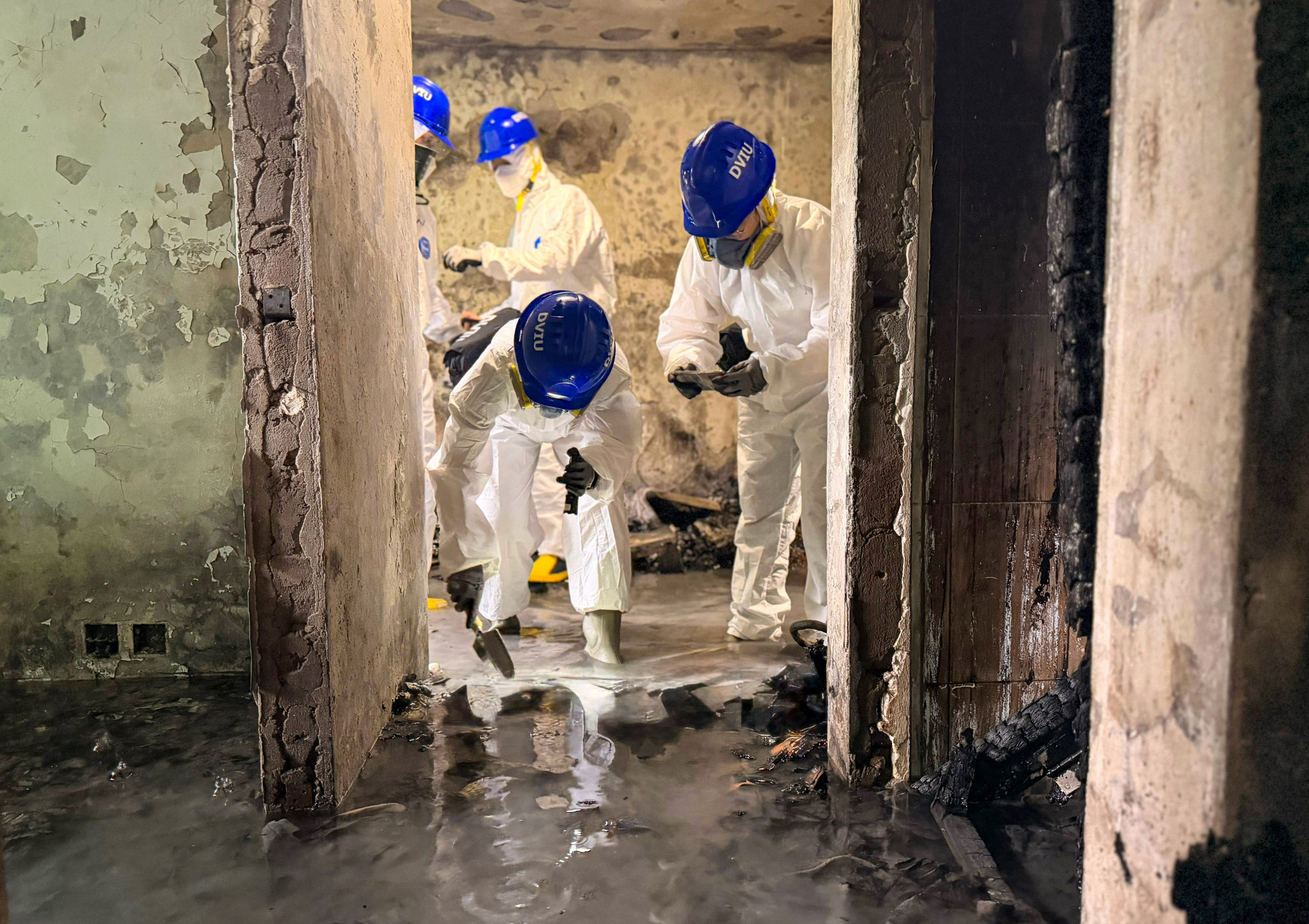
The scale of the calamity was evident, as the Disaster Victim Identification Unit (DVIU) discovered 18 more bodies in the wreckage of Wang Fuk Court in Tai Po following Wednesday’s blaze.
They have completed searches in four of the seven affected buildings, but about 40 people remain unaccounted for.
As the city grieves, a sweeping resettlement effort is under way. Deputy Financial Secretary Michael Wong Wai-lun said 1,827 survivors of the blaze had moved into temporary homes such as hotels and transitional housing.
For longer-term accommodation, the government has located another 200 homes, up from the 1,800 announced earlier.
“We have been in talks with different providers. The residents can stay there for a very long time. We are confident that they can continue to be sheltered and supported until all problems are resolved,” he told the media.
The 2021 census found that about 4,600 people lived in the housing estate, including in the unaffected block.
In the first editorial by a central government-controlled media on the fire, Xinhua praised Chief Executive John Lee Ka-chiu and the city government for the swift deployment of rescue and relief measures, urging the city to look forward.
The commentary, which typically reflects the stance of the central government, focused on how the tragedy had united the city and urged Hong Kong to move forward. It said Lee’s leadership was befitting his role as “the principal officer” of Hong Kong.
The piece also highlighted the immediate launch of targeted safety inspections and the establishment of a special task force to investigate the cause of the disaster.
The unprecedented disaster has deeply shocked the Hong Kong public and also prompted a swift response. As of Sunday noon, HK$1.2 billion (US$154 million) had been raised for the affected families, shattering the government record.
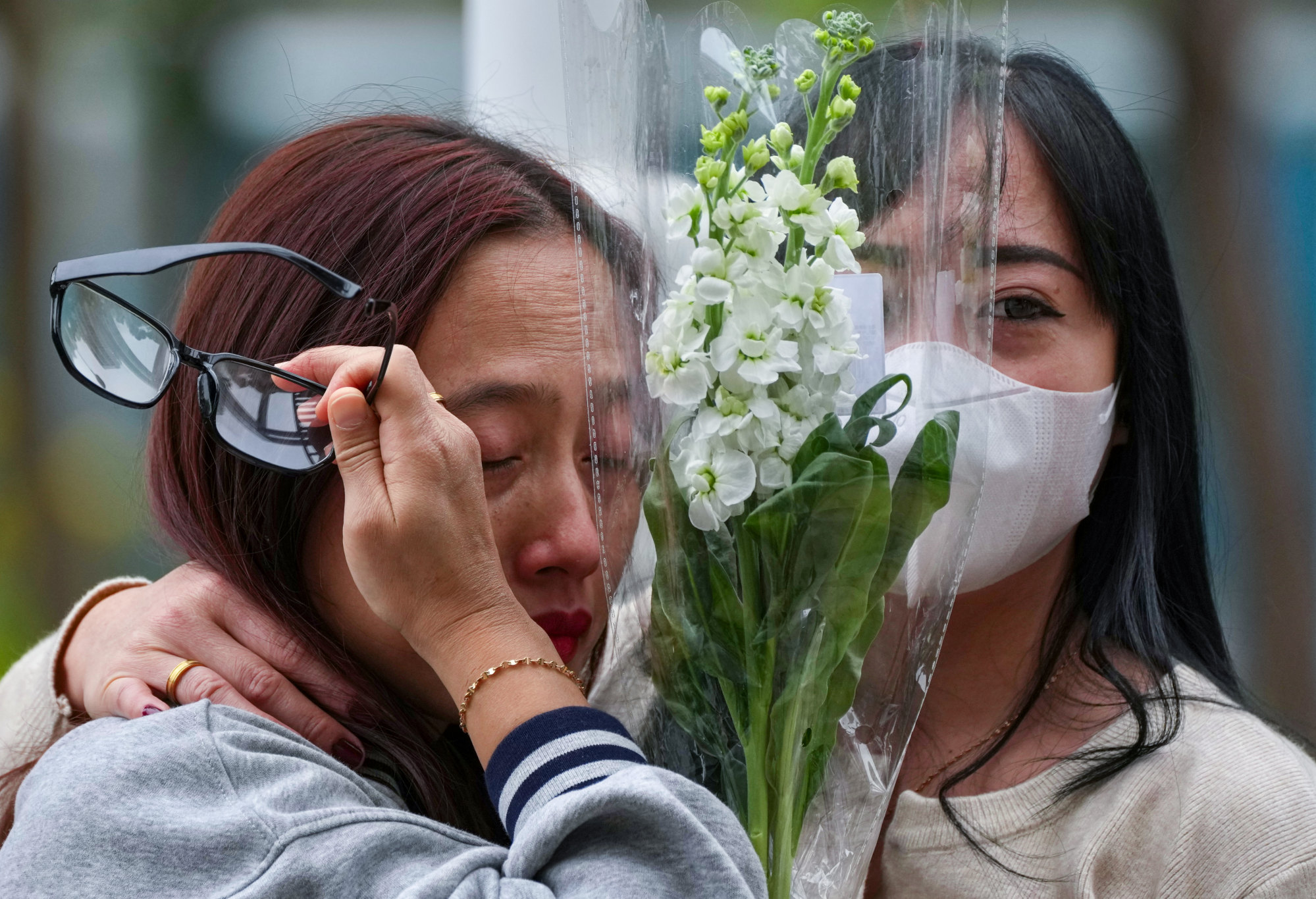
People from across the city lined up on Sunday to pay an emotional tribute to the victims on the second day of the three-day official mourning period. Many also visited the Sha Tin Fire Station, where a 37-year-old fallen firefighter worked. Similar remembrance events were held in Central for affected domestic helpers.
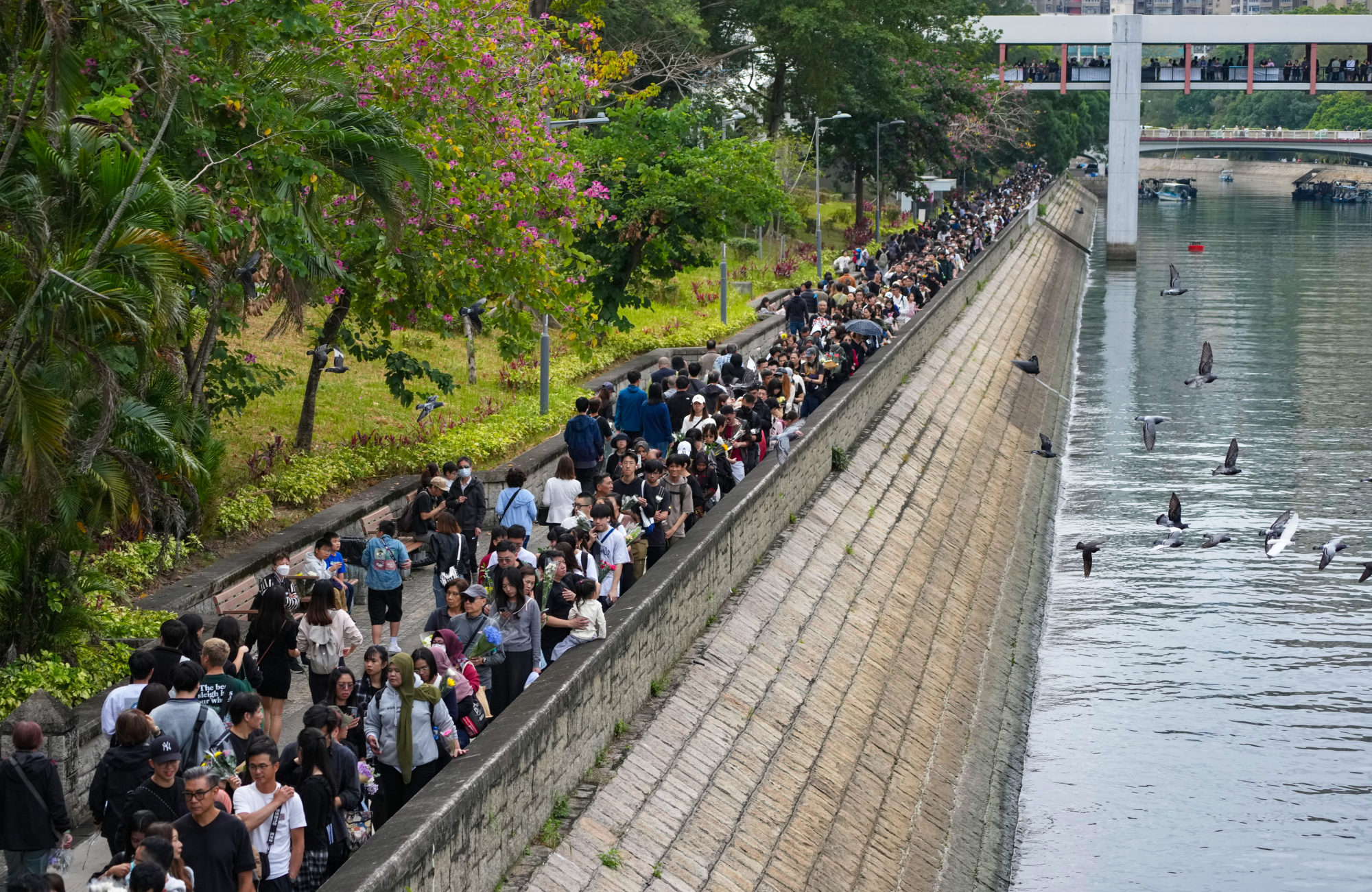
In Tai Po, a queue of people stretching 2km (1,312 yards) wound patiently along Lam Tsuen River. For over an hour, they walked in silence to reach a makeshift altar near the fire-ravaged estate, leaving behind flowers, handwritten messages, toys for the children who were lost, and offerings of food and drink.
“May those souls rest in peace. Be well in heaven,” one note read.
On Chater Road in Central, hundreds of mostly Filipino domestic helpers held a community prayer, their heads bowed and tears flowing as they mourned the loss of eight helpers from the Philippines and Indonesia, according to their consulates.
The tragedy also claimed the lives of five construction workers, all of whom had been working on the buildings’ outer walls, according to Fay Siu Sin-man of the Association for the Rights of Industrial Accident Victims.
Public sorrow mingled with a sense of frustration, particularly over the much-criticised regulatory regime governing the construction industry. Many called for a thorough probe into the cause of the tragedy.
Yet the logistical challenges facing investigators and recovery teams are staggering.
Chief Superintendent Karen Tsang Shuk-yin, officer in charge of the casualty inquiry unit, said that out of the 146 deceased, 54 bodies were pending identification. The number of injuries was revised to 79, as four people died in the hospital.
“We expect more to come,” Tsang said of bodies to be found in buildings and the death toll.
The DVIU’s search of four buildings is completed, and three others remain.
Cheng Ka-chun, the officer in charge of the unit, described the harrowing conditions inside the buildings, where bodies were found in flats, on staircases, in corridors and on rooftops. The search was hampered by a lack of light, with teams relying on headlamps, torches and an emergency lighting system to navigate through piles of burned debris, including many sharp objects.
He said the team would push for greater progress in the search during the daytime to maximise efficiency.
About 40 people were still unaccounted for, and authorities are working to find them.
At the same time, about 100 cases have been classified as “unresolvable” due to insufficient information from callers to locate their loved ones, or officers unable to reach the caller for follow-up.
Chief Superintendent Tsang added that some callers had also come to find that their loved ones did not live at Wang Fuk Court.
Leung Hung-wai, deputy director of development and construction at the Housing Department, said no immediate structural integrity problems had been found, but some flats needed reinforcements.
Amy Lam Man-han, regional commander for New Territories North, said Wang Chi House, the unaffected building, remained unsafe to reopen because hanging debris at the site could fall and injure people.
Financial Secretary Paul Chan Mo-po said in his weekly blog that authorities made the resettlement of affected residents the top priority.
“We will do our utmost to handle the aftermath and resettle the residents affected by the fire. The top priority is to ensure that these residents comfortably get through the winter.” Chan wrote.
One of the resettled victims was 70-year-old retiree Au King-kwan, who stayed at a community hall for four days and moved into a hotel in Mong Kok.
Au said he secured a three-month temporary unit in Kwun Tong through the government, but he did not know what would happen after that.
“After escaping, I’ve come to cherish even more what I have. This is a hard lesson. But no matter what happens, we have to move on,” he told the Post.
The Primary Healthcare Commission also announced that the 18 district health centres or stations would provide free personalised services to the affected residents.
The commission will also arrange for specialised medical, nursing, pharmaceutical and psychological support services.
Displaced residents can register via hotlines or online, with no need to visit the centres in person.
They can also go to any family medical clinic under the Hospital Authority for outpatient services that include consultations, treatment and prescriptions.
Lam said the government was continuing its criminal investigations into the cause of the blaze, with at least 11 people arrested by police and the anti-corruption agency on suspicion of manslaughter or graft. - SOUTH CHINA MORNING POST