SOUTH-EAST ASIA (Bernama): South-East Asian climate advocates are calling for a clear regional agenda to influence climate policies, warning that worsening floods, droughts, and storms are destroying lives, rivers, and farmland across the region.
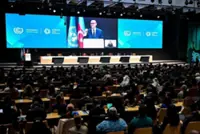
As world leaders gather to deliberate on climate action at COP30 in Belém, Brazil since Thursday, Southeast Asia is being battered by weather-linked disasters that are pummelling growing economies and rural communities with mounting losses.
One of the most vulnerable countries is Timor-Leste.
"Climate change is a critical issue to Timor-Leste, where 70 per cent of the population relies on subsistence farming. Drought seasons are now longer than before, and farmers are facing water shortages.
"There is no single dam in the country and no mechanisation in the agriculture sector. Farmers are still using cows and buffaloes to plough rice fields,” National University of Timor-Leste (UNTL) Rector Joao Martins told Bernama from the capital Dili.
In Belém, global environmental scientists and government leaders will deliberate on key issues, from cutting carbon emissions to limit global heating to 1.5°C and attracting private capital to deforestation and the carbon market.
The situation in South-East Asia remains grim.
Unpredictable heavy rainfall, tornadoes, typhoons, floods, rising temperatures, and earthquakes are destroying properties, infrastructure, crops, and fisheries.
From the archipelago of the Philippines to the region’s most populous country, Indonesia, with 270 million people, to rising economic powerhouse Vietnam, weather-related events are causing endless misery.
As the conference begins, the Philippines is still recovering from Typhoon Kalmaegi which has resulted in at least 114 fatalities.
The same typhoon struck parts of Vietnam Thursday, forcing the country to suspend maritime activities.
"South-East Asian governments should come to COP30 with a clear regional agenda that emphasises implementation and delivery. COP30, after all, will be known as the Delivery COP.
"Beyond commitments, the focus must shift toward creating an enabling ecosystem for carbon markets, climate finance, and technology transfer areas where ASEAN can lead through collaboration rather than competition,” Kuala Lumpur-based Climate Advisor, Centre for Governance and Political Studies, Dr Renard Siew Yung Jhien told Bernama.
Rapidly industrialising economies such as Indonesia and Vietnam are facing a climate conundrum, where governments need to balance economic growth to generate jobs for millions of their citizens and protect the environment at the same time.
The World Resources Institute (WRI) Indonesia has identified the energy and transportation sectors as the major contributors to carbon dioxide emissions in the country.
Indonesia has pledged to reduce carbon emissions by 29 per cent in 2030.
"Indonesia is still struggling to meet its ambitious economic, social, and climate targets. One of the biggest challenges is that there is no set pattern of climate adaptation measures that all countries in the region can adhere to.
"This is because there are fewer measurement tools for adaptation than for mitigation actions, and because adaptation is more context-specific, investment in climate adaptation efforts is uncertain.
"Asean, with diverse economic capacities, also needs to prioritise green ecosystems and lead the way forward for its green economic development, as these countries are home to critical mineral production and are biodiversity powerhouses,” WRI Indonesia Managing Director Dr Arief Wijaya told Bernama.
Siew said there is also a pressing need to operationalise the Asean Common Carbon Framework that was championed during Malaysia’s Asean Chairmanship.
"Ultimately, South-East Asia must position itself not merely as a recipient of climate finance, but as a proactive partner in designing equitable solutions that balance growth and sustainability.
"It’s also time to elevate local voices from farmers to coastal communities who are already adapting on the frontlines of climate change but remain underrepresented in policy dialogues,” said Siew.
The COP30 is being held three decades after global leaders first met in Berlin, Germany, to sshape the global climate agenda.
Brazil i hosting the summit exactly 10 years after the Paris COP21, which set the ambitious target to limit the rise in global warming to 1.5°C.
But many countries have failed to meet their own national targets, and the issue is being highly politicised.
The two-day World Leaders Climate Action Summit began on Thursday, and the United Nations Climate Change Conference (COP30) will take place from November 10 to 21.- Bernama