




China’s real estate investment trust (C-Reit) is poised to grow by 30 times to become a US$1 trillion industry in the next 20 years – a transition borne out of several factors, including declining home sales – which is expected to benefit select mainland developers, according to Morgan Stanley.
Following 25 years of property growth, primarily focused on the residential segment, mainland developers are increasingly weaning off from building projects that would yield one-time profits, the US investment bank said in a report on Thursday.
The trend reflects how more developers were accelerating a change in business strategy, with a sharpened focus on recurring rental income and property management fees.
“The shift may alter the competitive landscape of developers, reshaping the industry’s long-term investment thesis,” equity analysts Stephen Cheung and Cara Zhu wrote in the report. “Developers are poised to benefit from this emerging long-term theme given their large rental portfolios, but still low participation in Reit issuance.”
Morgan Stanley estimated that annual urban private housing demand in China would soften to 15 million to 17 million units from 2024 to 2030, compared to demand of 18 million to 20 million units from 2016 to 2021.
In addition, annual primary home sales could trend down to 6 million units by 2035 – lower than the 8.8 million units in 2023 – and not as many as 14 million units from the 2016-2021 period.
Annual second-hand homes, meanwhile, could rise further from 8 million to 9 million units. That would increase this segment’s share of overall home sales to 60 per cent, from as low as 20 per cent from 2016 to 2021.
By 2040, lived-in homes could further see their market share jump to 75 per cent, the report said.
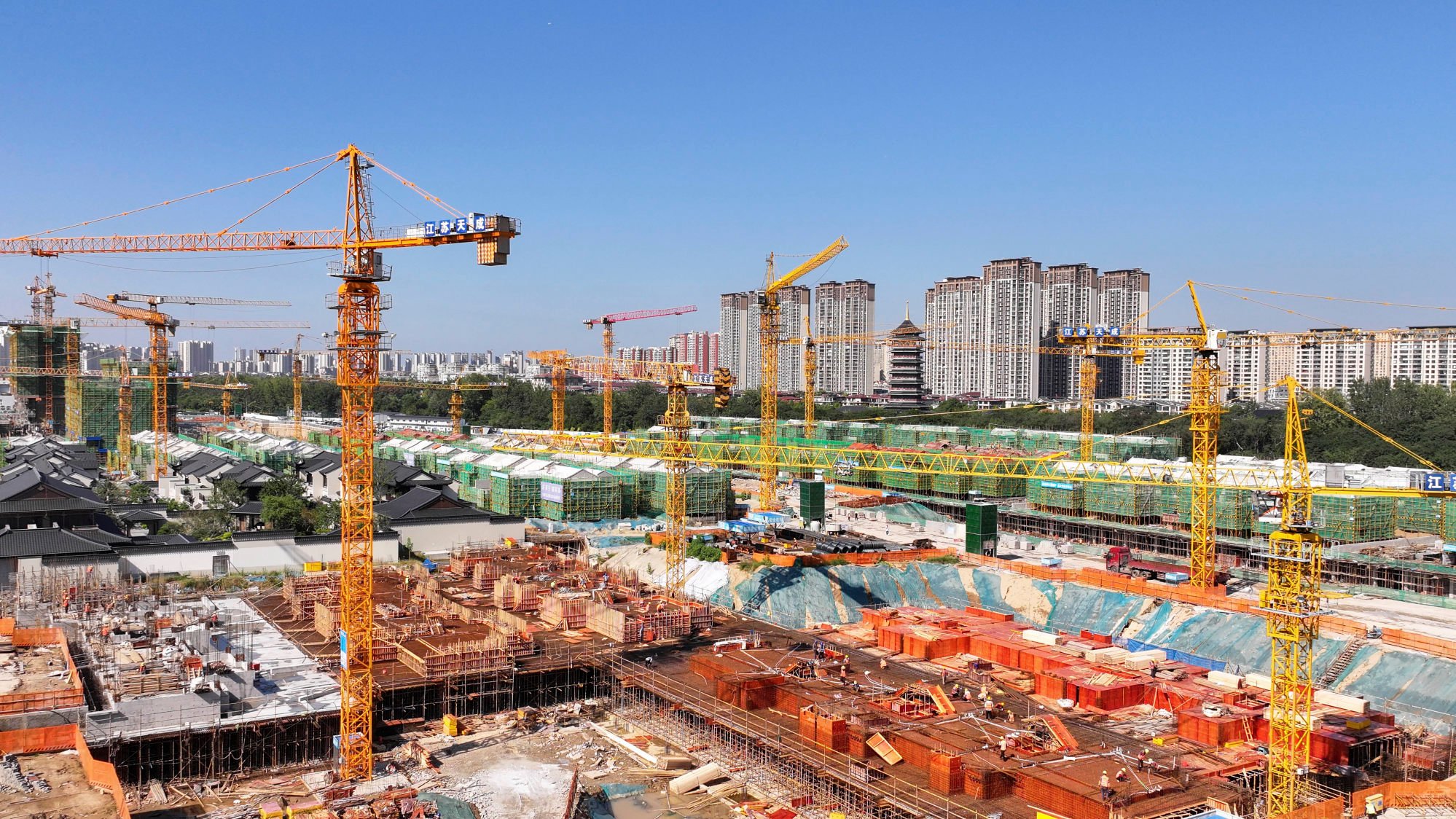
The decline in primary housing volume and prices has also led mainland developers to sharpen their focus on selected tier 1 and tier 2 cities, leading to higher land prices for residential lots in core regions that provide smaller margins.
“In the short term, recurring income could cushion the earnings decline during a property down-cycle, supporting developers that have large rental portfolios with a milder earnings drop,” the Morgan Stanley report said.
It noted that the core earnings of China Resources Land dropped a mere 4 per cent in 2024 versus 2021, despite the continued compression of its development margin. By comparison, the earnings of China Overseas Land & Investment declined by more than 50 per cent in the same period.
In the case of Longfor Group, it was able to maintain decent liquidity by refinancing its mature debt with 90 billion yuan (US$12.6 billion) in long-tenor operating loans in the past two years, even as its property sales shrank by more than 65 per cent in 2024 compared to 2021.
The report noted that both China Resources Land and Longfor owned large portfolios of investment properties, including shopping centres and offices.
Beyond domestic supply-and-demand dynamics, Morgan Stanley said C-Reit in the long term could also track the evolution of developed markets. That means developers would become mainly landlords or even asset managers, whose revenue is backed by strong recurring income assets. -- SOUTH CHINA MORNING POST



