



The world is moving fast into the world of Artificial Intelligence (AI), and the South-East Asia region is also fast rising to its challenge.
In fact, AI is projected to contribute between 10% and 18% of the region's GDP by 2030, potentially up to US$1 trillion.
Led by the Association of South-East Asian Nations (Asean), moves to adapt to AI was even launched as a priority for Malaysia's 2025 Asean Chairmanship. This network connects policymakers, researchers, and industry players to foster safe and inclusive AI adoption.
AI adoption is rapidly growing in Asean, driven by significant economic potential, with a focus on developing collaborative, safe, and ethical frameworks. Key initiatives include the new Asean AI Safety Network, expanded AI governance guides, and programs like AI Class Asean to build regional AI literacy and address risks such as bias, disinformation, and intellectual property infringement.
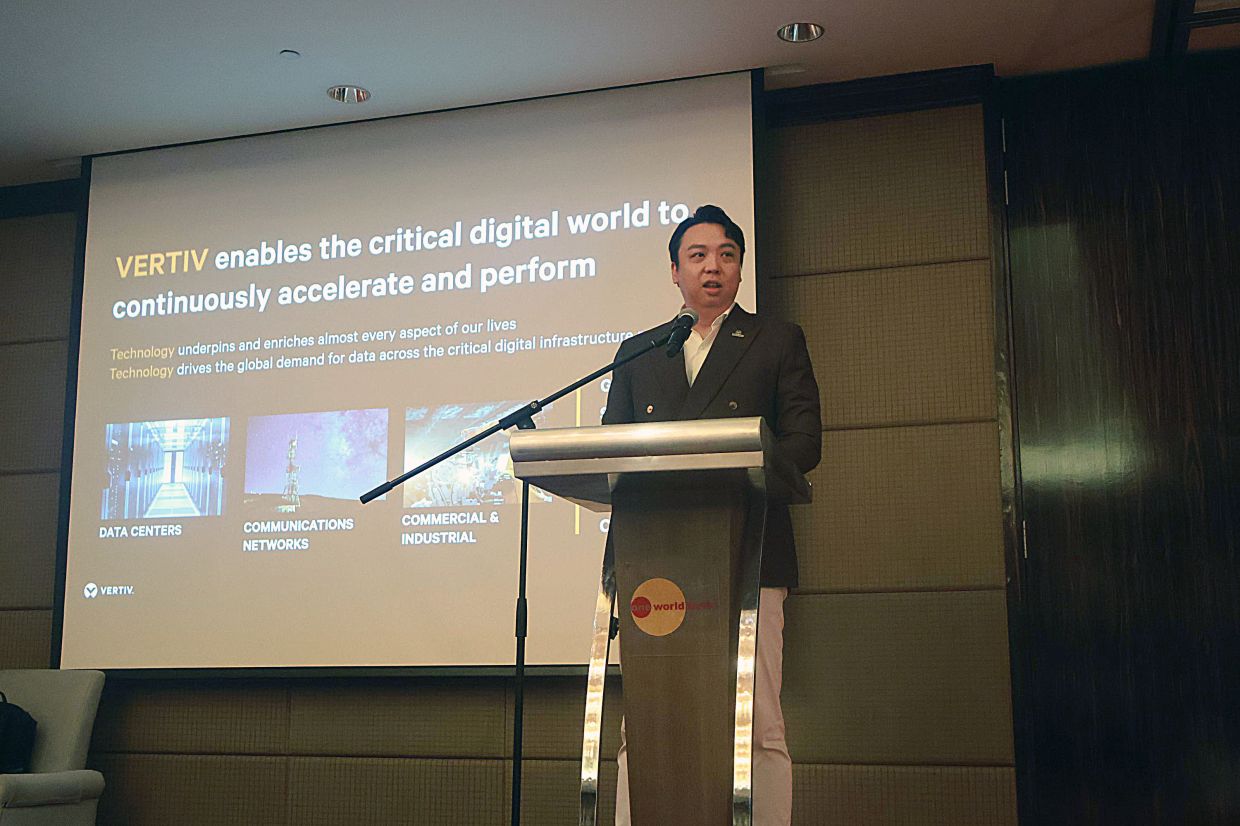
Among the players to drive AI into Asean is expected to be Vertiv, a global leader in critical digital infrastructure for applications in data centres, communication networks, and commercial and industrial environments.

"Across the region, governments, businesses, and communities are embracing artificial intelligence (AI), cloud adoption, and digital inclusion to boost competitiveness, attract investment, and create opportunities for people and businesses alike," said Churchill.
"AI alone is projected to contribute 10%-18% of Asean’s GDP by 2030, and this provides a clear signal that digitalisation is now a collective regional priority."
According to Churchill, the wave of transformation reinforces the urgency of digital infrastructure investment: the data centres, power systems, and networks that form the backbone of Asean's next leap forward.
"The choices made today will shape the region’s resilience and sustainability for decades to come," he added.
"At the policy level, Asean has adopted the Asean Digital Masterplan 2025, with integration and harmonisation as central themes, and digital transformation has moved to the top of the policy agenda for many nations.
"AI adoption, climate commitments, and digital inclusion are being stressed by governments and business leaders, with a strong focus on infrastructure that can keep pace with rising demand while staying sustainable."
Churchill added that there is a broad consensus that the next stage of digital growth will depend on systems that are resilient, efficient, and built to last. With the digital economy set to exceed US$1 trillion by 2030, achieving this potential will require infrastructure that is scalable and aligned to climate commitments.
"Every megawatt saved and every engineer trained strengthens the region’s ability to grow sustainably. Malaysia is a powerful illustration of this ambition. While not the only story in Asean, its progress shows how vision, collaboration, and investment can set a benchmark for
others."
Malaysia has quickly emerged as a hub for regional digital infrastructure. In Johor alone, 42 data centre projects were approved in the second quarter of this year. Policymakers are moving decisively with the National Energy Transition Roadmap (NETR) and MIDA’s Sustainable Data Centre Guidelines, ensuring growth is rapid yet sustainable.
Vertiv has seen this transformation firsthand. Through expanded partnerships with distributors such as Tec D 2 and Innovix 3 , access to advanced solutions is expanding nationwide.
On the ground, projects in Cyberjaya 4 and smart city deployments in Nilai 5 demonstrate how modern power and cooling technologies can support rapid digitalisation while improving efficiency. Together, Malaysia’s progress is more than a national success story; it is a regional reference point showing how growth and sustainability can advance together.
While each country is at a different stage of the AI journey, conversations with leaders
across Asean often return to the same concerns:
1. How can we manage the soaring power and cooling needs of AI?
2. How do we deploy reliable infrastructure fast enough to keep up with the demand?
3. How do we build sustainability while staying competitive?
"These questions reflect three shared pressures: AI-driven power density and cooling demands, ambitious sustainability goals, and shifting regulatory landscapes. On a regional level, Asean is already advancing collective regulation through efforts such as its Good Regulatory Practices framework and harmonised technical standards, all under the Master Plan on Asean Connectivity (MPAC) 2025," said Churchill.
"These steps aim to smooth cross-border trade, investment, and infrastructure deployment across markets. These shared pressures underscore why regional collaboration and knowledge-sharing are essential.
"Malaysia’s regulatory frameworks offer a model, and Asean’s harmonisation efforts are gaining traction. Meanwhile, country-level initiatives like the Philippines’ Vertiv Academy, Singapore’s edge deployments, and Thailand’s government cloud efforts reflect how solutions are emerging in practice.
Preparing for the age of AI
As a whole, AI is moving from experimentation to execution. An IDC study Vertiv had commissioned found that 84% of Asia Pacific organisations have already moved beyond pilot projects, and nearly half expect to realise tangible value from AI by 2026.
This acceleration is redefining what digital infrastructure must deliver. This is echoed in South-East Asia; for instance, Singapore has recently launched a Global AI Assurance Pilot 7, pairing AI testing firms with real-world GenAI deployers. In Indonesia, telecommunications operator Indosat Ooredoo Hutchison (IOH) is collaborating with Nokia and NVIDIA to pilot AI inferencing in its radio access network (AI-RAN) infrastructure 8, one of the first AI-embedded network operations efforts in Asean.
"At Vertiv, we are innovating to meet this challenge. Our reference architectures for NVIDIA’s GB300 NVL72 platform 9, available as SimReady assets in NVIDIA Omniverse, help operators reduce risk and speed up deployment of AI factories. We are advancing 800 VDC power ecosystems 10 to deliver higher efficiency, and evolving liquid cooling and hybrid architectures to support denser, more sustainable workloads," Churchill added.
"These innovations are not only about adding capacity but also enabling Asean’s digital economy to grow responsibly. This keeps sustainability at the heart of progress while ensuring infrastructure is ready for what lies ahead.
"This is why our role is not simply a provider of equipment, but as a partner in building the region’s digital backbone. Whether in Cyberjaya or Cebu, Bangkok or Singapore, our goal is the same: to ensure that Asean’s growth is underpinned by infrastructure that is efficient, reliable, and future-ready.
"Vertiv is now walking alongside leaders and businesses across the region as long-term partners to support their digital ambitions and build infrastructure that is efficient, reliable, and future-ready. By investing in the right infrastructure now, Asean can secure a digital future that is innovative, sustainable, and inclusive."
