SINGAPORE: A consortium has won a contract to deploy driverless vehicles on two public bus services in Marina Bay and one-north from the second half of 2026.
Valued at around S$8.1 million, the contract was awarded to a consortium comprising MKX Technologies, Zhidao Network Technology (Beijing) and BYD.
It is part of Singapore’s push for autonomous vehicles (AVs) to be deployed across the island in the next five years to boost the public transport network.
The contract includes six 16-seater electric buses, AV software and hardware, as well as associated systems needed to run the public bus service.
In its announcement on Thursday (Oct 2), LTA said the vehicles will be piloted on public bus services 400 (Marina Bay) and 191 (one-north) for an initial period of three years.
Service 400 serves the Marina Bay and Shenton Way areas, stopping at Marina Bay Cruise Centre and Gardens by the Bay, as well as Shenton Way and Downtown MRT stations.
Service 191 plies the one-north area. Besides Buona Vista bus terminal, it also stops at one-north and Buona Vista MRT stations.
After the six units are deployed, LTA can procure 14 more driverless buses from the consortium and expand the pilot to more public bus services in Singapore.
MKX Technologies, which is owned by a Singapore subsidiary of Chinese online vehicle financing company Yixin Group and Japanese electric car-sharing company MK.X, will lead the local research and development, as well as project management work.
Zhidao Network Technology will provide the AV software, as well as hardware like the Light Detection and Ranging sensors, cameras, fleet management and remote operations systems.
The company is linked to Chinese autonomous driving start-up Mogo Auto, which is backed by technology conglomerate Tencent.
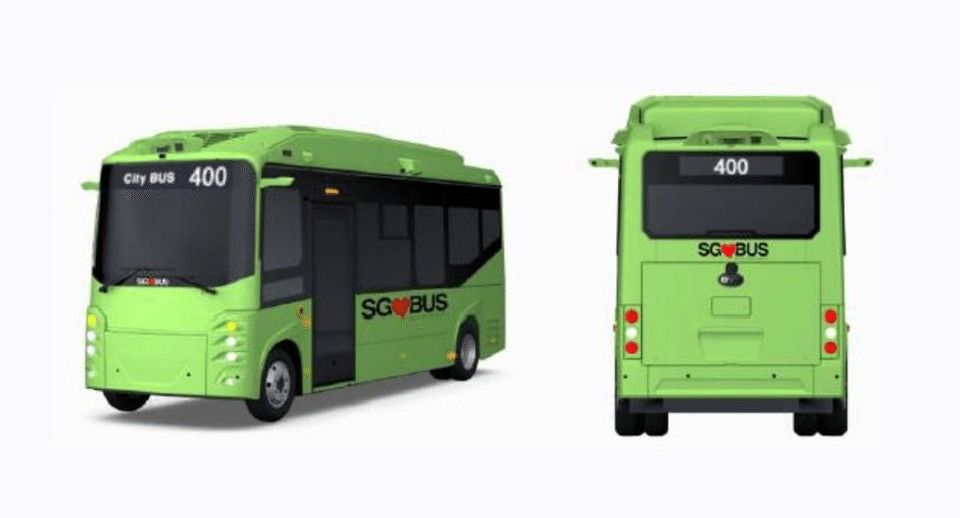
Chinese carmaker BYD will supply the electric buses.
The driverless vehicles will have features similar to those of existing public buses, including designated spaces and ramps for wheelchairs, personal mobility aids and strollers.
They will run alongside manned buses as part of a hybrid fleet. During the pilot phase, the fares will be identical to those in the standard service.
LTA will test the driverless buses before they are deployed. It said that it will work closely with the consortium to ensure that the buses and supporting systems are operationally ready.
Initially, a safety operator will be stationed in each of the driverless buses at all times, while LTA will monitor in real-time how the buses are performing and ensure they comply with regulations.
Public transport operator SBS Transit, which runs the two bus routes, will gather feedback from commuters to review and improve the driverless bus operation.
When the autonomous vehicles are confirmed to run safely and smoothly, the safety operator onboard will be replaced by one stationed in a remote control centre. A customer service officer will then be deployed on the buses to assist commuters.
To enable existing bus drivers to serve as safety operators and operate the autonomous buses competently and confidently, the consortium will work with the Singapore Bus Academy to provide the necessary training, LTA said.
The tender was called by LTA in January to evaluate using AV technology for public bus services.
The authority said the four proposals received were evaluated based on the maturity of the AV technology, the AV developer’s track record in local and overseas deployment, and their capability to meet the operational needs of public bus services.
The Straits Times previously reported that the other three proposals were by the local offshoot of Chinese self-driving technology company WeRide, a consortium led by Malaysian bus operator Handal Indah, and vehicle distributor Cycle & Carriage.
The announcement on Oct 2 comes after the launch of the self-driving shuttles in Punggol on Sept 20. The vehicles used are five- and eight-seaters, and the three routes are different from existing public bus service routes.
Acting Transport Minister Jeffrey Siow said on Sept 20 at the launch of the autonomous shuttles that the Government aims to have between 100 and 150 self-driving vehicles by the end of 2026. - The Straits Times/ANN