
Hong Kong is picking up the pieces as schools resume classes, businesses assess losses and workers tackle the widespread destruction caused by powerful typhoon Ragasa, which brought the city to a standstill for nearly two days.
The Hong Kong Observatory cancelled all typhoon warning signals at 11.20am on Thursday.
It noted that the threat posed by Ragasa, which triggered the highest-level No 10 hurricane warning for nearly 11 hours the previous day, had diminished significantly.
Education authorities also announced that afternoon kindergarten classes would resume, while lessons in the morning remained suspended.
Ragasa edged as close as about 100km (62 miles) to the south of Hong Kong on Wednesday morning, disrupting work and transport services and forcing the suspension of school classes for nearly three days.
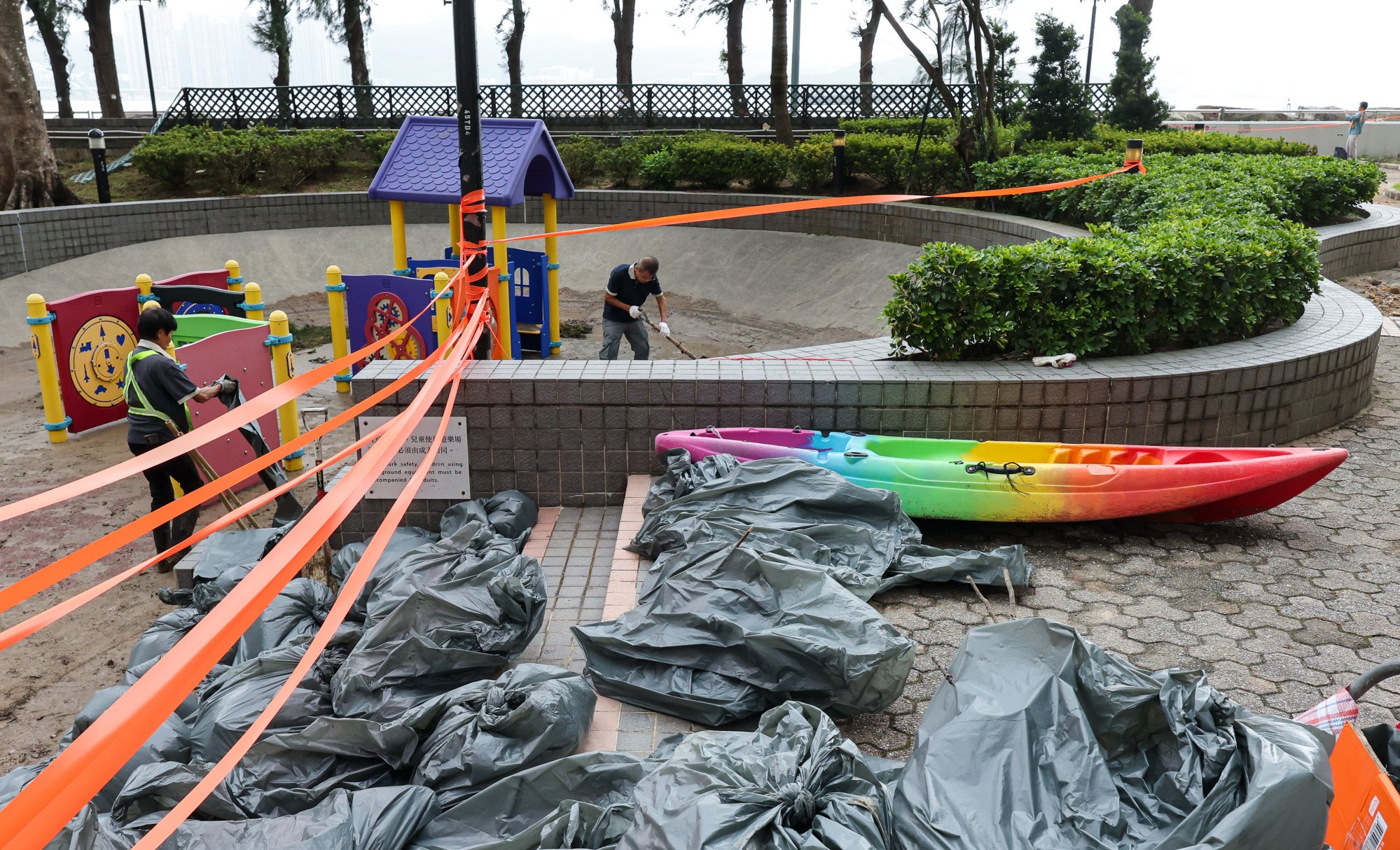
In Heng Fa Chuen, a flood-prone coastal residential complex on the eastern side of Hong Kong Island, many cleaners and workers were seen clearing debris earlier in the day.
They shovelled mud and grass washed in by seawater and set up bright orange cones to warn people to stay away from fallen trees.
A children’s playground was closed due to the significant cleaning required. Trash, including a kayak, had been removed from the area, which lies lower than the surrounding landscape.
But some residents and workers said the damage this time was minimal compared with the devastation caused by Super Typhoon Mangkhut, which triggered the No 10 signal in 2018.
“The damage looked much smaller this time than during Mangkhut,” said Pierre Choi, a 62-year-old retiree who has lived in Heng Fa Chuen for about a decade.
He recalled that the winds reminded him of those during Mangkhut, which prompted him to stay indoors all day.
When he finally headed out on Thursday morning, he felt the impact was less severe than in 2018.
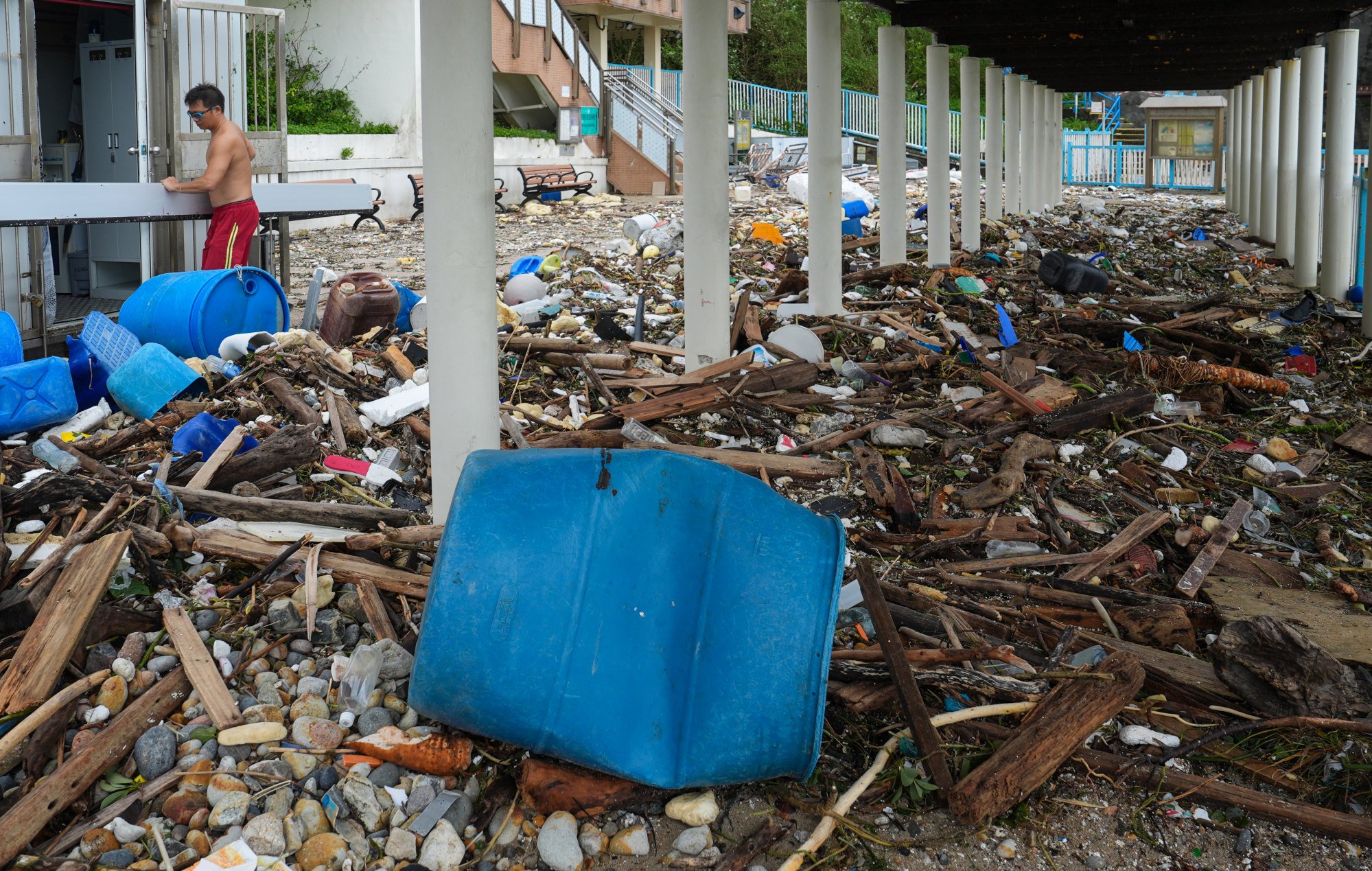
“Last time, we could barely walk outside the next morning because the pavement bricks near the water were lifted and broken. Many lifts did not work due to flooding,” Choi said, crediting the improved outcome this time to the housing management team’s early warnings and better preparations, including timely floodgate installations.
In Tseung Kwan O, one of the hardest-hit areas in the city, flood barriers in front of three restaurants at Monterey Place shopping centre were blown into a mountain of debris, with plates, glasses, chairs, tables and cushions washed out from the eateries.
Along the nearby promenade, sections of metal railings that had been welded into the ground were blown off and twisted, blocking pavements and biking routes, with slabs of stone peeled off from concrete walls and bricks, as well as tiles on the ground lifted in large chunks.
An underpass for a biking route was flooded, metal road signs were bent and three cast-iron public benches were believed to have been blown away, leaving only remnants of their legs.
Staff at Monterey Place were seen inspecting the damage, making notes of cracked walls and cordoning off areas. Flood barriers were collected from the pile of debris.
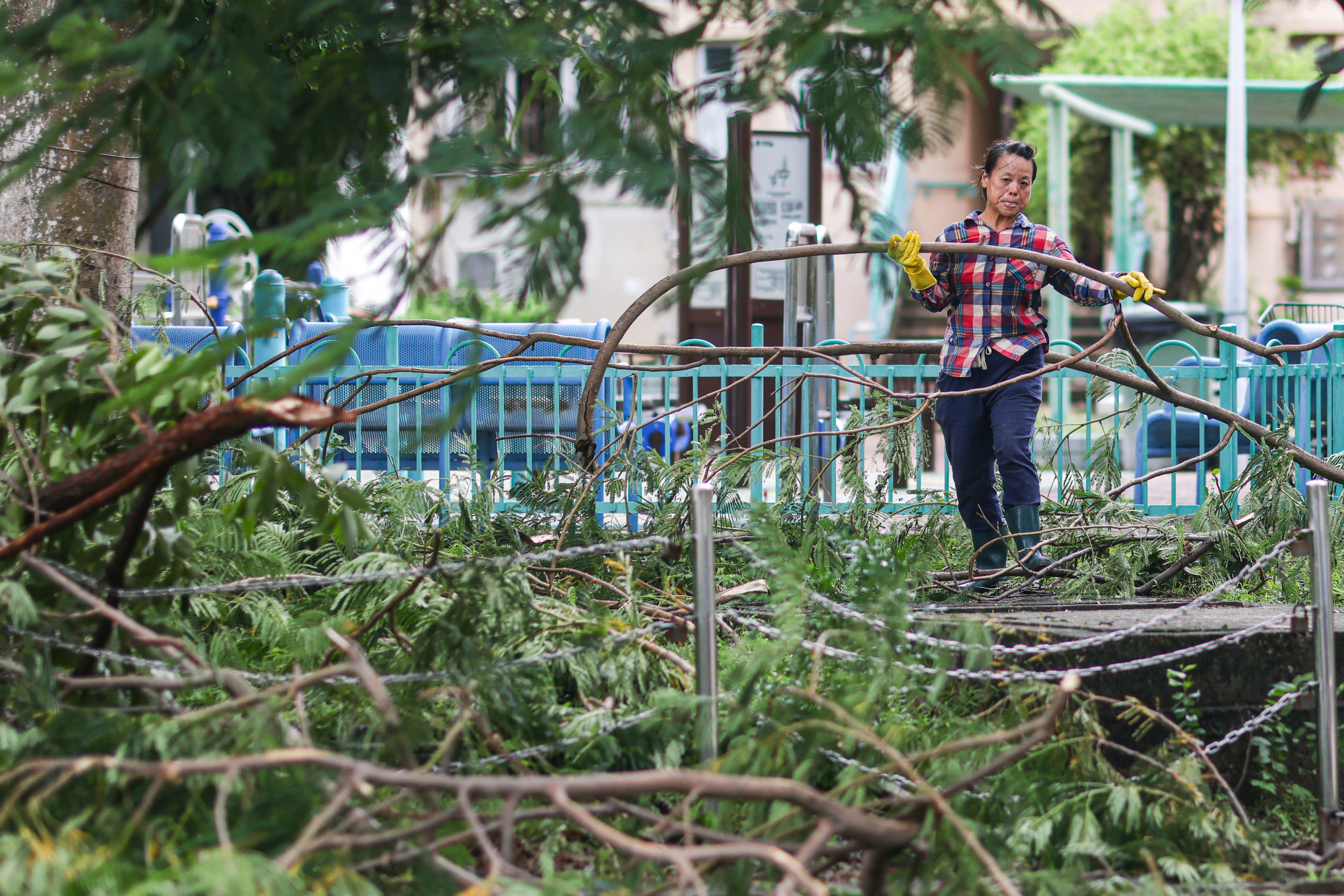
Neighbourhood resident Ashitha Hegde said the extent of the storm was beyond her expectations, adding she had dined at the affected establishments before.
She said more could be done to prevent similar situations from happening again, but it could be hard to “escape nature’s fury”.
At Laguna Verde along the Hung Hom harbourfront, residents were out viewing the damage caused by a barge that rammed the embankment near the residential estate.
The immediate site of the impact was lined with shattered glass and fragments of the barriers separating the pedestrian pathway and the sea. The area was also fenced off as workers inspected the damage.
Vincent Leung, a resident at the estate for more than 10 years, said it was the first time he had seen something like this happen at the site.
“I use this promenade a lot. Many people use it to do exercise, such as running from one end to the other,” the 73-year-old retiree said. “I think there is nothing much they can do. At most, they can make some wooden panels to protect the barriers.”
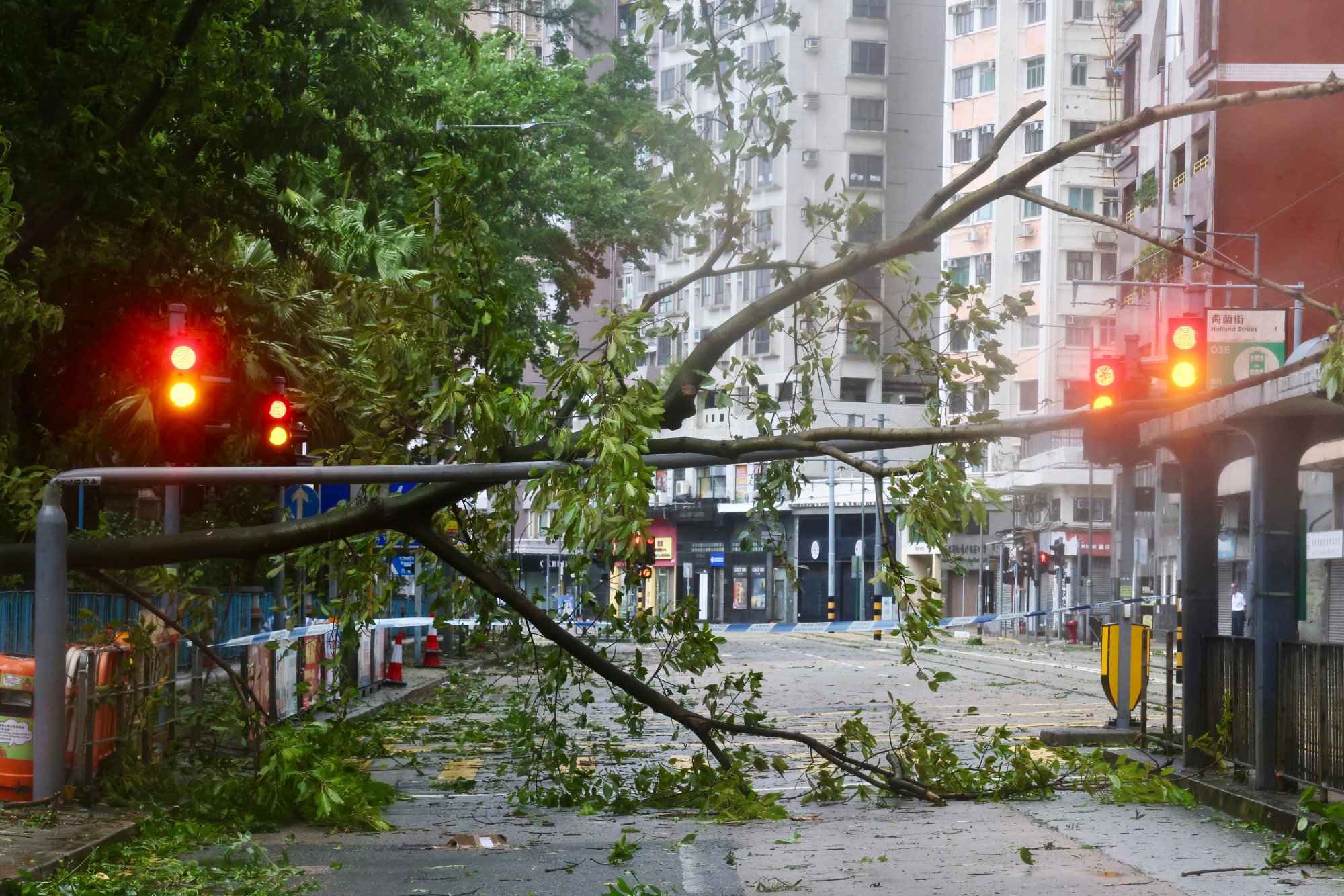
Leung noted that in the long term, authorities would have to change their city planning to address the potential effects of climate change as extreme weather events were expected to increase.
Albert Au, a resident of the nearby Whampoa Gardens residential estate and a frequent user of the promenade, said he thought it was likely to take a while to repair the area.
“I think it’s the shipowners’ responsibility to prevent something like this from happening again as what could the residential estate do to prevent something like this?” the 64-year-old retiree said. -- SOUTH CHINA MORNING POST