
This summer, Hu Jia and her family opted to skip Thailand’s iconic beaches and ornate temples, a short flight from her home in China’s Sichuan province. Instead, she booked a two-week trip to Vietnam amid growing Chinese concerns over Thailand’s safety.
“Vietnam has its own unique charm,” said Hu, 33, who spent just under US$3,000 (RM12,613).
“I really love places that feel natural and untouched. If I get the chance, I’ll definitely come back.”
Hu and her family are among a new wave of 3.5 million arrivals from China that’s fuelling Vietnam’s record tourism this year and helping to unseat Thailand as the top regional destination for mainland visitors.
Fears over scam centres and the high-profile kidnapping of a Chinese actor in January have kept tourists away from Thailand, sending its arrivals from China plummeting about 35% this year.
Vietnam’s boom is part of a major realignment in South-East Asia’s multibillion-dollar tourism industry, coming at the expense of regional titan Thailand.
The redirection potentially means US$3.5bil (RM14.7bil) in lost revenue for Thailand that’s now going to Vietnam and other neighbours, according to China Trading Desk, which tracks Chinese travel spending.
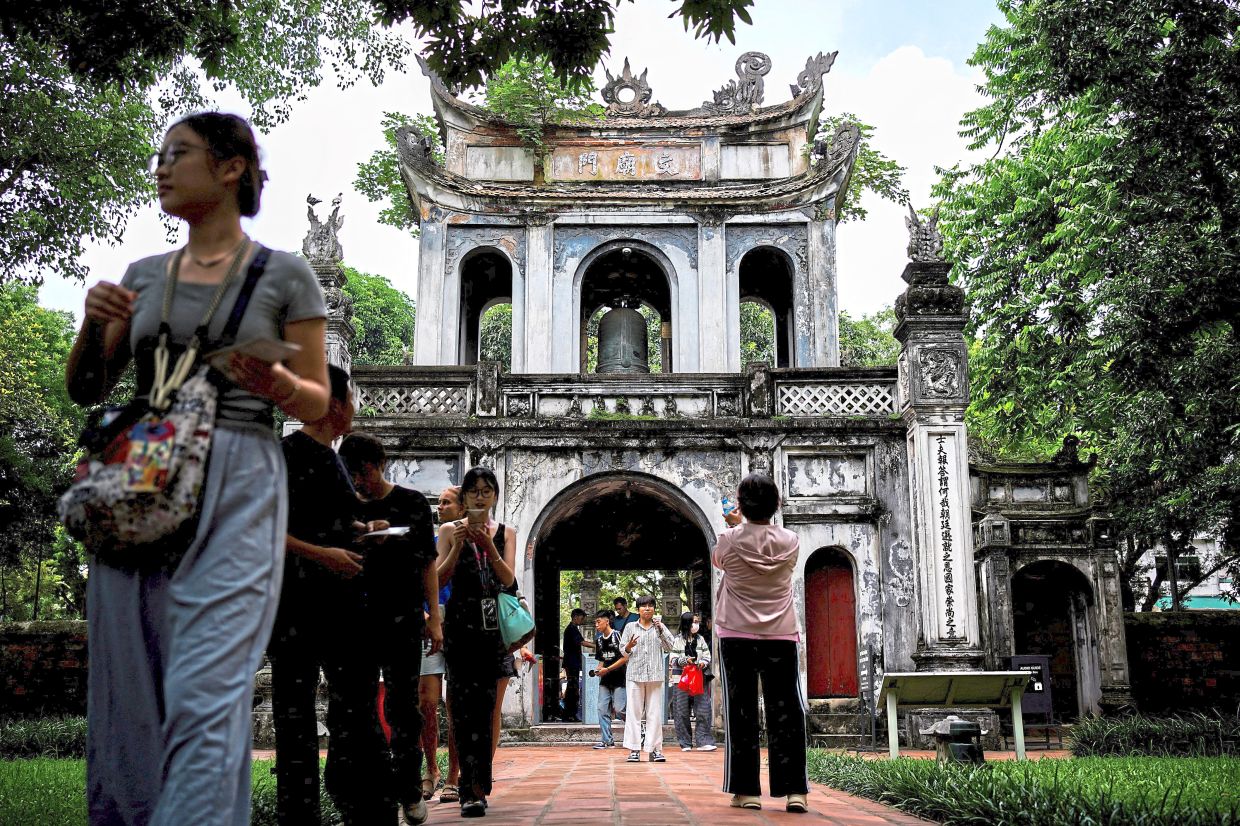
The shift is driven by a new wave of independent Chinese travellers, signalling a fundamental change in the preferences of the world’s largest travel market.
“For this new group of Chinese travellers, Vietnam offers something fresh,” said Subramania Bhatt, CEO of China Trading Desk. “Many visitors feel Vietnam is more off the track, a bit more authentic.”
Vietnam has logged a record- breaking nearly 14 million foreign arrivals so far this year, with visitors from China posting a 44% year-on-year gain through August.
Malaysia has also seen a 35% gain in mainland visitors in the first half of the year, with airline seat capacity from China jumping nearly 50%.
The country’s new visa-free entry for Chinese nationals, along with a weaker ringgit, is expected to pull in even more mainland adventurers, said Shaharuddin Saaid, executive director of the Malaysian Association of Hotel Owners.
The Vietnamese government and private tour companies are focused on attracting more foreign tourists, especially those from China.
In the coastal city of Danang, big, bold Chinese characters now adorn everything from hotel entrances to street food stalls and massage parlours.
Hotels are hiring Mandarin-speaking staff or using translation apps to communicate with guests.
Some are abandoning chartered budget travel, in which hordes of tourists traipse through cities behind tour guides carrying flags and looking for deals.
“They don’t want to be pushed into a bus, taken to a destination, taken to a hotel, taken to a shop where everything feels very Chinese,” Subramania said.
And they are increasingly willing to spend more money.
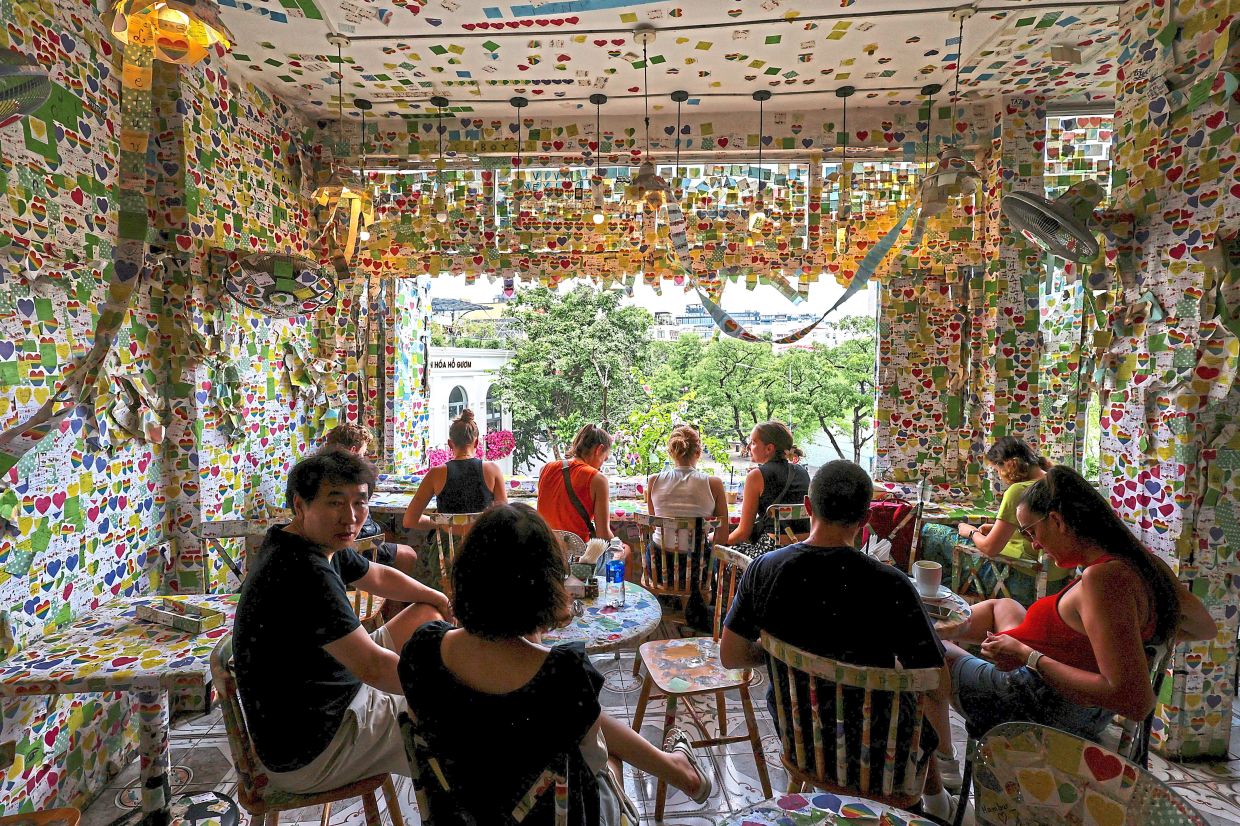
Hava Travel, a tour operator in Danang and Nha Trang, pivoted from budget travellers to boutique tourists. The agency served about 2,000 clients seeking curated experiences in August, a 20% spike from the start of the year.
Across from the Crowne Plaza Danang resort that features the city’s only casino, the Viet Lam Ban Vi restaurant’s private rooms cater to high-rollers by serving up fresh seafood and hotpot with Cantonese flavours.
Some of the mainland tourists are likely “big bosses” who come for work, golf and gambling, said restaurant staff. They dine in white-marbled private rooms that feature gold chandeliers.
Bills often run more than US$400 (RM1,682), a typical factory worker’s monthly salary, and are paid nonchalantly.
That spending is driving the country’s tourism retail sales, which have soared about 51% this year through August compared to last year, according to market analysis firm BMI.
Its analysts expect Vietnam to attract a record 22.6 million arrivals this year, topping the 2019 high of 18 million visitors.
But as Vietnam celebrates, the mood in Thailand is starkly different. In the first eight months of 2025, one-way airline seat capacity from China to Thailand fell by more than 11% year-on-year to 5.1 million, according to Cirium flight analytics.
Though visitors from the mainland still constitute Thailand’s biggest source market, their dwindling numbers contributed to a 7% drop in overall foreign visitors through August, despite strong gains from other markets like Europe and the United States.
The abduction and rescue of Chinese actor Wang Xing, who was lured to Thailand and trafficked to Myanmar by an online scam gang, continues to deter travellers.
“Chinese travellers who have never been to Thailand are still scared,” said Thienprasit Chaiyapatranun, president of the Thai Hotels Association. “We have done a very poor job in publicising how the government has cracked down on call centre scams and boosted security.”
Thailand is also losing its reputation for value. Mainland visitors complain on social media about price hikes on hotels, food and taxi rides post-pandemic.
Still, there’s hope for a recovery in the coming winter season.
“Bangkok is still ranked the most revisited destination in Asia on our platform,” said Damien Pfirsch, Agoda’s chief commercial officer, who sees a possibility of reversing the declines.
“We need a quick turnaround in Chinese travellers to help push the industry to have a great time again.” — Bloomberg