
More than 40 million Amap users logged on to test its artificial intelligence-powered ranking service, as Alibaba Group Holding’s answer to Google Maps started ranking mainland destinations and providing recommendations for 1.6 million establishments.
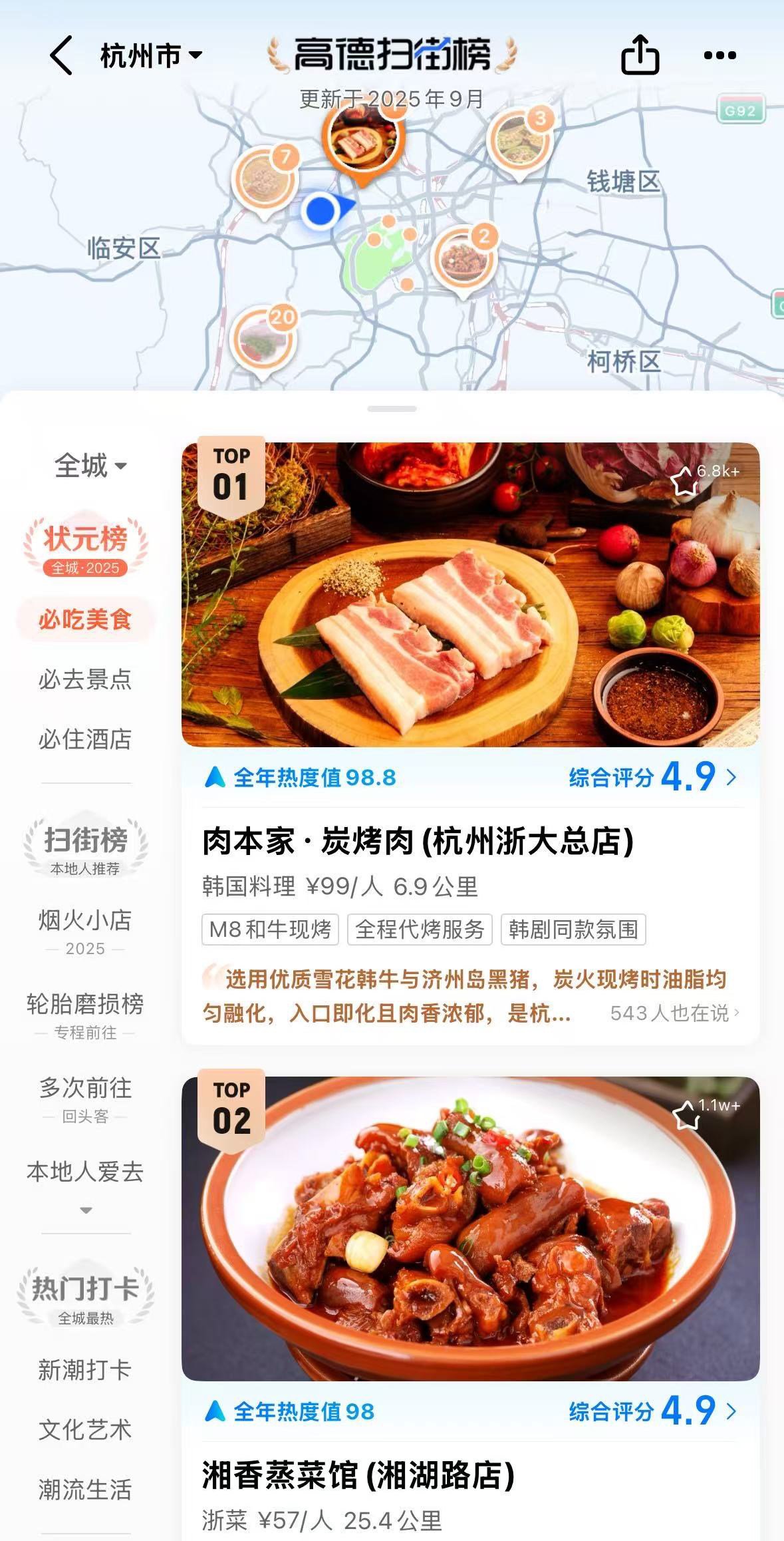
Amap Street Stars – which uses AI algorithms to rank destinations including restaurants, hotels and tourist attractions – recorded that many users on its launch on Wednesday, as the mapping app positioned itself as a gateway for lifestyle services, according to data released by the Alibaba unit on Thursday. Alibaba owns the Post.
That initiative marked “a significant step towards Alibaba’s vision for a super-app strategy”, JPMorgan analysts said in a research note on Wednesday. “Amap is increasingly positioned as Alibaba’s primary entry point for offline local services, running parallel to Taobao as the online traffic entrance.”
The new service could also be “another hit to Meituan’s cash cow”, the note said. Amap Street Stars posed a direct challenge to Dianping, Meituan’s user review service.
Amap’s AI-powered ranking service represents Alibaba’s latest shot at on-demand delivery giant Meituan, as their competition in the instant commerce segment continues to heats up.
Many Chinese users on Thursday hailed Amap Street Stars’ combination of ranking and navigation features, which US internet giant Google’s Maps app provides in most markets outside mainland China.
“I am happy to see there’s finally an app on its way to becoming the Google Maps in China,” said Shi Pei, who lives in Shanghai. The service has made it more convenient for users to search for the most popular restaurants and proceed there, she said.
“There were good rating services and good mapping services before, but it was just inconvenient for a person to switch between different apps,” she added.
Another Shanghai resident and long-time Dianping user, David Zheng, said he tried the Amap service on Thursday to locate a highly ranked beef noodle shop.
“The meal was good,” he said. “I will now consider using the Amap rankings when travelling to other Chinese cities.”
According to Li Chengdong, founder of Beijing-based consultancy Dolphin Think Tank, Amap’s most valuable asset was the high user base that it has generated over the years.
As of August, Amap had about 170 million daily active users, while Dianping had more than 30 million, according to data from Amap and market research firm QuestMobile.
Alibaba’s latest attempt to boost its in-store business could help it improve profit margins, as the fierce instant commerce war with Meituan weighed on both companies’ earnings, Dolphin Think Tank’s Li said.
“In-store business is more profitable, while Alibaba’s on-demand delivery business has been losing money for years,” he said.
Following the launch of Amap Street Stars, speculation has risen that the service could be combined with Taobao Shangou, Alibaba’s instant commerce unit, particularly in generating business from restaurant recommendations.
Over the past few months, Alibaba has made efforts to pull together different business units to boost its e-commerce ecosystem, transforming itself into a comprehensive consumer platform, according to a mission statement by Alibaba CEO Eddie Wu Yongming.
“In consumption, our long-term goal is to create a comprehensive consumption platform catering to our one billion consumers’ full spectrum of shopping and daily life needs,” Wu said last month. “We aim to offer the best experience to the largest consumer base with the highest purchase frequency, ultimately leading in a 30 trillion yuan (US$4.2 trillion) addressable market.” - SOUTH CHINA MORNING POST