
Divers have spent more than a month searching a lake south of Manila for the bodies of men with links to the Philippines’ bloody national obsession: cockfighting.
They were murdered by rogue police, a government witness says, allegedly for rigging matches at the height of the country’s pandemic-era craze for betting on live-streamed cockfights, or “e-sabong”.
The disappearances led then president Rodrigo Duterte to announce a total ban, but three years later, the e-sabong industry is still thriving.
On a recent Saturday in the Manila suburb Bulacan, cockfighters, or “sabungeros”, cracked grim jokes about their missing compatriots.
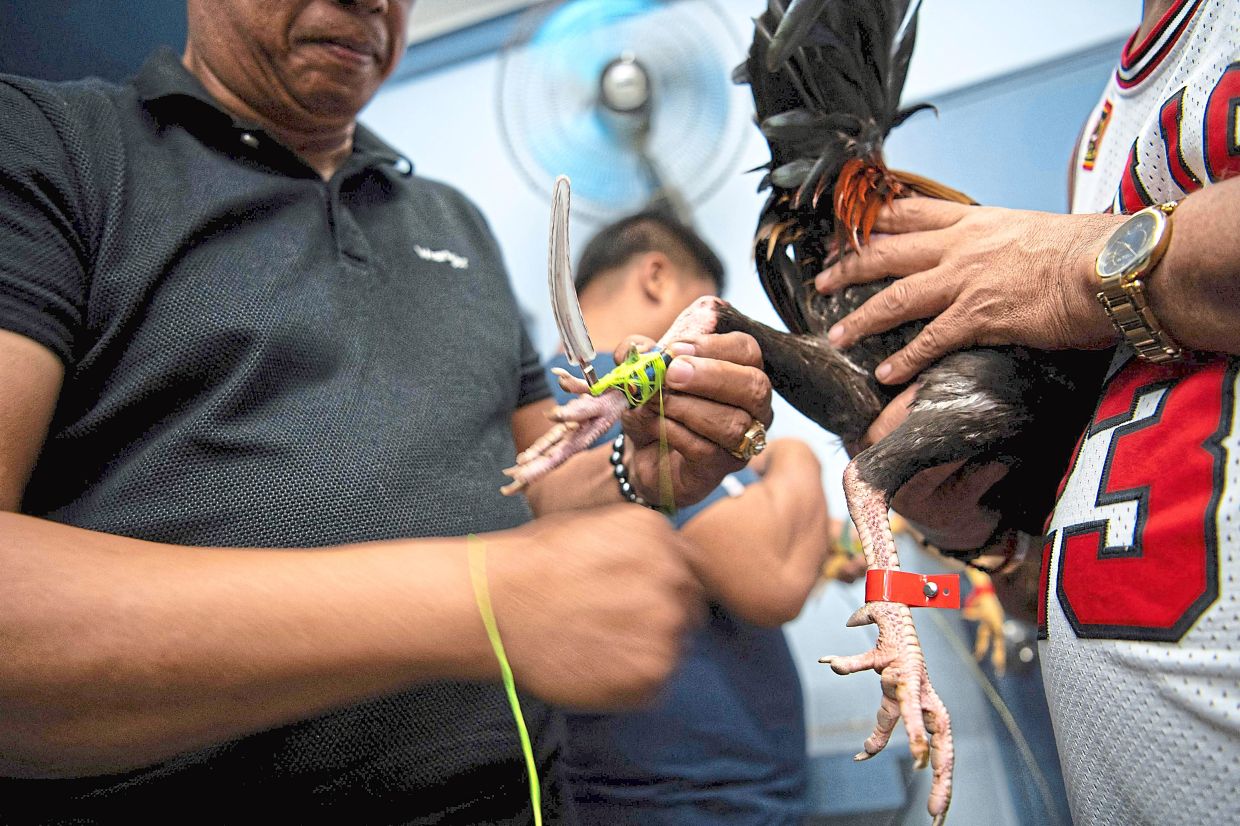
Inside the “tarian”, a crowded room where blades are attached to each bird’s leg, sabungero Marcelo Parang insisted the murders had nothing to do with the legal cockfighting world.
“We don’t know if (the men killed) did something bad,” said the 60-year-old.
“We’re not scared ... In here, we’re peaceful. In here, the matches are held fairly,” he said of the deadly contests.
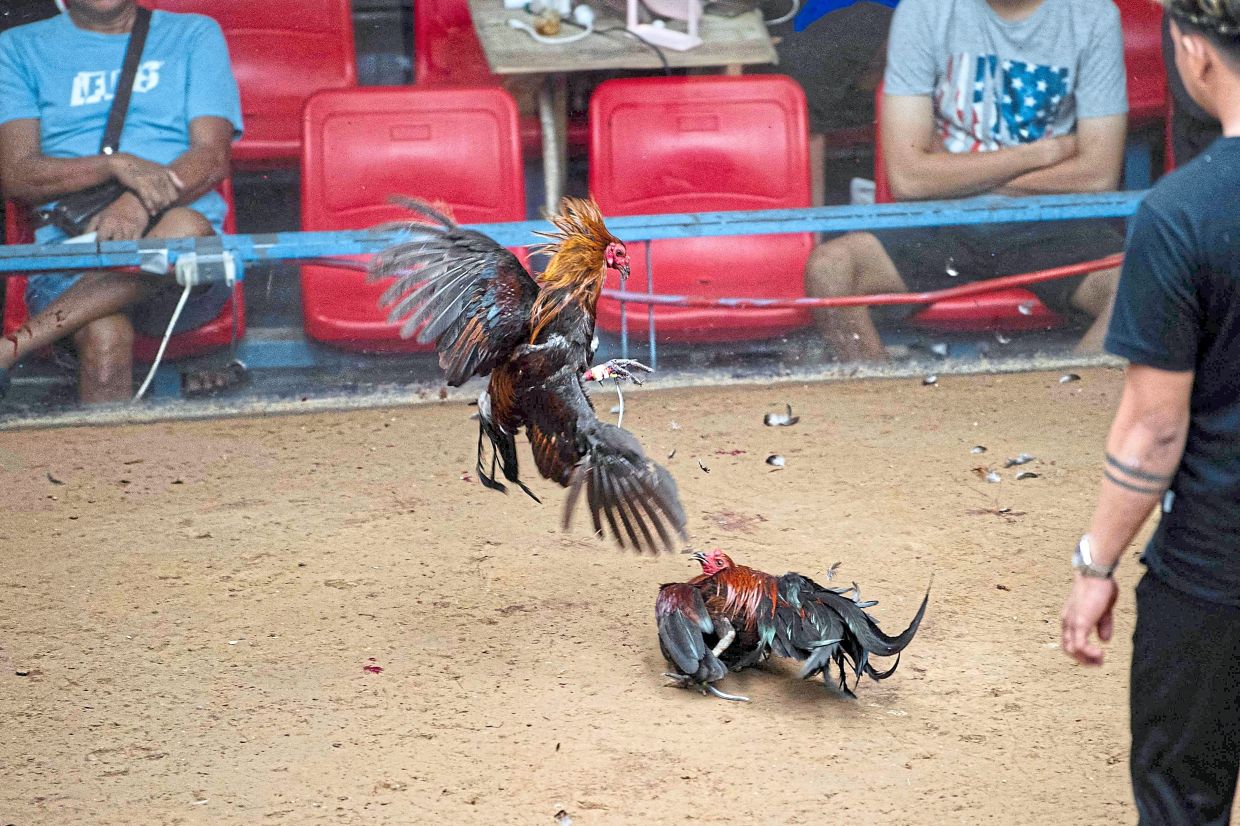
Outside, the crowd in the 800-seat arena roared as another bout ended with the losing rooster unceremoniously dumped in an empty paint bucket.
Cockpits like the one in Bulacan were once a second home for Ray Gibraltar, who grew up in a family of cockfight enthusiasts. One uncle was a breeder.
When the fights moved online during the Covid-19 pandemic, the former director-turned-painter began wagering on them as well.
But the easy access, anonymity of the online world, and sheer volume of betting sites can lead to e-sabong addiction, and within a year, Gibraltar was winning and losing upwards of US$15,000 (RM63,160) a day.
“I wasn’t eating. I was just drinking coffee and smoking ... I had no sleep,” he said of a three-day session. “In terms of money that I lost on e-sabong ... I could have bought a house and car,” he said, adding he “borrowed money from everyone”.
Before checking into rehab, he wagered the last 300 pesos (RM21) in his e-wallet.
The story is a familiar one for Reagan Praferosa, founder of Recovering Gamblers of the Philippines, who says few clients show up before hitting rock bottom.
“They won’t call us if they still have money,” he said.
His first e-sabong addicts began arriving in 2020.
Since then, about 30% of his caseload has revolved around the livestreamed fights.
“(At arenas) you had to go somewhere to cash out. Now ... it’s connected to an e-wallet,” he explained, adding other forms of gambling were now taking their cues from e-sabong.
“Most of the sites have replicated their platforms.”
Jay, a graphic artist, still logs onto an illegal website every time he gets his paycheck.
The 24-year-old, who asked to use a pseudonym as he fears his family’s judgement, showed how wagers for as little as 10 pesos (RM0.70) could be placed on two roosters shown on his phone.
Authorities estimate bettors like Jay are fuelling an industry that generates millions of dollars in revenue each week.
“It’s not the money I’m after, it’s the thrill,” he explained of an addiction he says he is trying to control.
“It’s easier to chase that in (e-sabong) because it’s available on my cellphone.”
While gambling for relatively low stakes, Jay has found himself forced to make excuses after losing the money meant for his younger brother’s school supplies.
Since the e-sabong ban was initiated, the country’s telecoms commission has blocked more than 6,800 e-sabong websites, police Brig-Gen Bernard Yang said.
But the use of VPNs makes pinpointing the streams’ true origins nearly impossible.
Asked for examples of IP traces that had led to raids, he pointed to a successful operation in the central Philippines’ Cebu province – though it had taken place years earlier.
While conceding that current penalties – with fines as low as 1,000 pesos (RM70) – provide little deterrent, Yang insisted the problem was simply “not so grave anymore”.
But Senator Erwin Tulfo on Friday told Congress e-sabong remained a menace as he pushed the country’s central bank for action against a range of online gambling sites.
Hours later, the monetary authority issued a directive that e-wallet firms remove their links to illegal websites within 48 hours.
Congressman Rolando Valeriano, who said the situation remains “very alarming”, has authored an anti-online cockfighting and gambling Bill that would dramatically increase fines and jail terms.
“In every community, you can see children who know how to (bet on) e-sabong. That’s what was worrying me,” he said.
“This might be a lonely battle, but we will keep on fighting.”
The fight could be lonely indeed.
A day after the new session of Congress began, a photograph, verified by AFP, began circulating in local media.
The image was of a congressman staring at his smartphone during the vote for House Speaker. He was watching a cockfight. — AFP