SINGAPORE: As artillery fire echoed along the Cambodia-Thailand border in July, Asean moved swiftly, but discreetly, behind the scenes.
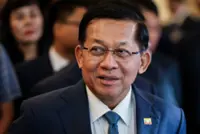
Its intervention was pivotal in halting the most serious intra-Asean fighting in more than a decade, said Secretary-General Kao Kim Hourn (pic) in an exclusive interview with The Straits Times on Aug 5.
“I think what it has done constructively is to keep it under control, and then try to de-escalate. And then after that… they go back to negotiate,” he said, referring to the two Asean neighbours.
Kao noted that Asean had focused on managing the conflict rather than resolving its deeper political causes.
Domestic dynamics in both Thailand and Cambodia – exacerbated by online nationalism and disinformation – had made substantive mediation difficult, he said. Still, he saw the eventual outcome as a success.
A fragile ceasefire between Cambodia and Thailand was brokered in Kuala Lumpur on July 28, following emergency mediation led by Malaysian Prime Minister Datuk Seri Anwar Ibrahim, whose country holds the Asean chairmanship in 2025.
The talks, backed by the United States and China, brought together Cambodian Prime Minister Hun Manet and acting Thai Prime Minister Phumtham Wechayachai for a face-to-face, ending five days of clashes that left more than 40 dead and displaced over 300,000.
Kao said that Asean’s intervention, particularly by Anwar, was aimed at ensuring the situation did not spiral out of control. Within just five days, he noted, the mediation efforts had taken effect, and the grouping’s actions had constructively helped keep the conflict contained.
“The Malaysian Prime Minister moved swiftly to address this issue head-on, and (it shows) that Asean is still very much relevant,” he said, praising Malaysia’s prompt diplomatic push.
Regarding his own role in the talks, Kao, a Cambodian, was unequivocal: “I have to perform my duties as Secretary-General of Asean, not as representative of Cambodia.
“I have to be seen as absolutely impartial, neutral, very clear.”
To that end, he had made it a point to be transparent in all dealings with ministers and colleagues from all Asean countries.
Before he took the office of Asean Secretary-General in 2022, Kao said, Cambodian leaders had reminded him: “You’re not Cambodia.”
Even with de-escalation, Kao warned that the situation in Thailand and Cambodia exposed a worrying trend: the rise of online nationalism and disinformation.
On social media, nationalist memes and misinformation circulated widely in both countries, stoking tensions even after the ceasefire was announced. Online users traded blame, revived old grievances, and in some cases, agitated for action.
Kao said such rhetoric posed real dangers, noting that Cambodian authorities had issued clear instructions to the public to refrain from sharing provocative material and warned that individuals would be held accountable for what they posted.
“We don’t want to have permanent damage, so we want to recover as soon as possible the (ties) between the two countries,” he said.
The flare-up between Thailand and Cambodia, he added, should serve as a “wake-up call” for Asean to make sure that it works hard to keep the peace and treat everyone in the region like friends and family.
“Yes, we have challenges… But we have to manage, we have to resolve, we have to sort out those challenges. We cannot expect that everything is going to be smooth sailing,” he said.
To support the fragile ceasefire, Kao said Asean is exploring the deployment of a monitoring team.
Details are under discussion. “Right now, they are still talking (about) what kind of composition, what are the standard operating procedures,” he said, adding that all member sates are welcome to contribute personnel voluntarily.
Cambodia has also requested assistance from the Asean Coordinating Centre for Humanitarian Assistance on disaster management (AHA Centre), the regional body tasked with coordinating relief efforts during natural disasters and emergencies.
Set up in 2011 and based in Jakarta, the AHA Centre has historically focused on responding to typhoons, earthquakes and floods. But it has also been deployed in conflict-related situations involving humanitarian needs.
It was activated in 2021 to provide aid to Myanmar in the wake of political unrest and internal displacement following the military coup. It was also involved in delivering assistance during the 2017 Rohingya refugee crisis, helping coordinate Asean’s response to the humanitarian fallout in Rakhine state.
Looking to the future, Kao said Asean’s long-term strength would depend not just on conflict management but also on its ability to evolve and adapt.
One of the key developments on the horizon is the accession of Timor-Leste as Asean’s 11th member.
The South-East Asian nation of 1.4 million formally applied to join Asean in 2011 and received in-principle endorsement in May. Its membership is expected to be formalised at the 47th Asean Summit in October.
Kao said the Timorese government has been moving quickly and has shown a strong commitment to joining Asean. He noted that officials from Timor-Leste have been attending a wide range of meetings to familiarise themselves with the grouping’s procedures, processes and protocols.
“To their credit, they have been working very fast, and it has been very forthcoming,” he said. “They are ready by October this year to comply with the decision of Asean leaders.”
He added that Timor-Leste’s preparations go beyond the foreign ministry and involve aligning the entire government system with Asean’s requirements, which include adopting legal instruments and treaties, as well as participating in capacity-building programmes and training.
But Kao noted that Asean today is far more complex than during earlier waves of expansion, and noted how the work does not stop with membership to the group.
A pressing task is the conclusion of the Code of Conduct (COC) in the South China Sea, a long-delayed framework intended to reduce tensions in one of the world’s most contested waterways.
Four Asean member states – the Philippines, Brunei, Malaysia, and Vietnam – along with China and Taiwan, have overlapping claims in the area.
The Philippines, which will assume the Asean chairmanship in 2026, has signalled a strong desire to fast-track the COC.
Philippine President Ferdinand Marcos Jr. called for “the urgent need to accelerate the adoption of a legally binding code of conduct… to safeguard maritime rights, promote stability and prevent miscalculations at sea” during the 46th Asean Summit in May.
Negotiations with China have dragged on for more than two decades since the 2002 Declaration of Conduct. As of mid-2025, talks had only just reached the stage of negotiating a draft text.
Kao acknowledged the delays but said there has been a renewed push for progress.
“There is a general consensus that we should have the COC ready by… July next year, which is basically mid‑term of the Philippine chairmanship,” he said.
“So… we have to backtrack, meaning we have to work very hard to conclude the major issues and then later on have the time for legal scrubbing, internal discussion and all that.”
While careful not to overpromise, Kao made clear he believes in Asean’s ability to deliver.
The bloc’s strength, he suggested, lies in consensus-building, persistence, and trust among its members, even if progress is incremental.
“I always work on the basis of optimism,” he said, with a smile.
“So as long as we focus on building consensus and trying to reach all the low-hanging fruits and build momentum, I think we will reach somewhere.” - The Straits Times/ANN