MANILA: Philippine President Ferdinand Marcos Jr flew to Washington on Sunday (July 20), hoping to turn warm diplomatic ties with the US into tangible economic gains.
But instead of a breakthrough, he is returning to Manila with a modest concession: a 1-percentage point cut in the reciprocal tariff rate on Philippine exports to the US, from 20 per cent to 19 per cent.
In exchange, the Philippines agreed to remove tariffs on key American goods, including cars. It was not the outcome Manila had hoped for.
The new rate is still higher than the 17 per cent announced in April by US President Donald Trump, and analysts say it spotlights the Philippines’ limited bargaining power when dealing with an unpredictable but transactional US partner.
Philippine trade negotiators had initially aimed to secure a free trade agreement or a bilateral comprehensive economic partnership deal.
“Well, that’s how negotiations go,” Marcos told reporters hours after Trump announced the revised tariff rate on his Truth Social platform.
“When we arrived here in Washington, the tariff rate was 20 per cent... so we tried very hard to see what we can do,” he added, referring to the 1-percentage-point decrease.
That cut came at a cost. Marcos confirmed the Philippines would open up previously protected sectors, including car imports from the US. Other American goods set to receive zero tariffs are still being determined.
The Philippines also committed to buying more US products such as soya beans, wheat and medication, which Marcos framed as a move to help Filipinos access more affordable essential goods.
US Secretary of State Marco Rubio said on July 23 that the US is set to give the Philippines some US$60 million (S$76 million) in foreign assistance funding to support energy, maritime and economic growth programmes.
Rubio said the State Department also plans to work with the US Congress to allocate US$15 million to support investments and job creation along the Luzon Economic Corridor, a trilateral initiative with Japan and the Philippines launched in April 2024 to boost infrastructure and connectivity across Manila and surrounding provinces.
Lopsided deal?
Still, the asymmetry in the deal is hard to ignore.
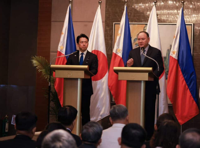
While Trump praised Marcos as a “strong negotiator” during their joint press conference ahead of their bilateral meeting, he also quipped that the Philippine President was “negotiating too tough”, hinting that a larger concession had been left on the table.
The result, analysts say, was not a clear win for Manila, but a strategic compromise.
Dr Aries Arugay, visiting senior fellow at the ISEAS – Yusof Ishak Institute in Singapore and chairman of the University of the Philippines’ Political Science Department, described the outcome as underwhelming.
“We are worse off than the original” position of the Philippines, he told The Straits Times, noting that South-east Asian neighbours like Vietnam and Indonesia had secured steeper tariff reductions from the Trump administration.
“Marcos was really hoping to make economic gains out of this trip. Unfortunately... the general outcome was not really what was expected,” Dr Arugay said.
For Washington, success in this negotiation was always going to be measured differently.
Trump appeared content with the outcome, and he did not press the Philippines to increase its defence spending, as he has done with other allies.
Manila may have accepted the limited economic gain to preserve goodwill with its treaty ally amid rising tensions with Beijing over the South China Sea, said Georgi Engelbrecht, senior analyst for the Philippines at the International Crisis Group.
“I have a feeling (the Marcos government) was also thinking the priority is to keep Trump close to us, and what we can get is what we can get... It’s not perfect, but it could have been worse,” Engelbrecht told ST.
Strong military ties
Still, the Philippines was able to reaffirm its longstanding defence ties with the US, one of the key goals of Marcos’ trip.
In that sense, both Dr Arugay and Engelbrecht said Marcos achieved what he needed: a reaffirmation of military cooperation with the US, no public scolding from Trump, and enough progress to signal continuity in the alliance – even if it fell short of a clear economic win.
Both Trump and Marcos voiced support for a planned US-funded ammunition production and logistics hub in Subic, a former US military base turned freeport zone located north-west of Manila.
Touting America’s military stockpiles, Trump said the ammunitions hub is “very important” and part of broader US efforts to bolster its posture in the Indo-Pacific, where Washington is locked in a rivalry for influence with China.
Marcos cast the project as part of his administration’s “self-reliant defence programme”, aimed at modernising the Armed Forces of the Philippines and reducing dependence on foreign suppliers.
“It will help the Philippine modernisation of the military,” said Dr Arugay, but added that it also “really reinforces American presence in the country through the EDCA sites”.
He was referring to the Filipino military bases that American troops have access to under the Enhanced Defence Cooperation Agreement. The US initially had access to five bases, but Marcos expanded that to nine in 2023.
The proposed ammunition facility, initiated under the Biden administration with bipartisan support in the US Congress, is not without risks. Its location in Subic places it within striking distance of the South China Sea, raising concerns over potential escalation.
But Engelbrecht downplayed those fears, saying: “China’s not going to launch a rocket just because of that alone.”
What matters more is Philippine control over how such facilities are used, he added. “These are still Philippine bases. Marcos would still need to green-light any activity that the US wants to do,” Engelbrecht said.
Despite failing to get a steeper tariff cut, Marcos was the first South-east Asian leader to meet Trump at the White House since his re-election in 2024. That alone sent a signal that Marcos remains a reliable US partner, said the analysts.
Yet the challenge moving forward is clear: The Philippines cannot afford to rely on the US alone.
“The Philippines must hedge and diversify, like Indonesia did with its EU trade deal,” said Engelbrecht.
Dr Arugay agreed, saying: “The Marcos administration should not put all its strategic economic and security eggs in the US basket. We must look for new markets.” - The Straits Times/ANN