




Brazil and China agreed on Monday to study the feasibility of a transcontinental railway that could reshape South America’s trade routes by connecting Brazil’s Atlantic Ocean coast to Peru’s Pacific Ocean port of Chancay.
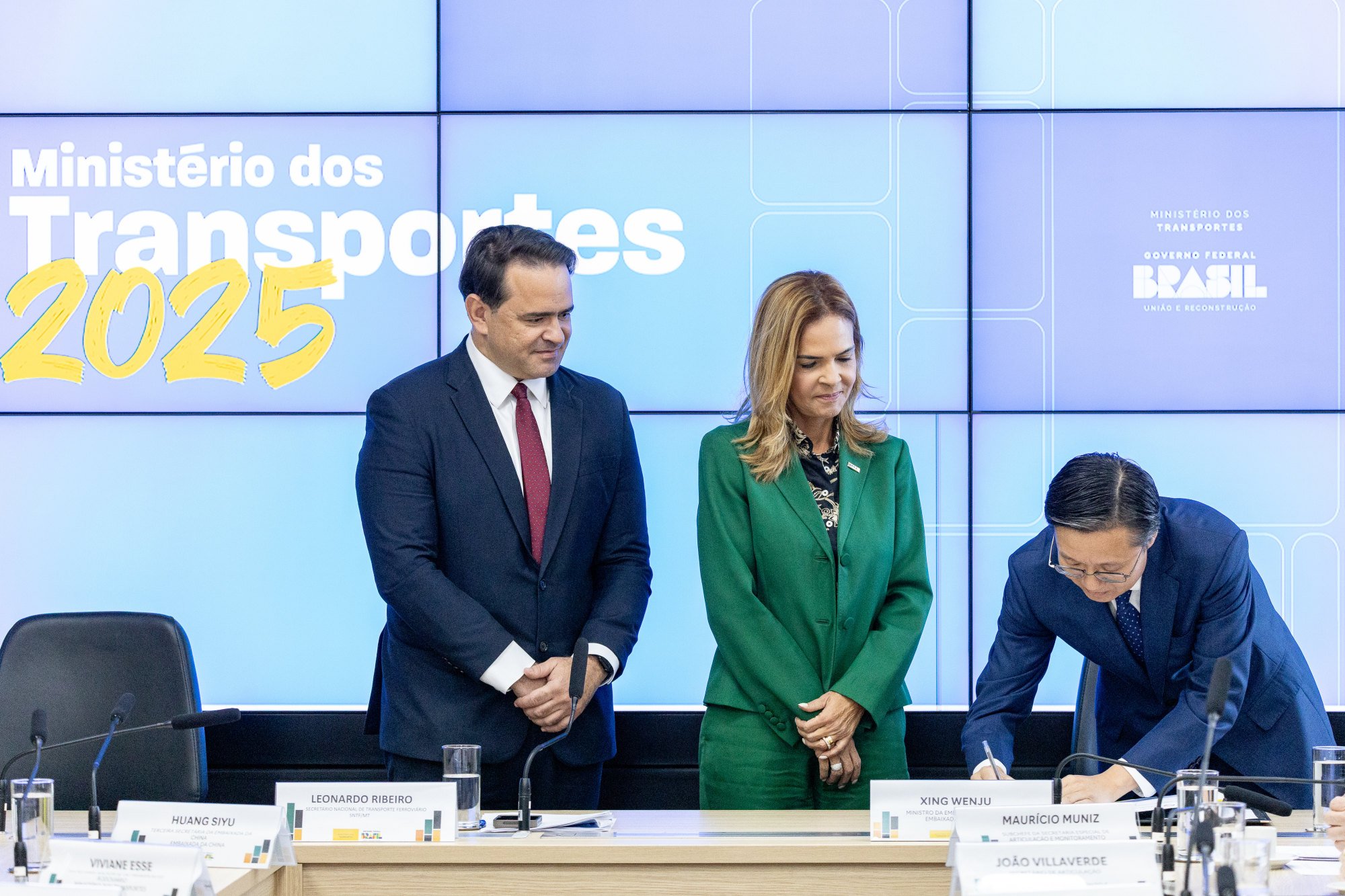
The memorandum of understanding was signed between Infra S.A., the Brazilian state-owned company linked to the Ministry of Transport, and the China Railway Economic and Planning Research Institute, part of China State Railway Group.
The plan outlines a railway of about 4,500 kilometres (roughly 2,800 miles), running from Ilhéus in the northern Brazilian state of Bahia to Rio Branco in the northwestern state of Acre, before crossing the Andes towards the Peruvian coast.
Some estimates put the cost of proposed project at upwards of US$70 billion.
If built, the corridor could shorten shipping times to Asia by as much as 12 days compared with current Atlantic routes that pass through the Panama Canal. For now, however, the agreement is only for technical, environmental and economic studies, expected to last for up to five years.
The signing follows months of increased contact between Brasília and Beijing over the matter. In April, a Chinese delegation visited the Fico and Fiol railway lines in Brazil, which are expected to form key parts of the planned corridor. The team also toured the Port of Santos, Latin America’s busiest port, which is expanding with Chinese investment.
Brazilian President Luiz Inácio Lula da Silva’s government considers access to the Pacific essential for strengthening ties with Asia and boosting agricultural and mineral exports.
The idea of linking Brazil to the Pacific by rail is not new. A similar project was first discussed over a decade ago but was shelved amid questions about cost, technical obstacles and environmental impact.
The announcement comes as unease in Washington rises over China’s growing economic influence in the western hemisphere.
In November, shortly after US President Donald Trump’s re-election victory, Mauricio Claver-Carone, now his special adviser on Latin American affairs, called for tariffs of up to 60 per cent on any company using Peru’s Chancay port for trade with China.
Claver-Carone said the tariff would not only discourage general use of the port but also help prevent its use for transshipment – routing goods through other countries so they can be re-exported and enter their final market facing lower tariffs.
The so-called Fico and Fiol lines, to be operated under public–private partnerships, now form the backbone of Brazil’s railway expansion and would be central to the new route.
For China, the railway would help unlock the potential of the Chancay megaport near Lima, built with Belt and Road Initiative funding at a cost of around US$3.5 billion.
Inaugurated in November, the port is expected to become a major link for South American trade with Asia. Analysts say that without a direct connection to Brazil, its role as a regional hub would be limited.
In Peru, however, the news of the agreement triggered unease. Leolino Dourado, a researcher at the Centre for China and Asia-Pacific Studies in Lima, noted that some Lima officials were unsettled because Peru was not formally involved in the signing, despite the project passing through its territory. Local media described it as a violation of Peru’s sovereignty.
Even so, Dourado noted that Peruvian ministries have held talks with Brazilian and Chinese officials this year and that the absence of the foreign ministry may have contributed to misunderstandings.
“There were discussions at the technical level, but the lack of coordination within Peru created the impression that the country was left out,” he said.
Dourado said he thought the economic case for the project was shaky, arguing that the long overland distance from Brazil to Chancay made rail freight more costly than shipping goods directly through Atlantic ports. In his view, any savings from a shorter sea leg to Asia would be outweighed by the higher expense of moving cargo by land.
He noted studies that had raised similar doubts, including a 2015 International Union of Railways report that found little financial sense in building such a link. Dourado said that signs were few that conditions had improved since then.
He also said that any viable route would likely cross environmentally protected areas or indigenous territories, which could lead to legal disputes and complex negotiations. Altering conservation laws to make way for tracks, he warned, would be far from straightforward.
Without solid economic grounds and guaranteed funding, he added, there was a real risk the railway could remain little more than a grand vision.
“Crossing the Andes involves tunnels and bridges that push costs higher. Previous estimates put the northern route at about US$72 billion. If the line follows the southern option to reduce the environmental impact by using the existing Pacific Highway corridor, the cost jumps to nearly US$100 billion,” he said.
Despite the doubts and tensions, Brazil and China expressed hope that the studies would clarify whether the plan could move from the drawing board to reality, linking South America’s vast interior more directly to booming markets across the Pacific.
“This partnership is a fruit of wisdom and mutual trust, and will contribute to the dynamism and development of transport in our countries,” Wang Jie, general director of China State Railway Group, said in a statement.
The Brazilian government also said that the project would, once completed, strengthen its agenda for regional integration and sustainable infrastructure.
“Brazil is ready to lead a new era of logistics infrastructure. And this leadership role will be exercised with a sense of responsibility, high-quality engineering, solid partnerships and future-oriented tracks,” Leonardo Ribeiro, Brazil’s secretary of rail transport, said. - SOUTH CHINA MORNING POST


