The alms bowl is a symbol of monks, yet in Sri Lanka, artisans are struggling as cheap substitutes flood the market, igniting a debate over Buddhist tradition and quality.
The village of Panvila has long been associated with craftsmen who produce the humble “paathra”, the special bowl that forms part of the eight essentials donated to monks and which is used to ask for food.
Thenuwara Badalge Sarath, 65, says he is the only blacksmith left in a village that once supplied much of the country.
“When I learnt the craft from my father, there were more than 10 families in the neighbourhood who made these bowls,” Sarath said, while hammering a piece of scrap metal into a holy utensil.
“Today, I am the only one keeping up the tradition. My son died recently in a road accident and there is no one to carry on this line of work after I am gone,” said the fourth-generation craftsman.
Sarath spends about a week producing a batch of five to six bowls from discarded steel barrels. He sells each for 600 rupees (RM8.45), but competition from cheap imports is tough.
“There are aluminium bowls that come from abroad. They are cheaper and lighter – we can’t compete,” Sarath said at his village smithy, near the southern tourist resort of Hikkaduwa.
The Buddhist-majority nation of some 22 million people has just over 42,000 monks, but the demand for bowls is disproportionately high because of the positive karma attached to offering them to temples.
Kirinde Assagi, a leading Buddhist monk, said the alms bowl forms part of the eight items for a monk to lead an ascetic life and spread the teachings of Buddha, along with two robes, a razor, a straining cloth, a needle and thread, and a belt.
“The bowl is his livelihood. When a monk goes out begging with his bowl, he gets sustenance,” Assagi said.
“Because gifting ‘ata pirikara’ to monks brings enormous good karma, devotees clamour to donate this,” said the monk, in reference to the eight-item package.
At his Gangaramaya temple in the capital Colombo, there were nine such packages donated within an hour one weekend.
Assagi says most of the bowls, however, are of poor quality, made out of aluminium and unfit to serve food in.
“We see the practice of monks begging slowly dying off as the quality of the bowls goes down,” he said.
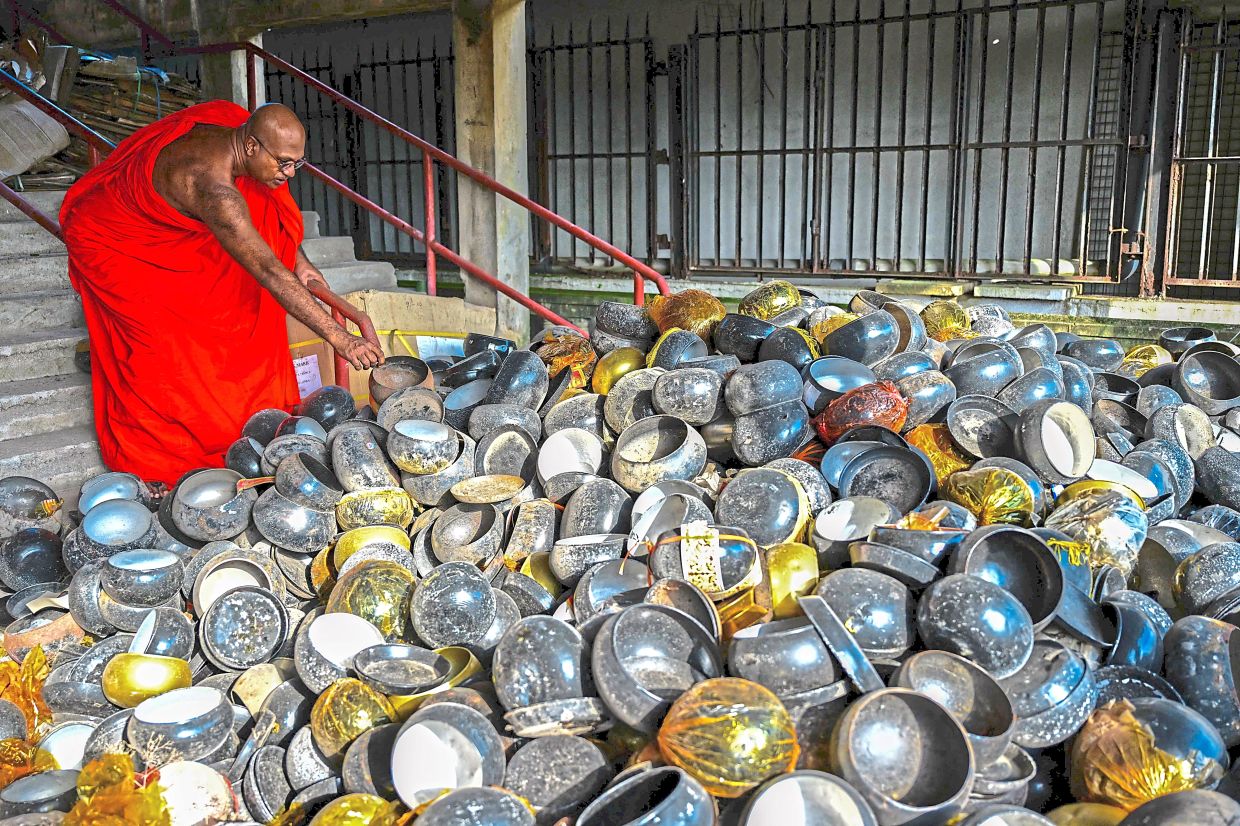
In a storeroom at the back of his temple, there is a huge pile of bowls that monks say are not suitable even for offering food to household pets.
“I will show you a mountain of begging bowls that we have discarded.
“We make holes at the bottom and repurpose them for potted plants.” — AFP