
KAMPHAENG PHET, Thailand: In the thick, steamy forests of western Thailand, 20 skittish sambar deer dart from an enclosure into the undergrowth -- unaware they may find themselves in the jaws of one of the habitat's 200 or so endangered tigers.
The release is part of a project run by the government and conservation group WWF to provide tigers with prey to hunt and eat, which has helped the big cat make a remarkable recovery in Thailand.
The wild tiger population in Thailand's Western Forest Complex, near the border with Myanmar, has increased almost five-fold in the last 15 years from about 40 in 2007 to between 179 and 223 last year, according to the kingdom's Department of National Parks (DNP).
It is an uptick that WWF's Tigers Alive initiative leader Stuart Chapman calls "extraordinary", especially as no other country in South-East Asia has seen tiger numbers pick up at all.
The DNP and the WWF have been breeding sambar, which are native to Thailand but classed as vulnerable, and releasing them as prey.
Now in its fifth year, the prey release is a "very good activity," says the DNP's Chaiya Danpho, as it addresses the ecosystem's lack of large ungulates for tigers to eat.
Worrapan Phumanee, a research manager for WWF Thailand, says that deer were previously scarce in the area, impacting the tiger population.
But "since starting the project, we've seen tigers become regular residents here and successfully breed," he says.
Cambodia, Laos and Vietnam have all lost their native populations of Indochinese tigers, while Myanmar is thought to have just 23 left in the wild, in large part due to poaching and wildlife trafficking.
Over the past century numbers worldwide have fallen from about 100,000 individuals to an estimated 5,500, according to the IUCN, which classifies tigers as endangered due to habitat loss and overhunting of the species and their natural prey.
But major tiger recoveries have been recorded in India and Nepal, where in recent years numbers of Bengal tigers have grown to 3,600 and 355 respectively thanks to conservation measures.
In a forest clearing in Khlong Lan National Park, DNP staff open the gate of the sambar deer enclosure where 10 males and 10 females have been grazing.
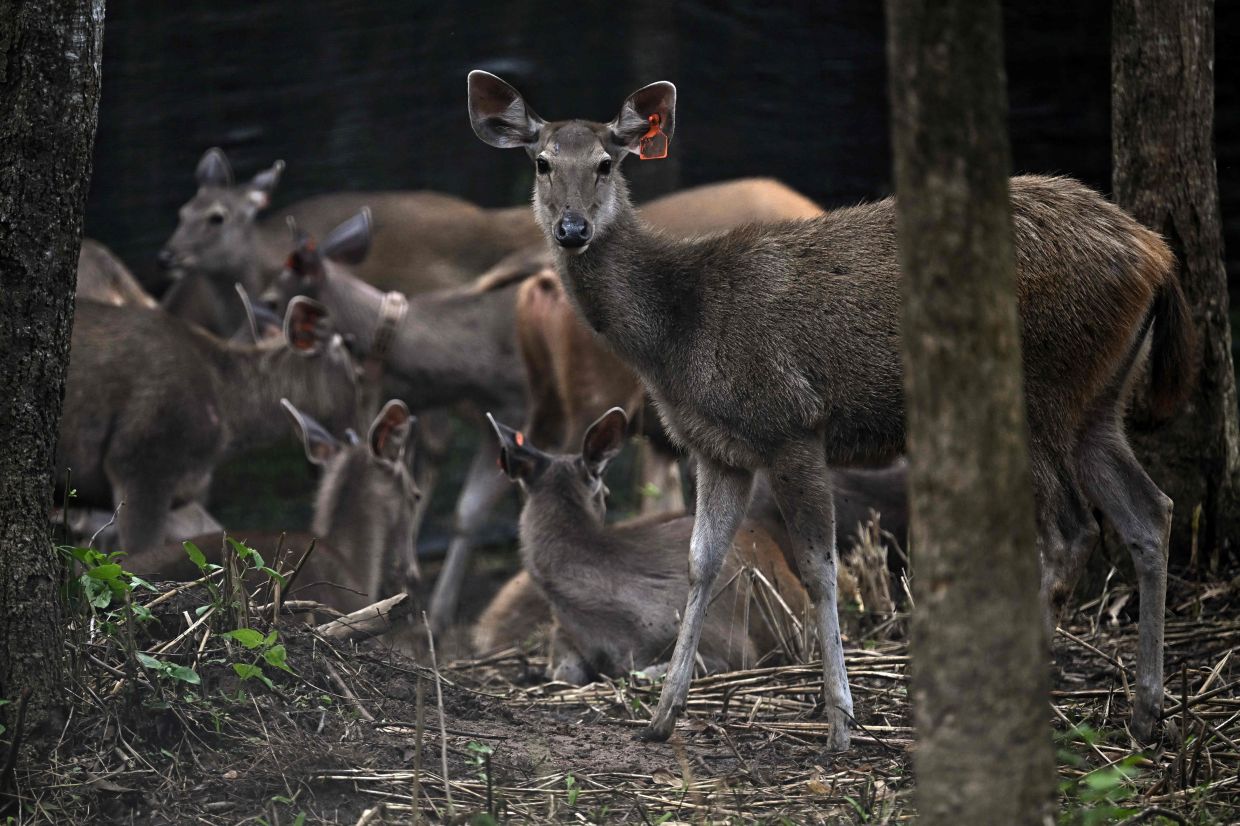
The deer watch cautiously as one brave individual darts out, before the rest follow at speed and disappear into the trees.
Worrapan says prey release programmes -- now also happening in Cambodia and Malaysia -- are part of wider restoration efforts to "rebuild ecosystems" in South-East Asia, where they have been adapted for local purposes from similar initiatives that have existed for years in Africa.
The breeding and releases also aim to solve the problem of the sambar deer's own population decline due to hunting, says Worrapan.
"The purpose of releasing deer is not solely to serve as tiger prey but also to restore the deer population," he says, adding that GPS collar-monitoring has allowed researchers to track their lives after release.
He says despite having only known captivity, the deer show a strong ability to adapt to outside threats.
"(They) don't simply wait passively. They try to evade predators and choose safe areas to thrive."
Chaiya says only a small number of the released deer end up as predator dinner, with most going on to reproduce.
The sambar deer and their offspring "play a role in the food chain within the ecosystem, serving as prey for predators," he says. - AFP