



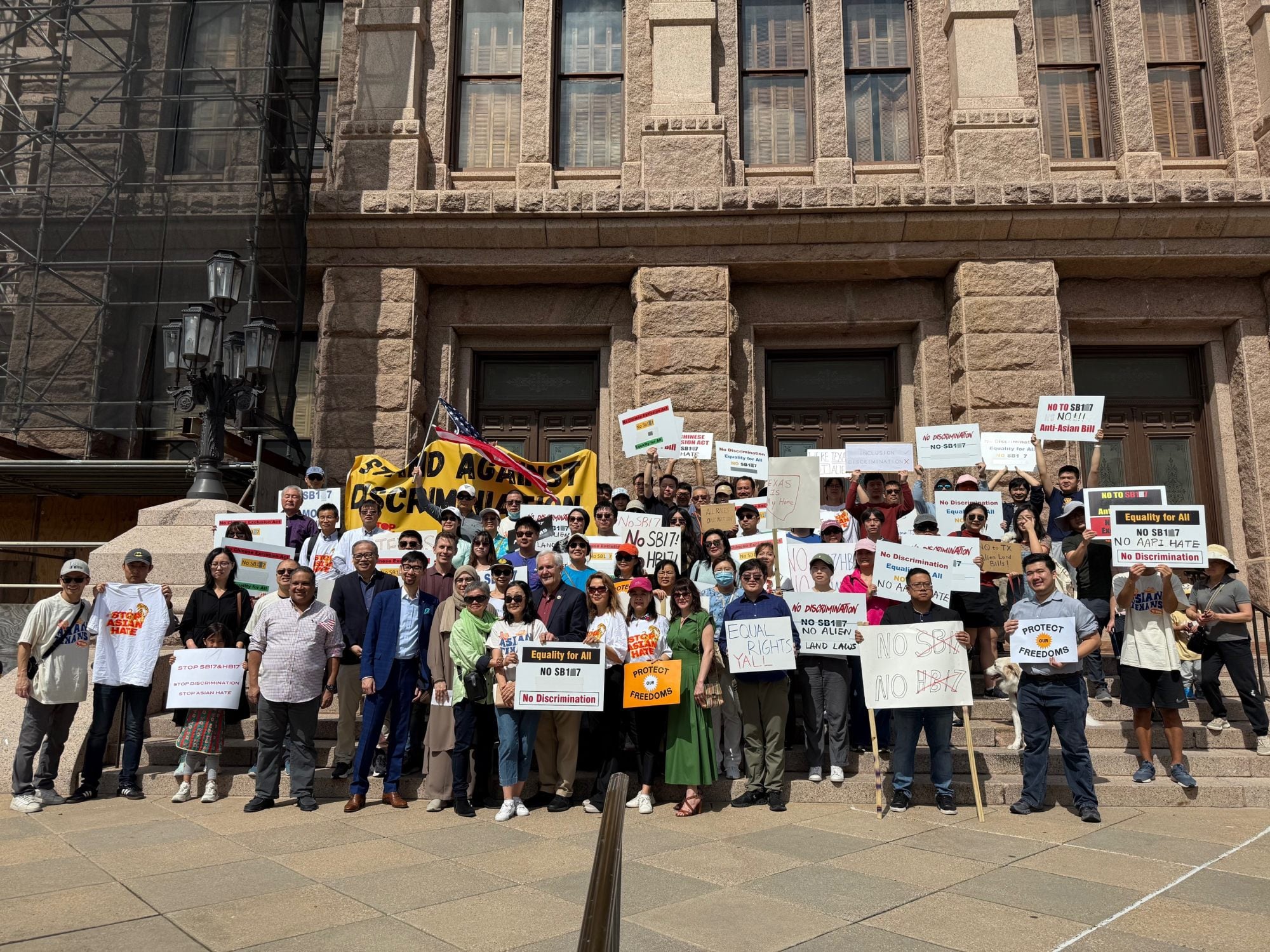
At a cafe in Austin, Texas, a group gathers on a sunny Friday morning. Just a few years ago, many were strangers. Today, one has brought biscuits, another T-shirts emblazoned with “Asian Texans Vote”. They have bonded through their shared opposition to Texas Senate Bill 17 (SB17), which became law last year.
“If you have to say one positive thing about all this ... it’s that I made friends with a group of people I never knew before,” says Hugh Li, president of the Austin Chinese-American Network and the group’s de facto leader.
SB17 restricts certain individuals and entities connected to designated foreign adversaries – China, Russia, Iran and North Korea – from acquiring interests in Texas real estate with some limited exceptions.
More than a year after the law took effect in September 2025, members of the Chinese community are still grappling with what it means for their ability to put down roots in the state, as outgoing Texas Attorney General Ken Paxton moves to strengthen enforcement.
For those gathered at the cafe, SB17’s implications feel personal.
“Humans are just humans,” says Toni Huang, a board member at the Austin Chinese-American Network and a retired software executive.
“It doesn’t matter where you live. We pay tax. We send our kids to school. We work hard. Like we’re literally going through the same motions as a human being, right?”
Huang opposed the bill because she wanted others to have the same opportunities she had to build a life in the US.
She followed a well-trodden path for Chinese immigrants, progressing from international student to H-1B visa holder, green card recipient and eventually American citizen.
Huang applied for citizenship during US President Donald Trump’s first term as his administration increasingly targeted foreign nationals.
Also gathered at the cafe is Asian Texans for Justice co-founder Alice Yi alongside immigration lawyer Chuck Guo, business owner and Texas Asian-American Association board chairman Jason Yuan, and an H-1B worker who did not wish to be identified.
All of the group members live in Austin, a liberal city in a state that has been dominated by Republicans for decades. The city’s technology sector and universities attract professionals and researchers from around the world.
Texas has the third-largest ethnically Chinese population of any American state, at around 275,000, behind California and New York, according to US Census data.
Li, who worked in the hi-tech field, has been an American citizen for more than 20 years. He spearheaded opposition to SB17 before its passage and continues to mobilise the community today.
“The policy right now essentially labels an entire group guilty before proven innocent,” he says.
In November’s midterm elections, Texas turned blue with several high-profile political wins. Some of the group campaigned for Democrats, including James Talarico, who won a US Senate seat, and Gina Hinojosa, who was elected Texas governor.
They also backed Nathan Johnson, who will be the next Texas attorney general. All three Democrats voted against SB17.
“I like very much Talarico’s messages of inclusion, love for the neighbours, equality and anti-corruption,” Li says, adding that he was also motivated to vote out Paxton.
Following the midterm results, Guo says he would like the incoming administration to “honour the promise of the American dream, free market, and the US Constitution” and “repeal SB17, and other bills that are discriminatory against national origin and immigration status”.
If there is not an outright repeal of SB17, Li says he will do his best to defang some of what he called the most hurtful clauses.
Li also wants the incoming state officials to correct years of “extreme policies of the Texas GOP [the Republican Party]” which he says had been in power for “way too long to even care about the concerns of a minority community like ours”.
Talarico, Hinojosa and Johnson did not respond to the South China Morning Post’s requests for comment on the future of SB17.
While the group represents SB17’s opponents, supporters say it addresses national security concerns, arguing it is necessary to protect Texas from foreign interference, pointing to China’s well-documented espionage regime and land ownership near military bases.
“My strengthened rules will increase transparency, empower Texans to report potential violations, and give my office additional tools to identify foreign land ownership and vigorously enforce the law,” said Paxton in an October 9 media release.
Justin Sadowsky, legal director at the Chinese-American Legal Defence Alliance, says the law is deliberately vague, leaving Chinese individuals other than green card holders uncertain whether it applies to them and effectively deterring them from renting or purchasing land.
“SB17 also applies to property rentals, so long as those rentals are for a year or longer,” Sadowsky says.
The rental clause could force some visa holders to limit their leases to 364 days, or avoid back-to-back renewals, to stay below the law’s one-year threshold, but Guo says it has not yet been enforced.
While individuals “domiciled” in the US are generally exempt, lawyers note that proving a “permanent home” remains murky for visa holders such as incoming students or first-year H-1B workers, whose temporary status complicates showing permanent intent.
“So your normal one-year apartment lease would be covered and therefore prohibited. And the residential homestead exception does not apply to rentals,” he adds.
This exception allows someone lawfully present and living in the US, such as an H-1B visa holder, to buy a residential property as a single homestead.
“A Chinese-born H-1B worker who is lawfully living and working in Austin is not barred from buying a primary home because of SB17,” says Jason Finkelman, an immigration lawyer in Austin.
“But if you are going to be buying an investment property, agricultural land, commercial or industrial property, there are some restrictions on that under SB17.”
Foreign nationals and their employers consider whether the visa holder can build a long-term life in Texas, not just immigration status, Finkelman says.
“Looking at buying property comes into that equation,” he adds.
Guo, a green card holder who initially moved to the US as a student, is part of the legal team in the third challenge to SB17, which is at the pre-trial stage in the Western District Court of Texas.
He says the challenge partly centres on how SB17 affects companies seeking to obtain L-1 visas to establish new offices in Texas.
SB17 can complicate establishing Chinese businesses in Texas, he explains. “In order for a new business to apply for it [an L-1 visa], you have to have a lease for over one year,” Guo says. “So basically, because of this SB17, you cannot apply for L-1 if you wish to establish here in Texas.”
Many L-1 visa applicants move to the US to open a new office, Guo says, adding that under federal regulations, USCIS requires applicants to secure physical premises large enough to house the new business – which in practice usually means holding a commercial lease of at least one year.
Although some of SB17’s effects may not yet be apparent, Huang warns that laws like this could impact America in the long term.
“It’s a bubble,” Huang adds. “You may not see it now. For example, if STEM [science, technology, engineering and mathematics] students don’t want to come here any more, those students would be professors 10 years down the road. So it’s not impacting now, but 10 years down the road when you realise that the US is not leading in STEM ... then it’s too late.”
When it comes to researchers who work for universities, the H-1B worker says they are being deterred from moving to Texas after hearing about SB17.
“They will choose something else out of Texas,” she says.
Alex, who works in civil and environmental engineering and gave a pseudonym to protect their privacy, has left Texas.
Alex is not a member of the group but was a plaintiff in a lawsuit against Paxton over SB17 while they lived in the state. The judge noted Alex was not a valid plaintiff because some F-1 and H-1B visa holders who intend to stay in the US are no longer considered “domiciled” in their home country.
Still, on an H-1B visa and not on a green card, Alex got an 11-month lease to be safe. When that concluded, Alex moved states, mostly because they were affected by US restrictions and freezes on H-1B visas in addition to SB17.
Meanwhile, the group is concerned SB17 represents a shift towards restricting immigration and questions why Chinese nationals should face rules that don’t apply to nationals of most other countries.
“Every step, they’re putting some penalty or some hurdle that is too hard to pass ... Every step, they basically [say], ‘I don’t want you’,” Huang says, referring to broader Trump administration policies.
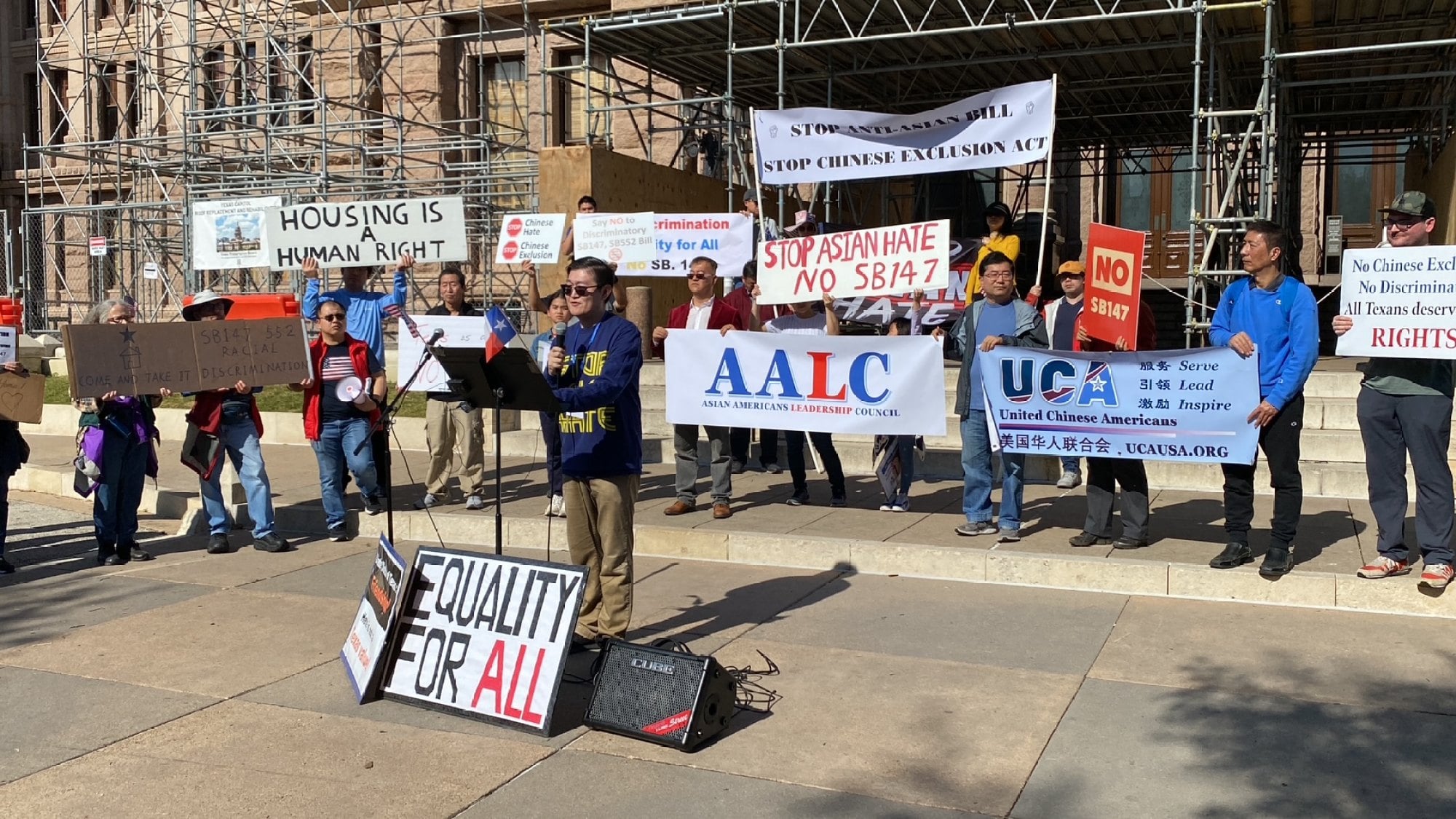
In SB17, some see echoes of historical exclusionary measures against Chinese immigrants, including the Chinese Exclusion Act of 1882.
“Clearly their intention is actually way beyond just the housing,” the H1B worker says. “This is the very first step to reach the end goal of completely expelling us from Texas.”
But the campaign against SB17 has also brought the community closer together, Li adds.
“You don’t mess with the Chinese, you don’t mess with their houses, you don’t mess with their kids,” says Yuan, who works in the automotive industry.
“Because in this country, where you’re located, where you live at, is directly tied to which public school district ... You don’t mess with that, that’s the number one rule.”
Politicians have never seen so many people from the Chinese community at their offices before, Li notes.
“I think a positive thing is that we are more involved in civic engagement, civic conversations, right?” he adds. “We came together and we have our voice heard.”
Li’s point is evident a month after the cafe when some members of the group were together again.
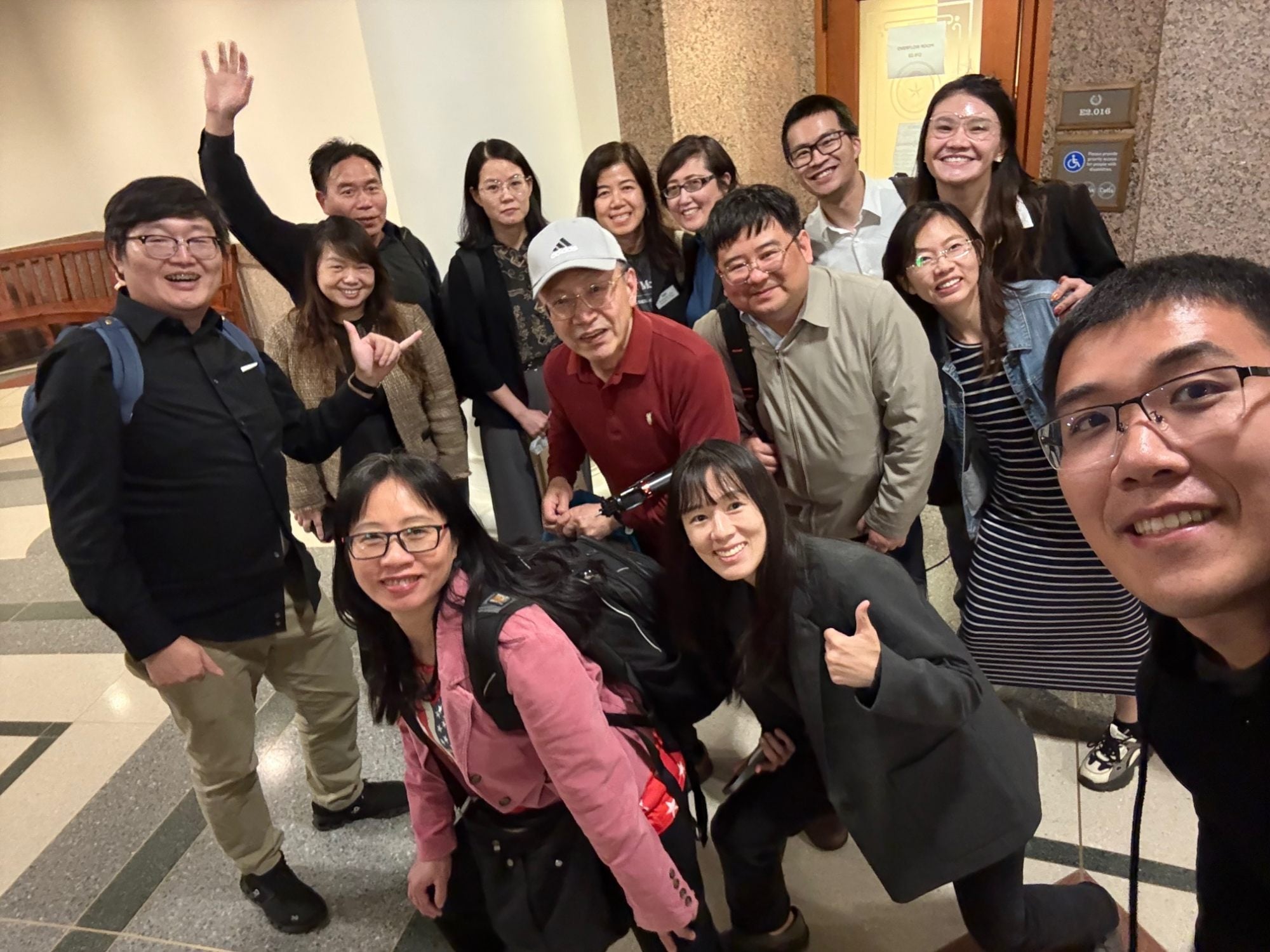
On this occasion, they gathered while campaigning for Talarico ahead of his high-profile victory over Paxton. Wearing the same “Asian Texans Vote” T-shirts and sharing pizza, they paused to snap a photograph together. This time, there are even more people in the picture. -- SOUTH CHINA MORNING POST
