US President Donald Trump announced that his administration may disclose new tariff amounts for some trading partners, including China, within weeks, as he encouraged officials from Beijing to visit Washington for a potential deal.
“Over the next two or three weeks, we’ll be setting the [tariffs] number,” Trump said at the White House on Wednesday. “We are dealing with a lot of countries right now.”
Asked if the revisions would apply to China, he replied that they “could be for China”.
Do you have questions about the biggest topics and trends from around the world? Get the answers with SCMP Knowledge, our new platform of curated content with explainers, FAQs, analyses and infographics brought to you by our award-winning team.
“Maybe we’ll make a special deal, and we’ll see what it will be,” Trump added. “Right now, it’s 145 per cent, that’s very high.”
The American leader urged Beijing officials to visit Washington to negotiate. Later in the briefing, he said officials on both sides were in contact over trade “every day” but gave no further details.
“I hope we can make a deal,” said Trump. “Otherwise, we’ll set a price, and hopefully they’ll come here, and they’ll contribute, and if they don’t, that’s OK.”
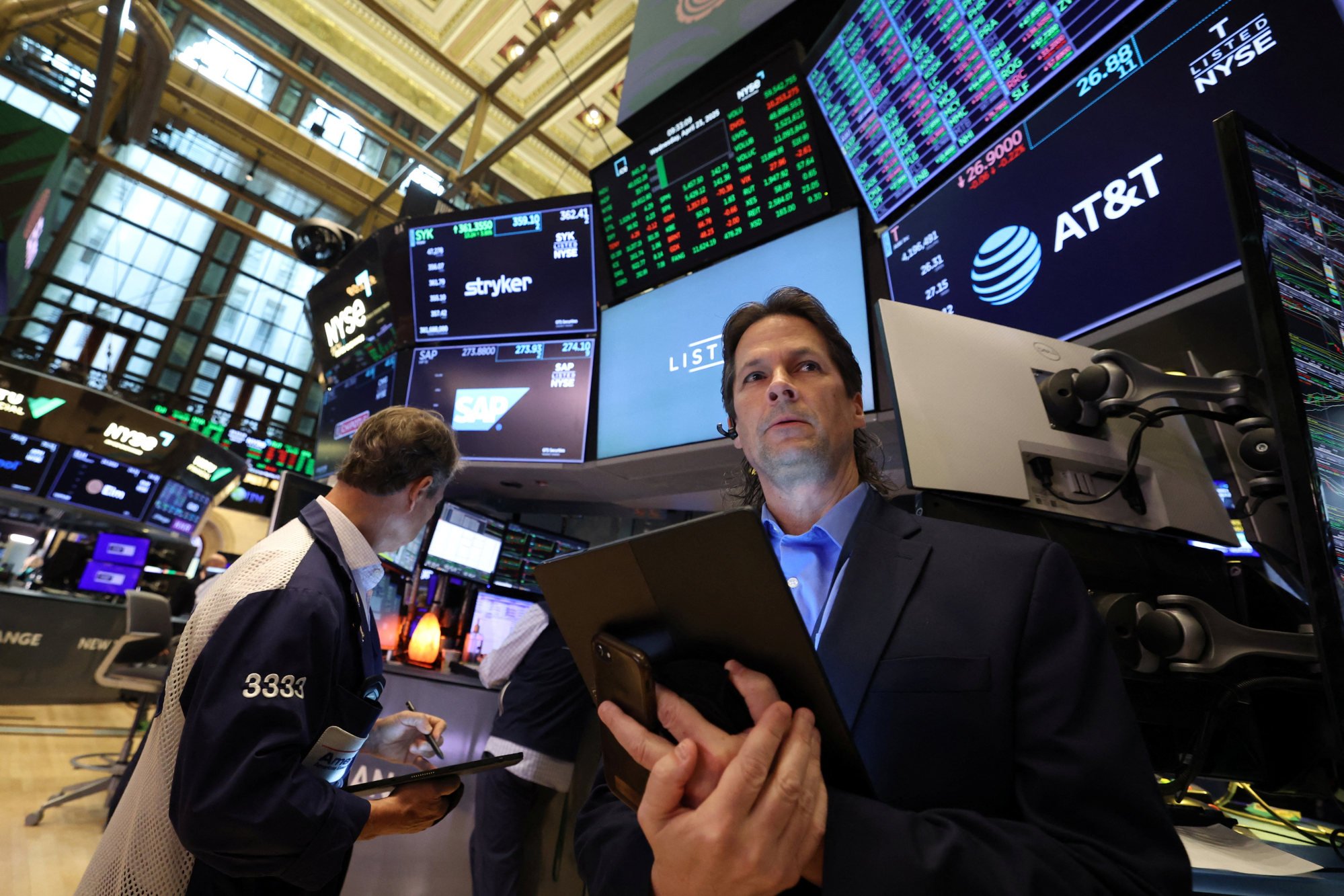
Trump’s remarks came after the Wall Street Journal reported that his administration was considering reducing tariffs on some Chinese imports to a level of 50 per cent to 65 per cent. The news helped lift US equities markets on Wednesday.
Such cuts would substantially reduce the tariffs that Trump set at 145 per cent earlier this month, part of the White House’s recalibrations of trade strategy that have roiled global markets for weeks, a senior White House official told the Journal.
Stocks rallied on the report as well as on Trump’s backing away from reported threats to fire Federal Reserve Chairman Jerome Powell.
The Dow Jones Industrial Average and the S&P 500 index both closed up more than 1 per cent, while the Nasdaq climbed more than 2.5 per cent.
According to the Journal, while no final decisions have been made, several options are under review, including a tiered system that would distinguish between strategic and non-strategic goods.
One proposal mirrors a framework suggested by the House Select Committee on China last year, imposing 35 per cent tariffs on imports deemed not to threaten the US national security; strategic goods would face at least 100 per cent, the report said.
The tiered structure could be phased in over five years, the Journal added.
Later on Wednesday, Financial Times reported that Trump plans to shield automakers by exempting car parts from the tariffs imposed on China to force Beijing to crack down on fentanyl production, and from those he has levied on steel and aluminum.
That report, which cited people familiar with the situation, would leave in place a 25 per cent tariff on foreign-made cars and a separate duty of the same rate on auto parts.
Earlier on Tuesday, Treasury Secretary Scott Bessent also told a group of investors at an event sponsored by JPMorgan Chase that the tariffs confrontation with China was “unsustainable” and that he expected a “de-escalation”.
Trump earlier on Wednesday claimed that the US had been “losing billions of dollars a day” during earlier administrations, including that of his predecessor, Joe Biden, and that “China got out of control”.
Trump also reiterated his stand that tariffs were an effective tool for the US economy, claiming that the country’s wealth peaked from roughly 1870 to 1913, by proportion. During that period, he said, “we used to be all tariffs and we had no income tax”.
Asked about the developments, the Chinese embassy in Washington cited Chinese foreign ministry spokesman Guo Jiakun’s response: “We will fight, if fight we must. Our doors are open, if the US wants to talk.”
“If a negotiated solution is truly what the US wants, it should stop threatening and blackmailing China and seek dialogue based on equality, respect and mutual benefit,” the statement added.
“To keep asking for a deal while exerting extreme pressure is not the right way to deal with China and simply will not work.”
Washington now imposes tariffs up to 245 per cent on select Chinese imports, notably electric vehicles and syringes. The figure adds Trump’s new China tariffs of 145 per cent to previous levies.
In retaliation, China has imposed a series of tariffs totalling 125 per cent on US imports.
It also added several US companies to lists of unreliable entities and facing export controls, barring those firms from further investment in China, and restricting the export of some critical minerals.
Beijing also announced restrictions on purchases on Boeing aircraft and Hollywood films.
This is not the first time Trump has softened his approach on Chinese imports.
This month, he announced that the tariffs did not apply to smartphones, laptop computers and machines used to make semiconductors, a major carve-out for items reliant on Chinese manufacturing.
But US Commerce Secretary Howard Lutnick later said that tariffs would be assessed specifically for these products.
More from South China Morning Post:
- As Donald Trump’s tariffs hit US allies hard, will China make inroads?
- After a whirlwind month, how will China’s Politburo counter Trump’s tariffs?
- China says Trump trade tactics will backfire, like ‘bargaining with a tiger for its skin’
- US Treasury chief calls tariff war with China unsustainable and expects it to ease
- Trump tariffs, uncertainty cloud US, global economy outlooks amid ‘new era’ of trade: IMF
For the latest news from the South China Morning Post download our mobile app. Copyright 2025.