VIENTIANE, Jan 10 (Vientiane Times/Asian News Network): Government sectors have been instructed to study mechanisms and ways to implement the policy of converting assets into capital to ensure more benefit to the nation.
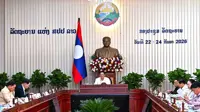
This policy was one of 10 important topics discussed at a government meeting of cabinet members, the Vientiane mayor and provincial governors, which ended on Friday.
Chaired by Prime Minister Thongloun Sisoulith, the meeting heard a report on a study of ways to convert state assets into capital, acknowledging that there was a lack of consensus among state agencies over the implementation of this policy in the past years, resulting in considerable losses to the nation.
The responsible committee was also urged to study ways to transform loss-making enterprises into joint ventures, government spokesman Prof. Dr Chaleun Yiapaoher told a press conference on Friday.
The move is part of the government’s ongoing reform of state enterprises, aimed at reducing the debt burden they have generated.
During the meeting, cabinet members and provincial governors discussed the impacts of the Covid-19 pandemic on the economy.
The crisis has affected exports, tourism and other service-related sectors, resulting in shrinking revenue for companies and households.
Despite enormous challenges, the government’s measures in response to the pandemic created favourable conditions for private companies to begin the recovery process and normalise their operations.
All sectors have been told to take more responsibility for keeping the virus in check and preventing a second wave of the coronavirus in Laos.
Concerning Laos’ plan to graduate from least developed country (LDC) status, the meeting discussed preparations to tackle the challenges that will arise when Laos exits the LDC category.
In addition, the meeting heard a report on the implementation of Prime Minister’s Order No. 15, which was imposed to clamp down on the illegal trade in timber.
The relevant authorities were advised to shoulder more responsibility in the strict management and monitoring of the felling and shipment of timber and the activities of timber businesses.
The government also discussed the challenges encountered in boosting commercial production, emphasising the need for central and local authorities to strengthen collaboration and share the responsibilities involved.
Local authorities need to identify the potential offered by their areas as well as the main crops that can be grown and are in market demand.
The sectors responsible were instructed to ensure improvement of essential investment climate indicators by March.
The meeting advised the Ministry of Planning and Investment, Ministry of Industry and Commerce and Ministry of Finance to look at ways to integrate their information through a data-sharing network, for the speedier approval of investment projects.
The Ministry of Planning and Investment and other agencies need to monitor and push for the implementation of all projects approved by the government, while ensuring they comply with the country’s laws and the concession agreements signed with the government.
Despite the daunting challenges, the government is attempting to ensure the continued growth of the economy and maintain security and social order so that people are able to earn a living and reduce their poverty. - Vientiane Times/Asian News Network
This policy was one of 10 important topics discussed at a government meeting of cabinet members, the Vientiane mayor and provincial governors, which ended on Friday.
Chaired by Prime Minister Thongloun Sisoulith, the meeting heard a report on a study of ways to convert state assets into capital, acknowledging that there was a lack of consensus among state agencies over the implementation of this policy in the past years, resulting in considerable losses to the nation.
The responsible committee was also urged to study ways to transform loss-making enterprises into joint ventures, government spokesman Prof. Dr Chaleun Yiapaoher told a press conference on Friday.
The move is part of the government’s ongoing reform of state enterprises, aimed at reducing the debt burden they have generated.
During the meeting, cabinet members and provincial governors discussed the impacts of the Covid-19 pandemic on the economy.
The crisis has affected exports, tourism and other service-related sectors, resulting in shrinking revenue for companies and households.
Despite enormous challenges, the government’s measures in response to the pandemic created favourable conditions for private companies to begin the recovery process and normalise their operations.
All sectors have been told to take more responsibility for keeping the virus in check and preventing a second wave of the coronavirus in Laos.
Concerning Laos’ plan to graduate from least developed country (LDC) status, the meeting discussed preparations to tackle the challenges that will arise when Laos exits the LDC category.
In addition, the meeting heard a report on the implementation of Prime Minister’s Order No. 15, which was imposed to clamp down on the illegal trade in timber.
The relevant authorities were advised to shoulder more responsibility in the strict management and monitoring of the felling and shipment of timber and the activities of timber businesses.
The government also discussed the challenges encountered in boosting commercial production, emphasising the need for central and local authorities to strengthen collaboration and share the responsibilities involved.
Local authorities need to identify the potential offered by their areas as well as the main crops that can be grown and are in market demand.
The sectors responsible were instructed to ensure improvement of essential investment climate indicators by March.
The meeting advised the Ministry of Planning and Investment, Ministry of Industry and Commerce and Ministry of Finance to look at ways to integrate their information through a data-sharing network, for the speedier approval of investment projects.
The Ministry of Planning and Investment and other agencies need to monitor and push for the implementation of all projects approved by the government, while ensuring they comply with the country’s laws and the concession agreements signed with the government.
Despite the daunting challenges, the government is attempting to ensure the continued growth of the economy and maintain security and social order so that people are able to earn a living and reduce their poverty. - Vientiane Times/Asian News Network
Already a subscriber? Log in
Get 20% OFF The Star Digital Access
Cancel anytime. Ad-free. Unlimited access with perks.