
A palliative care consultant’s personal experience with a parent who wanted to die.
Empathy is probably one of the more important qualities a healthcare professional should possess.
The belief that your doctor, nurse or allied health specialist truly understands your situation and feelings often provides positive reinforcement and commitment to treatment for a patient.
But the truth is, no one can quite empathise as much as someone who has actually been through the same situation.
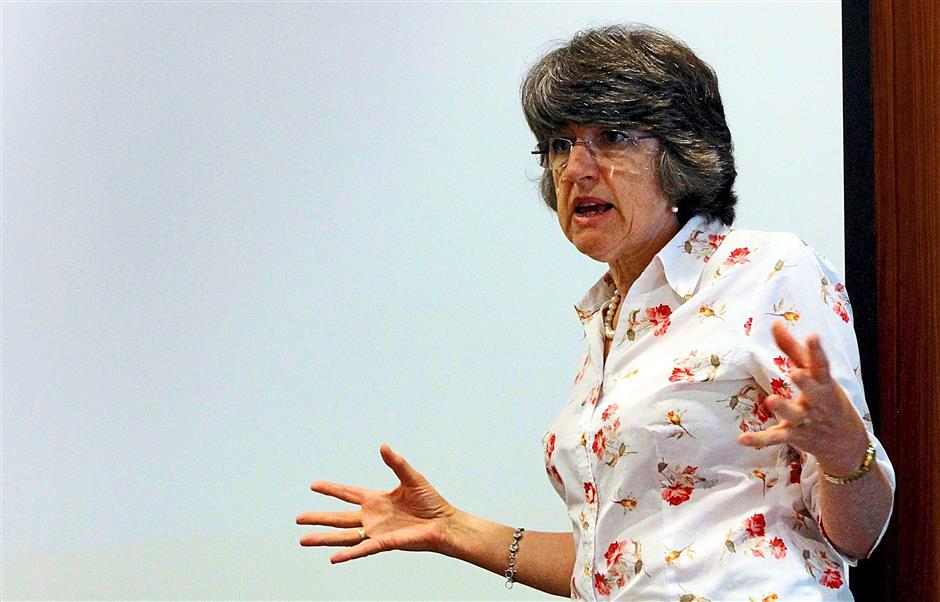
Baroness Dr Ilora Finlay, professor of palliative medicine at Cardiff University, Britain, knows exactly what it is like to have a loved one not only undergo palliative care, but also, wish to speed up death.
In 2005, her then 84-year-old mother, Thais, was diagnosed with breast cancer, which spread to her pelvis and lower back, and necessitated her admission to a hospice.
At that time, as described by Prof Finlay in a Daily Mail article published in July, her mother was adamant that she did not want to continue living in such pain and fear.
She told her two children repeatedly during that time that she wanted to die.
Prof Finlay wrote: “I had always known that Mum thought assisted dying was a good thing.
“She was very outspoken, and two decades after she had lost my father to an aggressive brain tumour, she told my brother and me: ‘I’ve had a good life, I don’t want to be a burden to anyone.’”
Of course, euthanasia was, and still is, illegal in Britain.
However, over 200 Britons to date have sought the services of Dignitas, a Swiss non-profit organisation that provides assisted suicide services for both Swiss residents and foreigners, who fulfil the appropriate required conditions.
The power of legacy
The major irony is that at the same time, Prof Finlay, a life peer in the British House of Lords, was also arguing against her colleague, Lord Joel Joffe’s proposed Assisted Dying for the Terminally-Ill Bill, in the Parliament’s upper house.
She shared: “At that time, when my mother was asking (to die), she was very angry that I was opposing the change in the law. And that was a conflict for me, here with my mother who I loved, and I was denying her the one thing she really wanted, potentially.
“And so yes, that was a terrible conflict, and quite often I was in tears after visiting her.
“But I think there was a little voice in me as well, which felt that I wasn’t going to give up hope on my mother; I wasn’t going to give up.
“There was that little voice which kept on saying, we just might get her home, we might get things better from here on out.”
Prof Finlay’s mother did eventually regain her desire for life, thanks to the hospice chaplain who sat down and asked her to tell him her story, without pushing his religious views onto this agnostic lady.
“And so he sat, this quiet, unassuming man, and listened, soaking up the years, as she told him her views and philosophy on life.
“And it was in this telling that it dawned on Mum that her decrepit body still held an active mind.
“Suddenly, she realised that if she wasn’t going to be allowed to kill herself, she had better make the most of what time remained,” wrote Prof Finlay.
Her mother started taking her pain medication properly and allowed the physiotherapist to teach her to walk again.
Eventually, her treatment started to take effect, and she was able to go home.
She went on to live another four more years, and in the process, witnessed the birth of two great-grandsons, shared many life stories with her family, and put all her affairs into order before quietly succumbing to her disease.
For Prof Finlay and her family, those final four years were “almost more precious than the 84 that had preceded them”.
As Hospis Malaysia CEO Dr Ednin Hamzah said: “We underestimate the power of legacy.”
Prof Finlay was in town earlier this year to speak at a two-day workshop on Palliative Care Ethics organised by Hospis Malaysia.
One of the points she made during her talk was the effect of euthanasia on children.
“The people that death impacts the most are the children.
“We often talk to the adults in the family, but for example, grandparents are the ones who often provide comfort and security to the grandchildren,” she said.
She gave another example of a man whose mother had sought assisted suicide with Dignitas, and who now had problems forming relationships because he felt his love had not been enough for his mother to want to stay alive.
“We don’t look enough at the impact of euthanasia on children,” she said.
“No man is an island. Every decision we make impacts on people around us.”
Not for docs
Prof Finlay’s conviction that euthanasia is not a medical care duty started and grew over her decades of practising palliative medicine.
Initially, this first palliative care consultant in Wales shared that she believed in the right to euthanasia.
“When I was a medical student and very junior doctor, I thought that euthanasia might be a good idea, it looked a seductively simple solution to complex problems.
“But the more I learnt about medicine, the more I realised how dangerous euthanasia is.
“Now, looking at what happens when you legislate this, you see ever-increasing numbers – over a four-fold increase in Oregon since they introduced physician-assisted suicide, and a 15% increase in euthanasia deaths in the Netherlands last year alone,” she said, adding that it is a matter of public safety.
The Netherlands was the first country in the world to legalise euthanasia in 2000, while Oregon, which is one of four states in the United States that allows physician-assisted suicide, legalised it in 1994.
In Britain, Charles Falconer introduced a bill legalising assisted suicide for terminally-ill, mentally-competent adults, called the Assisted Dying Bill in the House of Lords in May. The Bill is currently in the committee stage after its first two readings.
As with previous similar Bills, Prof Finlay strongly opposes this piece of proposed legislation.
“I don’t think euthanasia or physician-assisted suicide is a medical care duty.
“And if the law in Britain changes, I will be doing my best to keep it out of clinical practice,” she said, adding that no one really knows how long a patient, even one believed to be near death, might still live.
As a doctor, she said: “I want to be forced to go back and see what I can do to relieve pain and distress, to have to review the diagnosis.
“You stop treatment, which is not doing any good; you don’t hurt patients against their wishes; you continue providing care.”
Already a subscriber? Log in
Get 20% OFF The Star Digital Access
Cancel anytime. Ad-free. Unlimited access with perks.