Taking Islamic social finance to the world


Sultan Peak

THE Sultan of Perak will lead a special session on Islamic Social Finance at the United Nation’s inaugural World Humanitarian Summit (WHS) in Istanbul tomorrow. A well-respected humanitarian at heart, Sultan Nazrin Shah (pic) was hand-picked by UN Secretary-General Ban Ki-moon to collaborate on a paper that addresses the humanitarian financing gap.

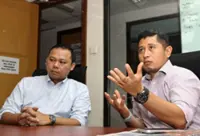
MERCY Malaysia executive council member Harmandar Singh interviewed the Ruler, who is the patron of the organisation, about his mission before his departure.

Tuanku, can you share what you will highlight at the Summit?

I am honoured to co-chair the UN High-Level Panel on Humanitarian Financing and have learnt that we need the humility to rediscover our sense of purpose. We are now facing not only a humanitarian crisis, but a crisis of conscience as well.

In my speech, I will focus on the Islamic financing component – a new funding source that needs explaining to a global audience. My work has taken me to places like the Vatican, which embraces faith-based funding, and even Russia, where people are keen to learn more about Islamic social financing.

Can the world afford to help itself?

The world today spends around US$25bil (RM102bil) to provide life-saving assistance to 125 million people devastated by wars and natural disasters. While this amount is 12 times greater than 15 years ago, never before has generosity been so insufficient.

In direct contrast, as a planet, we are a US$78 trillion (RM317 trillion) economy and we have never been richer. Closing the humanitarian financing gap would mean no one having to die or live without dignity for the lack of money.

With the shortfall in funds received and funds required, the summit is calling for a “Grand Bargain” on finance and aid organisations will be told to stop competing for resources. The UN fell short of US$7.5bil (RM30.6bil) in funding needs last year, 30% of what it required.

Cash-based assistance is the best way and there should also be less earmarked funds so help can reach the worst-hit when and where it matters most.

Please tell us more about the Grand Bargain.

We are calling on donors and implementing organisations to come together in a Grand Bargain. My panel will propose that Governments use the opportunity at the WHS to sign up to the idea of a solidarity levy and create a steady revenue stream for humanitarian action.

Médecins Sans Frontières (MSF) has pulled out of the WHS, citing the bombing of 75 hospitals last year, which violated the rules of war. It says the Summit is putting states on the same level as non-governmental organisations and UN agencies, which will minimise the responsibility of states. What are your thoughts?

MSF is a big and bold player in the global humanitarian space. The Summit is a once-in-a-generation opportunity where good people can converge to achieve good on a global scale. This is where issues raised by MSF will be tabled and discussed at length.

Islamic Social Financing is now coming to the fore as an additional funding stream and the humanitarian sukuk programme is also slated to be inaugurated at the Summit. What’s your expert opinion on this?

Islamic social financing is blue ocean territory. Recently I convened a meeting between the Islamic Development Bank (IDB) and the World Bank on this. IDB’s research on zakat in 2015 shows an estimated US$600bil (RM2.4 trillion) available to meet humanitarian needs. If 1% of this is made available, it can meet the global funding deficit for 2015! Work is ongoing to address how waqf, zakat, sadaqah and other instruments such as sukuk bonds can be channelled effectively and efficiently.

So what needs to be done?

What is lacking is coordination. Currently, zakat and waqf are all happening at local levels. What we need is a global, independent, multi-lateral market mechanism which can establish long-term financing plans so we can build a resilient response when crises hit.

How can Malaysians support the cause for humanity?

By being a shining example. Malaysians are a generous people and it is heartening to see them give their best at times of need.

Examples like MERCY Malaysia, an active partner in the global humanitarian ecosystem, also act as our beacon of hope whenever disaster and conflict strike.

Get 20% OFF The Star Digital Access

Monthly Plan

RM 13.90/month

RM 11.12/month

Billed as RM 11.12 for the 1st month, RM 13.90 thereafter.

Best Value

Annual Plan

RM 12.33/month

RM 9.87/month

Billed as RM 118.40 for the 1st year, RM 148 thereafter.

Follow us on our official WhatsApp channel for breaking news alerts and key updates!

Next In Nation

PM Anwar urges Indian Muslim community to be driving force for positive change
Barisan sets up unit to monitor delivery of Negri manifesto
PM Anwar orders shortage of foreign workers at mamak restaurants be fixed in a month
Negri polls: Securing RM30bil in new investments over the next five years among BN's manifesto
Cops cripple firearms syndicate with arrest of eight, RM360,000 in weapons seized
RM600,000 allocated to Kg Ladang Subang, SJKT Bukit Darah under Madani Adopted Village, Adopted School initiatives
Police investigating teen's fatal fall at Komtar Skywalk
Govt allocates RM44.5mil for flood mitigation works in PJ, Damansara
Anwar: Former PKR members who won on reform agenda should not criticise party
End race-based politics and support leaders with integrity, says PM Anwar

Others Also Read