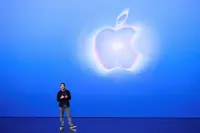
SAN JOSE: When Apple introduced the iPod 25 years ago, it was easy to dismiss it. The Western world was still reeling from the World Trade Center attacks in New York, and economic uncertainty was growing. And in that climate, Apple wanted US$399 for an MP3 music player – one that initially was only for owners of the company's Mac computers, which then had less than 3% of the market.
Despite all the doubts, however, the first iPod laid the foundation for a hugely successful product line that breathed new life into a music industry battered by rampant online piracy –and shaped Apple's future.
"The iPhone never would have existed without it," Tony Fadell, whose work on the iPod gave him the nickname 'Podfather', told Wired magazine recently.
Fadell added: "That means that the Apple we know of would never have existed without the iPod."
One secret to the iPod's success was that it solved a real problem. The MP3 format, which used compression algorithms to reduce the storage space needed for music to a fraction of what it had been, made entire album collections portable. Theoretically, at least: there were portable MP3 players, but they generally had relatively little storage and were difficult to use.
When Apple's co-founder and then chief executive Steve Jobs pulled the first iPod from his pocket on October 23, he immediately made a superlative claim: the device, about the size of a deck of playing cards, could hold around 1,000 songs. Before the all-you-can-eat buffet offered by streaming services such as Spotify, it was a plausible capacity for an entire personal music collection.
Apple reinvents the wheel
What really set the iPod apart, however, was how it worked. Its monochrome display let users browse music by artist, playlists or individual songs. The solution for moving quickly through large collections was a wheel with a selection button in the middle.
Apple had laid the groundwork for sorting songs with its iTunes software, which let users import CDs into a digital library on a Mac. It was part of the strategy Jobs had announced to make Apple computers the "digital hub" for users' multimedia content: videos, photos and music. Jobs said Apple had come up with the idea of building the iPod because it wanted a device integrated with the software. At the presentation, he spent 20 minutes showing off the apps before pulling the iPod from his jeans pocket.
The first iPod model still had a wheel that users physically turned. From the second generation in 2002, it was replaced by a touch-sensitive circle that recognised finger movements. Apple also added support for Windows PCs at the same time, dramatically expanding the iPod's market.
Rapid evolution
By today's standards, the pace at which the iPod family developed was almost breathtaking. The third generation, in 2003, introduced a 30-pin connector, which all iPhones also used until 2012. The cheaper and more colourful iPod mini followed in 2004, with a new click wheel that also incorporated the stop and menu buttons.
The following year brought the small iPod shuffle, which had no display and was designed to play music in random order. It was also the first model to use flash memory instead of the mini hard drives used previously. That year also saw the iPod nano, as thin as a pencil but with a small colour display.
By the end of 2005, Apple had sold more than 40 million iPods – a success that also boosted sales of its Mac computers. The iPhone's introduction in 2007 marked the beginning of the end for the iPod era.
The iPod touch remained on sale until 2022 – essentially an iPhone without mobile phone service – but it became clear that, with smartphones everywhere, few people would want a separate music player. Apple discontinued the iPod classic, by then with 160GB of storage, in 2014, and the iPod nano in 2017.
Generation shuffle
Two years after the first iPod, Apple launched the iTunes Music Store, where customers could buy not just whole albums but individual songs as well, for 99 cents each.
This had a lasting impact on the music industry's business. Music buyers were often interested in only a few songs, but previously had to buy entire albums or expensive singles. Sales of individual songs soared. The digital mixtape became more popular than ever with the shuffle function.
Some musicians complained that the iTunes model was killing the album. Jay-Z, for example, refused in 2007 to put his album American Gangster on the iTunes Store. He argued at the time that films were not sold as individual scenes and that the album was not intended to be broken apart.
The album controversy eased with subscription services that offer access to tens of millions of songs for a monthly fee. Apple was so slow to move away from the iTunes model that it had to buy the music company Beats to compete more quickly with streaming pioneer Spotify. – dpa