Trackers that ping satellites every time a whale surfaces for air. Thermal cameras that can detect the animals day and night. Acoustic devices that monitor their calls.
These and other emerging technologies could help protect the world’s last surviving North Atlantic right whales from collisions with vessels, a leading threat to their survival. And the Trump administration, as part of its deregulatory agenda, is considering whether the new systems could replace a simple, core protection almost two decades old: seasonal speed limits for large vessels.
The innovations, some of which are already in use to various extents, collectively show great promise. But they each face limitations and would require enormous resources to roll out comprehensively, meaning they are not yet a viable substitute for broad, mandatory speed restrictions, according to interviews with several of the scientists who are developing the technologies.
“That geographic scale is going to be very, very difficult,” said Mark Baumgartner, a senior scientist at the Woods Hole Oceanographic Institution who uses underwater acoustic monitoring to detect the whales. “It’s going to be expensive, and it’s going to be a major challenge.”
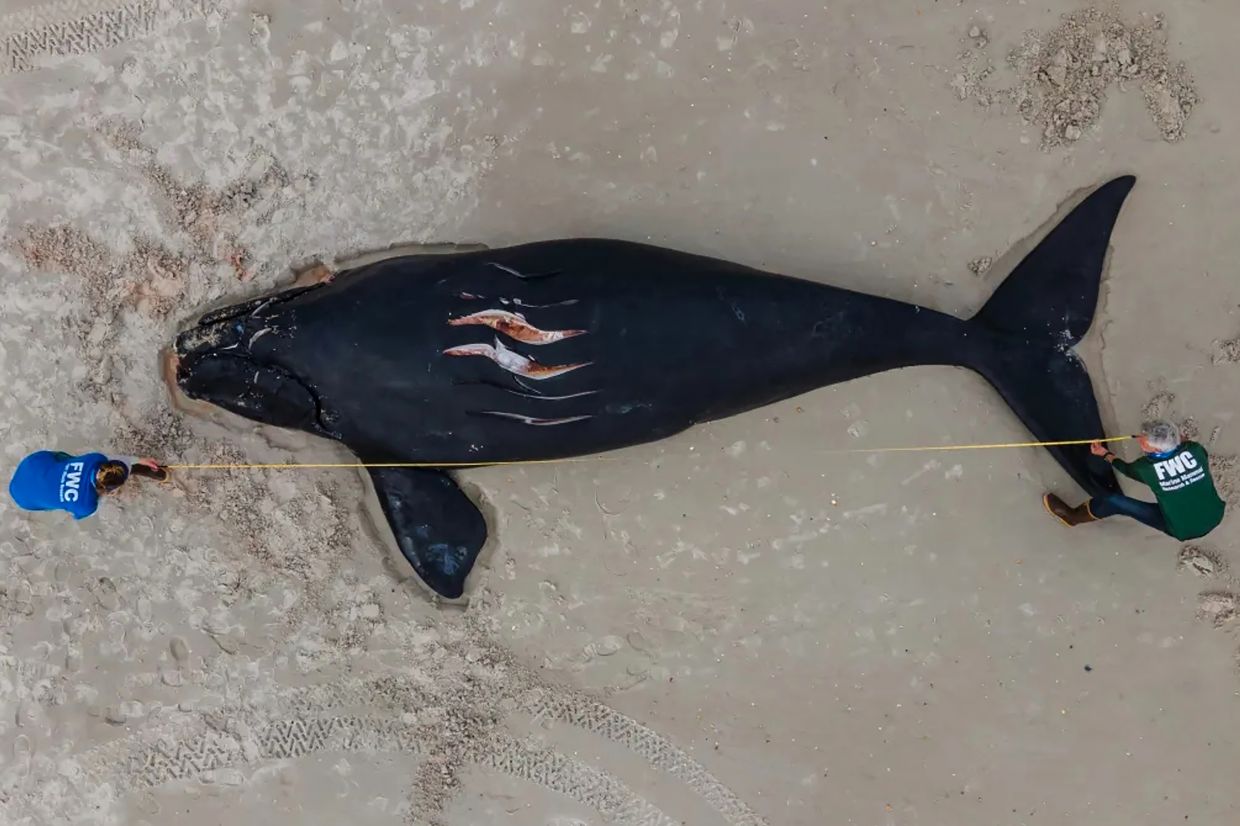
North Atlantic right whales are one of the most endangered species in the United States. Whaling drove them to near extinction. Since 2017 they’ve been experiencing what the government calls “an unusual mortality event”, with an elevated number of whales being found dead or injured. Only about 380 remain on the planet.
Main threats to whales
Vessel strikes and entanglements in fishing gear are the two primary threats, according to National Oceanic and Atmospheric Administration (NOAA) Fisheries. Global warming also appears to be playing a significant role, as changing ocean conditions cause the whales to follow their prey into new areas where they are less protected from traffic and fishing gear. Females are giving birth to fewer calves, probably because of a combination of stress and difficulty finding food.
For the species to recover, NOAA Fisheries has determined that even one human-caused death per year is too many.
The very nature of North Atlantic right whales makes them especially vulnerable to vessel strikes. They stick close to the coast, often swim at or near the surface and lack a dorsal fin, making them harder to spot.
Since 2008, vessels 65ft (19m) or longer have been required to operate no faster than 10 knots, just under 12mph (19kph), along certain stretches of the coast at certain times of year. During the Biden administration, NOAA Fisheries sought to expand those areas and include smaller boats, starting at 35ft (10.6m). But the boating industry, sport fishermen and harbour pilots fought the measure, saying it would cause economic devastation. The proposal quietly died.
Pinning hopes on tech
In March, the Trump administration announced that it was reconsidering the existing seasonal speed restrictions and looking at the possibility of replacing them with alternative management areas and technology-based alternatives. The goal, according to the notice, was “to reduce unnecessary regulatory and economic burdens on the regulated community”. The public comment period ended June 2.
“Technology has the potential to provide transformational tools to prevent species extinction while allowing marine industries, including fisheries, boating and shipping, to continue to flourish,” Rachel Hager, a spokesperson for NOAA Fisheries, wrote in response to questions.
The boating industry has welcomed the move. Ten-knot speed limits are prohibitively slow, affecting transit times and fuel efficiency for recreational vessels, said Gettys Brannon, president and chief executive of the South Carolina Boating and Fishing Alliance, a trade group.
“Regulations that were written 20 years ago shouldn’t remain frozen in time despite major advances in technology,” Brannon said. “In 2008, most people didn’t even have smartphones yet.”
Mixed results
An industry task force is working to identify, develop and implement technologies and monitoring tools to prevent strikes.
But a report assessing the readiness of various technologies, commissioned by NOAA Fisheries and completed in November, found that none had high marks in all three categories evaluated: the ability to detect North Atlantic right whales, the ability to reduce strike risk for individual vessels and the ability to reduce it regionally.
Acoustic monitoring was found to be the closest to ready, according to the report, which was completed by the Mitre Corp, a nonprofit organisation that provides research and development services to the federal government.
But the devices, which use specialised software on buoys and autonomous gliders to detect the calls of right whales, only work if the whales are calling. Mothers with calves, arguably the most important whales to protect, are known to be especially quiet.
Furthermore, expanding acoustic monitoring up and down the East Coast would be a herculean endeavor, said Baumgartner, who helps develop and deploy the technology. Currently, there are 11 such buoy stations and nine gliders operating in US waters, he said. (In the United States, acoustic detections of right whales currently trigger voluntary speed restrictions.)
Each of the technologies has its strengths and weaknesses. NOAA Fisheries considers thermal imaging to be one of the most promising, Hager wrote.
Devices sit on individual vessels or on land, detecting whales when they come up for air based on the temperature difference between the water and their exhaled breaths, called blows. Significantly, it works just as well at night.
The technology has scaled up quickly, said Daniel Zitterbart, an associate scientist at Woods Hole who helped develop it and co-founded a company to bring a product to market.
But the devices only work efficiently aboard larger vessels, because they need to sit high above the water, Zitterbart noted. And critically, the technology will only help if vessel operators act on the detections.
“There is the danger you put this on a boat and people just don’t use it,” Zitterbart said.
The kind of sonar used to detect submarines is not a good option for finding whales, he said. It introduces more sound into an already noisy ocean and is less effective for objects close to the surface, where whales are vulnerable to strikes and where they spend a lot of time.
Better tracking devices
Tagging whales with sensors for satellite tracking is enticing, but challenging. To ping satellites, the tag needs an antenna that sits outside of the animal’s body. Tags that don’t penetrate the skin tend to fall off quickly, often within hours.

Alex Zerbini, a senior research scientist at the University of Washington, has developed a tag that anchors below the whale’s blubber. It’s showing success on southern right whales, a related species with a healthier population, he said.
But the approach is controversial. The tag creates an open wound, like a body piercing. As the whale’s body heals around it, the tag is slowly pushed out and dislodged over the course of roughly a year. Regular retagging would be necessary.
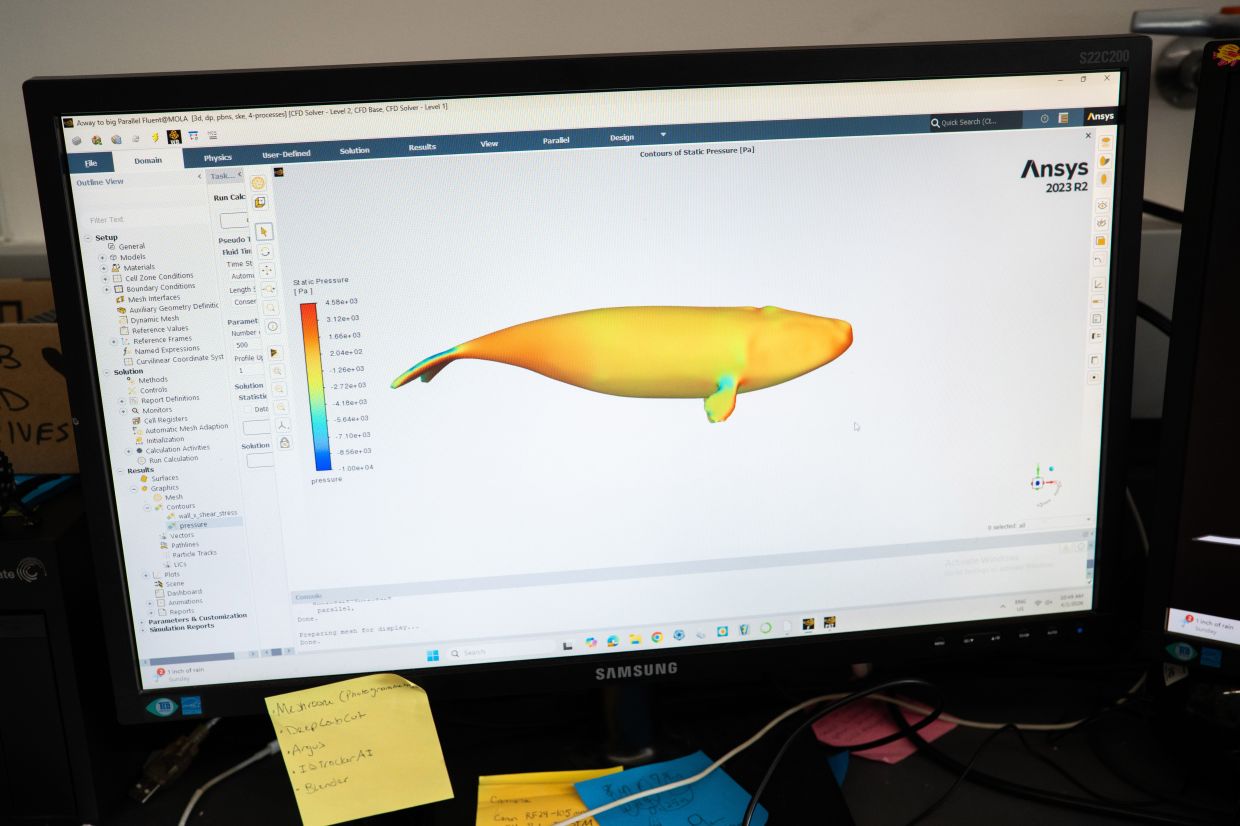
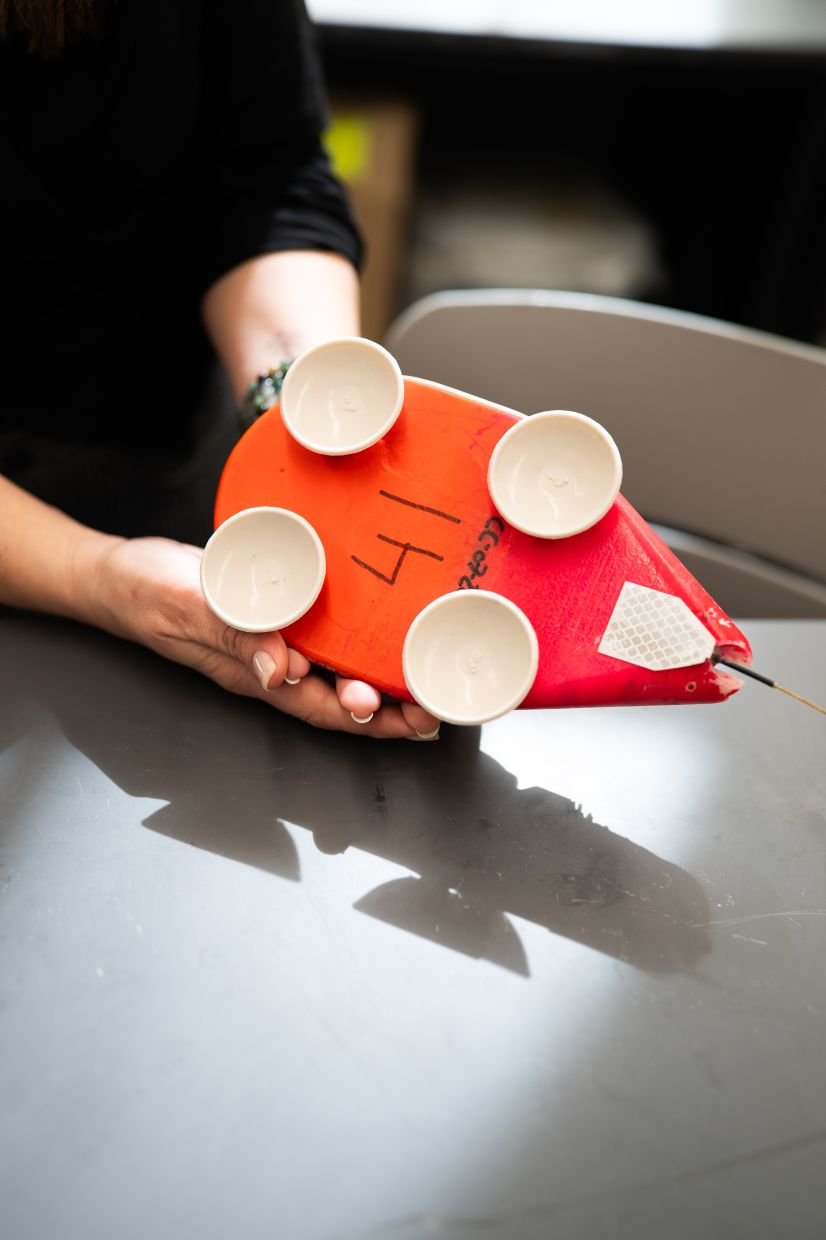
Brooke Flammang, a biology professor and director of the Fluid Locomotion Laboratory at the New Jersey Institute of Technology, is working on a new kind of noninvasive tag, modeled on the way remoras, also known as suckerfish, attach themselves to whales and other marine animals. Early results are promising, she said, but she’s still developing the device.
“We need the speed rules to stay in effect while we’re finalising other technologies for deployment,” she said.
Researchers at Duke University in North Carolina are working on a system that could take in data from all kinds of detection technology, combine it with other metrics and predict the presence of North Atlantic right whales the way meteorologists forecast weather. Measurements like water temperature and chlorophyll concentration, which can signal food, help scientists predict the presence of whales.
“Instead of showing rain potential, it shows whale potential,” said Jason Roberts, a researcher at the university’s Marine Geospatial Ecology Lab.
Currently, based on decades of research, the team can offer monthly predictions. But to effectively protect whales with minimal disruption to vessel traffic, they want to shrink that to days.
“That’s a huge leap, and it’s a very, very different and daunting task,” said Patrick Halpin, a professor of marine geospatial ecology at Duke and the lab’s director. The research and development is still a couple years out, he said, and then implementation and testing would require several more years. – ©2026 The New York Times Company
This article originally appeared in The New York Times.