SAN JOSE: Tesla said it expects its advanced driver assistance system "Full Self-Driving (Supervised)" to be approved across the European Union in the coming months.
Following approval in the Netherlands, the company is well positioned for EU-wide clearance this quarter, Chief Financial Officer Vaibhav Taneja said after the release of quarterly results on Wednesday.
The software, which still requires driver supervision, has been available in the United States for several years. Tesla said it now has about 1.28 million Full Self-Driving subscribers, up by 180,000 from three months earlier.
Chief executive Elon Musk said an unsupervised version of the system could be introduced in the United States "probably in the fourth quarter," though it would be rolled out gradually depending on safety assessments in individual regions. Vehicles with older hardware would need to be upgraded in so-called mini factories, he added.
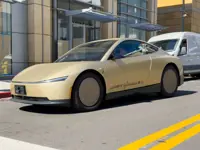
Musk has long said Tesla's future lies in autonomous robotaxis and humanoid robots rather than car sales. The company has begun production of its robotaxi vehicle, the Cybercab, a two-seater designed without a steering wheel or pedals, which Musk said could eventually make up the bulk of Tesla's output.
Tesla also plans to start production of its humanoid robot, Optimus, this year, with longer-term ambitions to scale output to up to 1 million units annually at its Fremont facility.
The company is discontinuing its larger Model S and Model X vehicles, and plans to use the freed-up space for robot production, though Musk cautioned output would ramp up slowly given the new technology.
Capital expenditure forecast raised to US$25bil (RM99.16bil) for 2026
Reflecting the scale of its expansion plans, Tesla raised its forecast for capital expenditure this year to US$25bil (RM99.16bil), from US$20bil (RM79.3bil) projected three months ago.
The electric vehicle maker also reported higher revenue and profit in the latest quarter as deliveries recovered.
Global deliveries rose 6.3% in the first quarter to 358,023 vehicles, after falling 13% in the same period a year earlier.
Last year's decline in deliveries was partly due to factory upgrades for an updated Model Y, Tesla's top-selling vehicle. Sales were also affected by controversy surrounding Musk's political activities, including his ties to US President Donald Trump, which may have deterred some buyers.
Tesla operates a major European plant in Grünheide, near Berlin, where it produces the Model Y. – dpa