
While most are aware about the surge in artificial intelligence (AI) tech since ChatGPT hit the scene at the tail end of 2022, those in the know have probably heard about how they can also create apps, websites, and even complex software entirely from scratch.
All it takes is a user giving instructions of what functionalities and features to include to a coding chatbot such as Claude, Gemini, Replit, or Lovable, and it will be able to generate code and produce a working end result.
This has spawned a plethora of local communities centred around “vibe coding”, as it has become known.
Members of these communities range from those with deep technical coding know-how, to complete beginners who now have an avenue to turn their ideas into reality thanks to the availability of AI-powered tools.
Emerging ecosystem
The three most active local AI-centred developer communities have formed an ecosystem of sorts, with a solid point of entry for participants at all technical levels.
For instance, Build with AI (BWAI) founder Andre Teow, 34, says that his community tends to cater to an older crowd, with participants ranging from their late 20s to 50s who may be looking for a career change, or SME operators who want to use AI to help their business operate smoother.
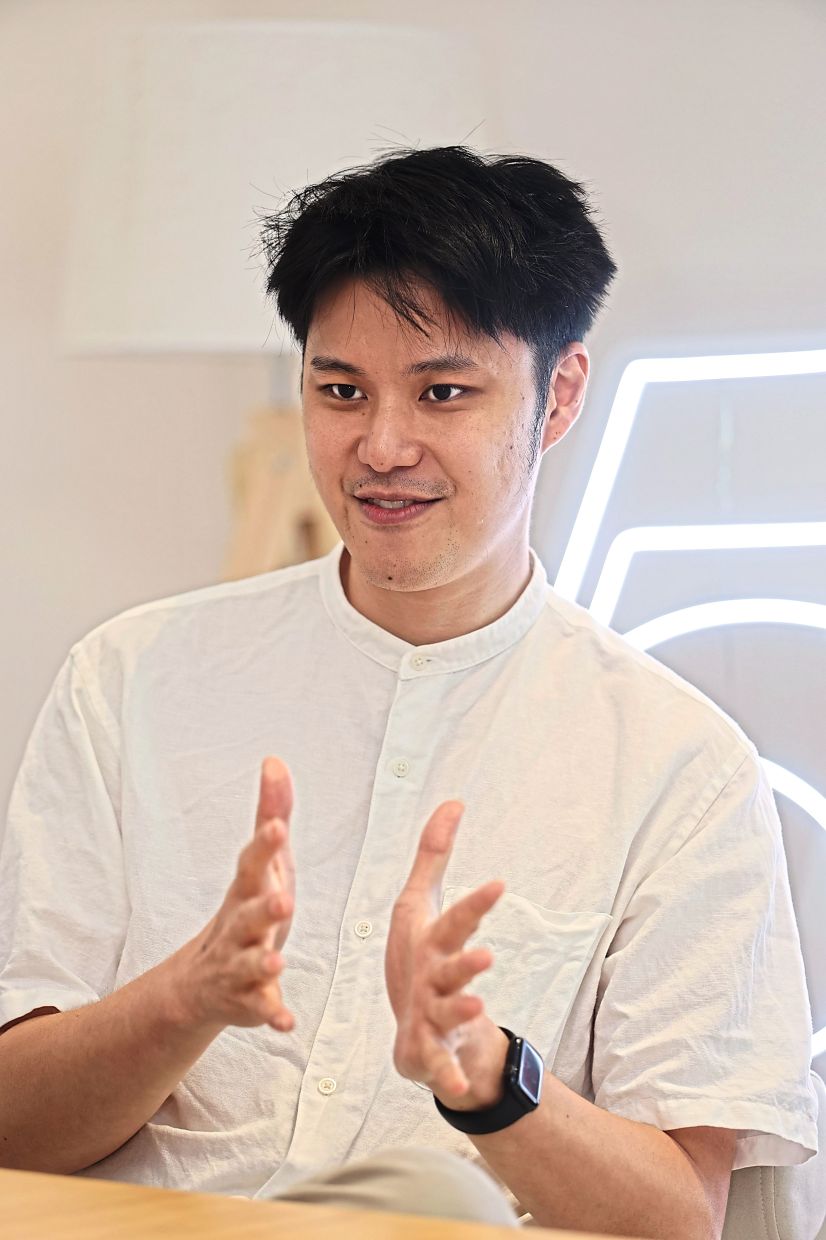
Teow believes that many non-technical people have ideas in mind that they want to turn into reality, but lack the ability to code or knowledge on where to get started. This is where communities can step in to fill the gap.
“Every month we have our offline meetup. We have 100-plus people showing up and the whole point of those meetups is just to build within a certain time period.
“A lot of people have not built before, and it’s usually through these sessions whether it’s through Build With AI or Build Club and so on, where they get to actually build something for the first time itself.
“That’s where they feel the magic of actually creating stuff with AI,” he says, adding that around 95% of BWAI members do not have any prior background in IT, with complete beginners being guided on the kinds of tools and prompts they can try using.
Those who already have a more technical baseline, or have participated in BWAI activities and want to be involved in more advanced discussions, can move on to the Build Club or AI Tinkerers KL.
Take 25-year-old Maxine Lai Mei Sim and 27-year-old Chong Xian Jun for instance, who got their start joining hackathons and eventually linked up with the AI Tinkerers KL community back in 2023.
While Lai comes from a technical background in computer science and data analytics, Chong originally studied architecture before pivoting into tech, first through self-studying data science and later moving into AI-driven software development.
Chong says that, like learning a new language, being in an environment where one is constantly exposed to and encouraged to use a technology speeds up the learning process.
“AI communities work the same way. Compared with paid courses or tutorials, I think the thing people don’t acknowledge is that knowledge isn’t scarce anymore. I can run a deep research query and get almost anything for free.
“The real scarcity is in judgment and prioritisation – knowing what to learn, what to focus on, what actually matters right now. Going through things alone, you might spend weeks going deep on something that turns out to be irrelevant.
“But in a community, you’re surrounded by people who are actively building, and you can see immediately what’s working, what tools people are actually using, what problems are worth solving,” Chong says.
The two of them are currently developing an AI-powered personal assistant startup, and say the community played a key role in their progress, particularly through the knowledge sharing and guidance from other members.
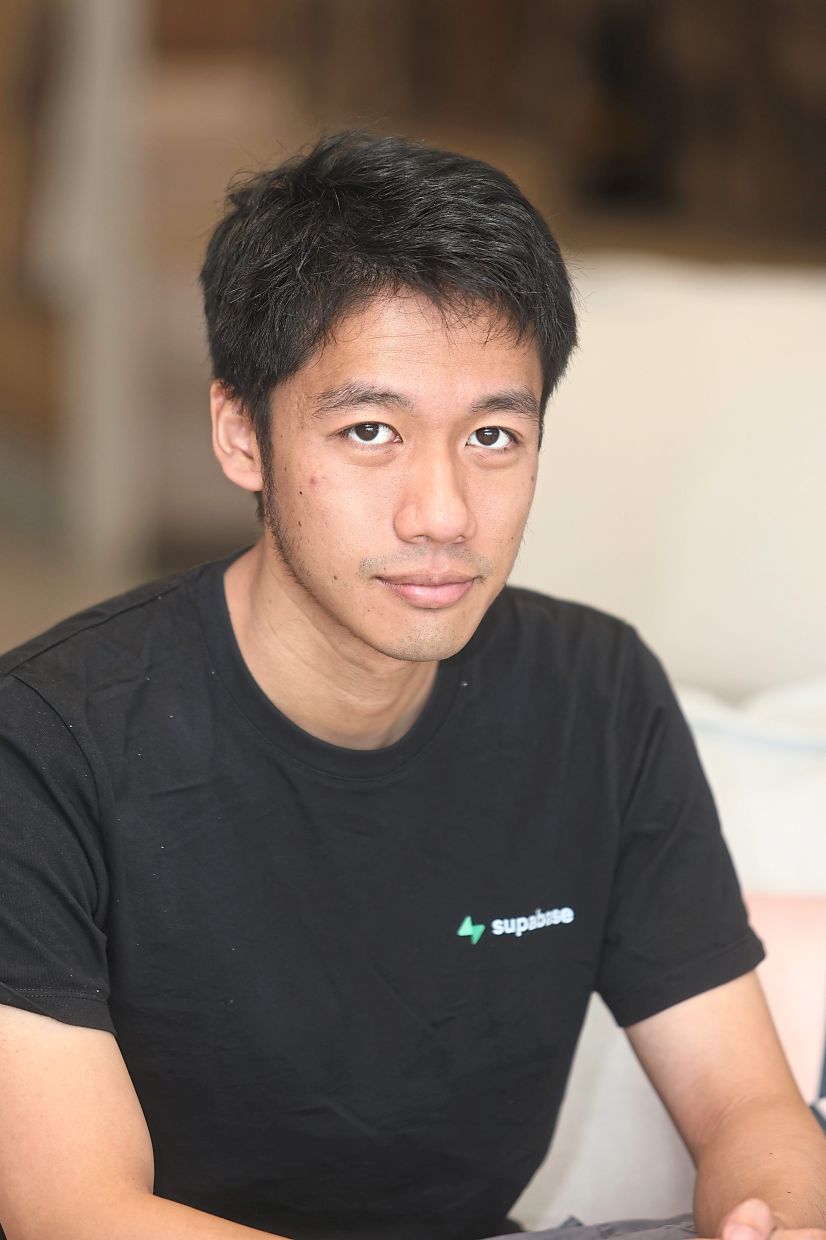
Brandon Beh, 27, City Lead for Build Club, says that his community has a roughly 70-30 split between technical and non-technical members, adding that more theoretical discussions into how AI works are encouraged among members.
He believes that this allows the more technical members to strengthen their understanding instead of just blindly applying the skills they have learnt, while at the same time equipping non-technical members with insight into what’s going on under the hood.
“You can live your life just prompting ChatGPT, but it helps to understand what is going on behind as well. It makes you a better prompter and allows you to build better stuff,” he says.
Broad appeal
When 54-year-old Arthur Wong was first drawn to the community due to its “collaborative vibe” after attending a tech startup event in 2022, he had a background in real estate and auditing.
“I met quite a lot of people from the tech industry. I liked their vibe. There were many young people – very curious and very knowledgeable, and some of them highly technical as well.
“What stood out to me was how collaborative everyone was. It was always about, ‘What’s the next cool project you want to build?’,” he says, adding that it was very different from the corporate environments he was familiar with.
Wong says attending events organised by communities such as AI Tinkerers KL, Build With AI (BWAI) and Build Club allowed him to see how people from different backgrounds approach problems and develop their projects.
Now he serves as an AI innovation and integration strategist for a consulting firm, due in part to the insight and exposure he gained from his participation with the various Malaysian AI communities.
For those like Puviin Varman, 28, a mechanical engineer who works in the oil and gas industry, the community has been a boon of resources and guidance when it comes to the more technical aspects of developing software.
“In the back of my mind, I always thought that the guys who attend these kinds of events are proper technical back-end or front-end guys, who probably speak what feels like a different language to me,” he says, adding that this initially made him hesitant to get involved.
Puviin later on took part in event on injecting prompts into a large-language model to get information organised by AI Tinkerers KL, which really kickstarted his AI and builder journey.
“One thing I noticed was the structure of the entire event was more catered to people who are not from the tech space or who are not deeply entrenched in it, so that was quite useful.
“From that event, I made quite a few friends, not just working in tech but also in human resources and some people in cybersecurity as well. The community helped a lot in my learning, and the people who came for those events were always happy to share,” he says.
Thirty-year-old Imran Omar similarly credits the community’s engagement and activities for him being able to make the leap into the tech space. He was previously a sound designer and music composer who worked on commercials and short films.
“I was a music guy growing up, and I decided to pivot early last year because I noticed that AI was becoming pretty good, and especially with coding. So I decided to try it out a little bit,” he says.
While someone without technical knowledge might simply ask ChatGPT to generate a program or piece of software, Puviin Varman says that community members learn how to prompt more effectively.
This includes giving more specific instructions to a coding assistant chatbot on things like the structure of the program, the plugins to integrate, and identifying the Application Programming Interfaces (APIs) to be used in the final product.
Likewise, Imran says that the community has also acted as a platform for him to bounce ideas around and get feedback on his projects during the regular show-and-tell events.
“Nowadays, there’s so many things coming out with AI, and it’s just an active place where people can just talk about it and give their own opinions. I’ve learned a lot about how to get started,” he says.
The topics do not need to necessarily be centred on AI too, as Imran says he’s asked on topics such as explainers on technical jargon, buying a domain name, web hosting, or implementing a payment processor like Stripe.
Building together
Another Build Club organiser, 27-year-old Edward Low, says that while such communities play a role in providing resources such as credits (which are used to access and run AI tools) needed by participants to build, they also act as a platform for members to share and learn from each other.
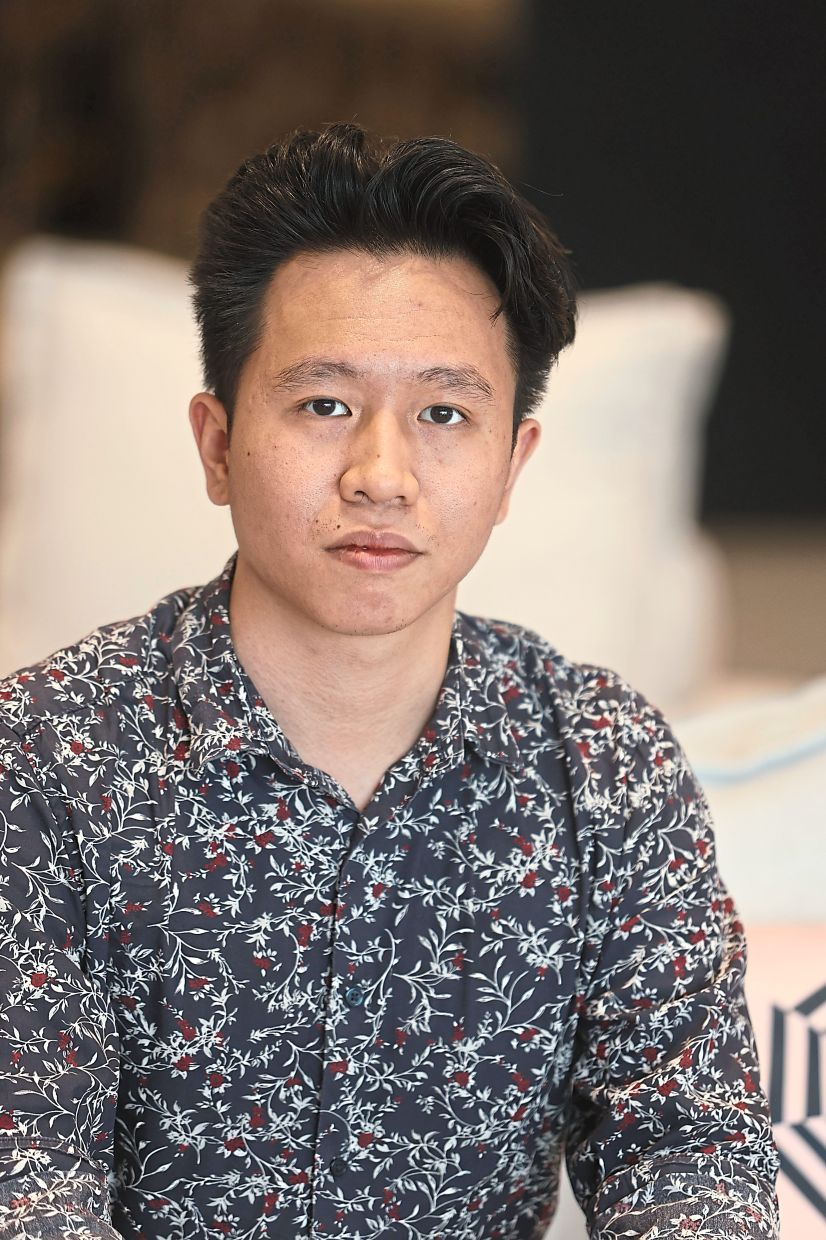
“We also have show-and-tell sessions at most, if not all, of our meetups. They give members a chance to share what they’re working on and get feedback from the community.
“People get inspired by what’s being shown and think, ‘Oh wow, this is what you can do,’ and that encourages them to start their own projects or collaborate with others there.
“Those who are facing similar problems can learn from the presenters and find solutions to those challenges,” he says.
Aiming to expand that reach across South-East Asia, Beh and Low founded AI.SEA last year, which acts as a larger community that similarly holds events, hackathons, and community meetups, while also providing further sharing opportunities for a wider range of members.
Lai says that this kind of exposure also puts participants ahead of the curve when it comes to the latest developments in the AI space.
“We have people here sharing their frameworks and how they use these tools and particular technologies to build things. For example, even before Clawdbot and OpenClaw (an open-source AI agent) went viral, we already knew about it from friends in the community trying it out and introducing it to us.
“There’s a lot of knowledge out there, so how do you know which ones are relevant to you and aren’t just hype or marketing? The community helps you filter and pick out the more useful tools,” she says.
Wong shares a similar perspective, saying that community-organised hackathons are an opportunity to see the different tech stacks (the sets of tools used to develop software) used by other members.
“So how do you design a smooth workflow? That’s one of the main things I’ve learned from the community. This is something discussed during hackathons, with sharing on the tech stack involved and how to approach each step.

“It’s like everyone is playing with Lego. We may have the same pieces, but each person builds differently. At the end, everyone shows what they’ve built, how they built it and how quickly they managed to put it together,” he says, adding that this kind of insight is critical in his AI consulting work.
Another, more recently formed community is CoderPuffs, a female-centric group founded by Lynnette Tee, 27. It hosts monthly meetups that cover the basics of vibe coding, often paired with cafe-hopping sessions.
“The whole aim is to introduce AI to non-technical girls. So it’s just a very casual, non-intimidating way of getting into AI and tech.
“What I noticed is that when you go to a lot of tech events, they’re very big scale, and very male dominated. They typically feel quite intimidating for a new person who doesn’t know a single line of code, which is why I started this,” she says, adding that such meetups let members be inspired by each other, and motivated to learn more.
Events held by communities in this space are typically organised on a platform called Luma, where interested participants can register in advance. Slots are often limited, with some sessions drawing more than 400 attendees.
Planning ahead
For those who are still studying, like 22-year-old electrical and electronic engineering student Shannon Choo Ru Xin, joining up with the local communities can serve as an invaluable chance to network and find future prospects.

After getting involved in the community, she later managed to secure a software engineering internship despite her academic background being from a different field.
From her point of view, the meetups and events also let participants get more hands-on experience and build a stronger portfolio of projects, which can give them a leg-up for a future career in the industry.
“Through conversations with the community, I learned what it is that I need to learn, and how to learn it as fast as possible. When you speak to people, they help you to summarise and cut to the chase – it helps to boil things down to the most practical of things.
“I like project-based learning. So after I got some fundamentals in some small courses online, I kind of skipped the whole tutorial phase altogether and I just picked a machine learning project to get started. From there, I did two machine learning projects.
“By that point, I was already involved in the community, then I also, through the community, got a software engineering internship, and I learned a lot from that,” she says, adding that having a strong portfolio is a lot more meaningful in the space, as that shows a person knows how to solve problems.
Choo has also started her own AI community called the AI HackerDorm, which is specifically targeted at university students and holds regular events at campuses for students to familiarise themselves with building projects.
However, Beh says that while such community initiatives have a role to fulfil, they should not be seen as an outright replacement for a traditional university education.
“Technically, you can learn how to ask an AI to code, but you’re not necessarily learning how to actually code. So that’s where university education comes in and gives you the fundamentals.
“It teaches you Python, it teaches you JavaScript, you know how to write it yourself. But the thing about AI right now is that it moves so fast – there’s no point going to get a certificate or course specifically on it because what came out two weeks ago is now obsolete.
“The good part about community-based learning is that you are getting direct exposure to the forefront of technology. You’re seeing how things evolve as they go, you’re learning on the go, and you’re always up to date with what is happening and what is the latest.
“So it actually should be seen, in my view, ... as supplementing a university education. That way, you have a very solid fundamental from whatever you have studied, but on top of that, you have practical real-world experience from community-based activities and learning,” he says.
Beh further adds that having an AI tool capable of handling things on the coding front will also give builders a chance to hone in on the specific problems they are looking to solve and more thoroughly plan projects out rather than being bogged down by technical details.
At the end of the day, the hope is that all these initiatives work in tandem to provide an avenue for both those with technical know-how and beginners to get their foot through the door into the tech space and start burnishing their coding skills.