(Corrects to "executive" from "CTO" in headline, adds designation in paragraph 3)
BENGALURU, Feb 23 (Reuters) - India's Wipro expects rapid AI adoption to boost rather than shrink demand for software service providers, a top executive said, countering concerns that the technology threatens the industry's outsourcing model.
The $283 billion sector has been hit by a sharp market selloff amid investor fears that AI tools could upend its traditional, labour-intensive operating model.
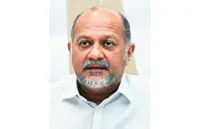
"When you look at the entire gamut of things that's possible, it really appears like a large opportunity for us," Chief Strategist and Technology Officer Hari Shetty said in an interview, adding that he expected AI to create more jobs than it displaces.
"What you're seeing today is basically task automation. What we are really talking about is autonomous enterprise, which is a completely different ball game that will require IT services companies to work deeply with clients to actually convert them."
Calling AI "probably the single biggest opportunity" for the industry and comparable to the discovery of electricity or the internet, he said current debates focus too narrowly on automation while missing a broader structural shift.
Citing World Economic Forum estimates, he said AI could create 170 million jobs globally while disrupting roughly 92 million, adding that India's IT sector will see strong demand for skills such as model training, data curation, and responsible AI.
"The primary differentiation here is people who know AI and people who do not know AI," he said.
Shetty argued that, much like cloud computing, AI will broaden rather than diminish the responsibilities of service providers.
Wipro continues to see strong demand for younger, "AI literate" engineers, he said, countering predictions that the industry's traditional staffing pyramid will hollow out.
What companies need are partners who understand their domain processes deeply enough to help them transition to "autonomous enterprises," a shift he expects will shape the next decade of technology spending.
"We clearly think AI is a dominant force, at least for the next decade to two decades, in terms of the kind of business that it will drive," he said.
(Reporting by Haripriya Suresh in Bengaluru; Editing by Dhanya Skariachan and Ronojoy Mazumdar)