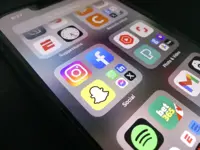
SYDNEY: Australia has introduced the world’s first social media ban for children and teenagers under 16, impacting millions of users on apps like Instagram, YouTube, TikTok and Snapchat.
Can this serve as a model for parents in countries where no such ban exists?
Media literacy specialist Alia Pagin says a ban shouldn't be any parent's first choice. Instead, children need close guidance as they grow up around highly addictive media.
Pagin says it's wrong to assume that at 16 someone suddenly becomes media mature and can responsibly use all these platforms at once.
She also argues that bans can always be circumvented, an issue that Australian authorities have also recognised. Indeed, several teens have boasted about still being active on social media a day after the ban.
"In essence it's about supporting and accompanying children and teenagers in their media use on an ongoing basis, and talking about it," says Pagin. This helps children to set their own boundaries in time.
Polling on Australia's social media ban shows overwhelming support for the age limits, with just 23% opposing the measure, according to YouGov figures.
Among the most vocal supporters are parents of children who died by suicide after mental health crises sparked or exacerbated by social media apps.
Critics have cautioned that one adverse effect of the ban is that children from minorities will be cut off from their online communities, making it difficult for LGBTQ and neurodiverse teens to exchange experiences.
"It won't be perfect. This is a big change," Prime Minister Anthony Albanese told reporters on Wednesday as the ban was going into effect. "Success is the fact that it's happening. Success is the fact that we're having this discussion."
Banning the benefits of social media?
Parents will already know many of the scientifically proven risks of teen social media use, such as radicalisation, the increase in eating disorders and also the unrealistic ideals presented to young girls, which can lead to insecurity, low self-esteem and pressure to conform. Teens on social media also face hate speech, cyberbullying and misinformation.
But Pagin argues that we should not rule out the benefits – communication, news, entertainment and a sense of belonging – because of the wealth of flaws. Her preferred approach is one of education: know and name the risks, don't demonise everything.
Pagin advises mothers and fathers to use media education resources online to help put things in context for their children. "You don't have to find everything out yourselves," she says.
If parents want to monitor and manage smartphone use, tools like Family Link (Android) or Parental Controls (iOS) can help. These also allow child protection filters and app blocks to be set.
It is always advisable to talk openly with children about such restrictions.
Pagin, a university lecturer on media education, also recommends that families think about creating media-free spaces and situations. "Many adults then realise they may themselves have a very excessive or even burdensome relationship with social media."
What is the right age?
It's difficult to set rules for smartphones and social media because it depends on the individual child’s maturity, says Pagin. Media educators often speak of a threshold around the age of 11 or 12 years old when a child is ready to have their own smartphone.
For a social media account, some argue to wait only until the age of 13 and then allow an app with parental consent. Others suggest waiting until aged 16.
Instagram, for example, allows users as young as 13 to set up accounts on their own, but has begun making their accounts private by default, assuming the child does not lie about their age.
Among 13 to 15-year-olds in Germany, 92% are already active on social networks, a 2025 survey by industry association Bitkom found. More than half of children (55%) in this age group already had their own public profile with a name and pictures.
YouTube, included in Australia's ban, is the most popular of all social media apps among 13 to 17-year-olds, according to a 2025 Pew survey which puts use in the US at 92%, followed by TikTok at 68%.
A national ban coming soon near you?
How well the ban will fare in the long term remains to be seen, but according to Australian media, social media platform Reddit is preparing to challenge the law in court.
As with other social media platforms, the company had earlier said it would comply with the rules despite disagreeing with the terms of the law.
Indonesia and Malaysia are already working on similar bans, while other countries are considering following Australia's lead. In November, Denmark announced an agreement to restrict children under 15 from using certain social media platforms over concerns about youth mental health.
In September, European Commission President Ursula von der Leyen said she was "inspired" by Australia's "common sense" move to introduce age restrictions. – dpa/Tribune News Service