This week, actress Brooke Shields posted an image of an action-figure version of herself that came with a needlepoint kit and a pet terrier. Rep Marjorie Taylor Greene, R-Ga., imagined her own figurine accompanied by a gavel and a Bible.
These hyper-realistic dolls are nowhere to be found in toy stores, at least for the time being. They are being created using artificial intelligence tools, including ChatGPT.
In recent weeks, social media users have been turning to AI to generate Barbie-fied versions of themselves, their dogs or their favourite famous figures. Anna Wintour has not been spared the AI-doll treatment. Neither has Ludwig van Beethoven.
The trend has frustrated illustrators who oppose the use of unlicensed artwork to train these artificial intelligence tools, and who remain concerned about the effects of AI on their livelihoods. Several have responded by posting similar images of figurines that they illustrated themselves.
“HUMAN MADE”, reads a text bubble in the corner of one such illustration by Linh Truong, who depicted herself with her sketchbook and her cat, Kayla.
Truong, 23, an artist who lives in New York City, sees the AI action figures, the latest of several AI portraiture trends, as a way that tech companies are trying to connect with users on a personal level.
“They’re like, ‘We want you to see yourself in our product’,” she said.
To plenty of people, that’s a tempting possibility.
Suzie Geria, 37, a fitness trainer in Toronto, thought the action figure created for her by ChatGPT was surprisingly realistic. It came with a kettlebell and a cartoon peach to represent the glute-focused class she teaches at a nearby gym.
“It’s kind of cool to see yourself reflected in a cartoon form,” she said. “I think we’re looking at other ways to see ourselves in the world we live in, which is very much online.”
Geria said she had empathy for those who worked in industries that might suffer job loss because of AI. “It’s a tough one, but it’s bringing people joy as well,” she said.
Pat Bassermann, 42, who works in marketing and lives in Andover, Massachusetts, typed a paragraph-long prompt into ChatGPT to create an action figure of himself on Thursday.
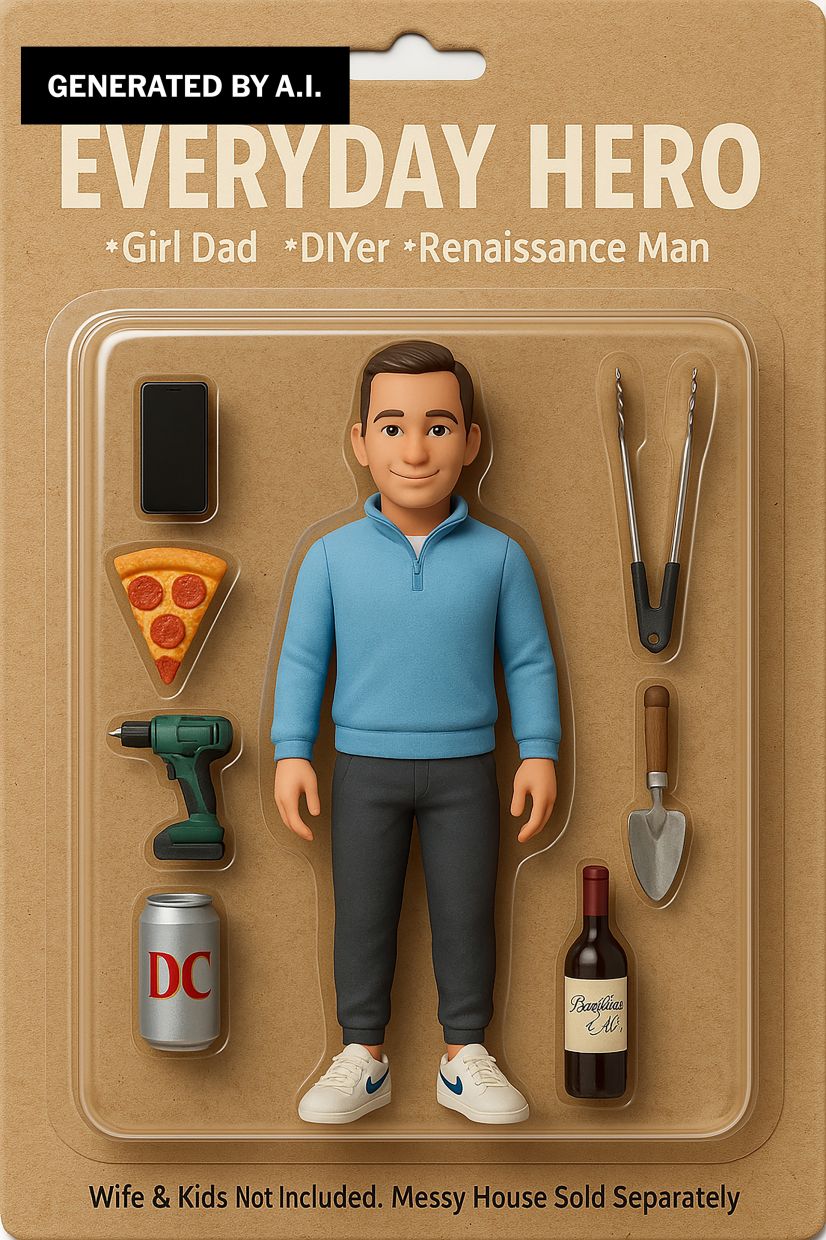
“Use this photo of me to create an action figure of myself in a blister pack, in the style like a premium collectible toy,” he wrote, adding requests for grilling tongs and a “relaxed, friendly smile”. He uploaded a headshot, and was presented with an image seconds later.
“Wife & Kids Not Included. Messy House Sold Separately,” reads a line of text at the bottom of the image.
Soon, his three daughters wanted their own versions. In a few more minutes, they were presented with figurines with ponytails, accessorised with ballet slippers, a video game controller and a cup of Boba tea.
As AI platforms have surged in popularity, their image-generating abilities have come under scrutiny. Artists and musicians have argued that the technology threatens their livelihoods. Deepfake images, many of them explicit, have confounded schools, political campaigns and celebrities.
(The New York Times filed a copyright infringement lawsuit against OpenAI and its partner, Microsoft, accusing them of using published work without permission to train artificial intelligence. They have denied those claims.)
In March, social media was flooded with videos that used ChatGPT to replicate the style of Japanese filmmaker Hayao Miyazaki. In response, some users circulated a clip of Miyazaki calling AI “an insult to life itself” in a 2016 documentary.
Martha Ratcliff, 29, an illustrator in Leeds, England, said she spent years developing a distinctive style of portraiture. She said she felt frustrated every time she saw a new AI portrait trend that ostensibly drew from the work of real artists without compensation.
She gets that it’s fun to hop on a trend, she said. “But I think if you look at the bigger picture, there are a lot of creatives that are worried,” she added. “You just don’t want it to wipe out the whole creative industry.”
She spent about 20 minutes on Saturday making her own hand-drawn rendition of the trend. She depicted herself holding her newborn, surrounded by flowers, colored pencils and a steaming mug that said “mama”.
“A human doing it is so much better than a robot,” she said. – ©2025 The New York Times Company
This article originally appeared in The New York Times.