
A DAY in the life of Quincy, a five-year-old labradoodle who travelled to the US Open with his owner, tennis player Danielle Collins, sounds like something out of a Hollywood film.
He wakes up to a skyline view of New York City from the penthouse of a five-star hotel.
A chauffeur takes him to Flushing, Queens, where excessive coddling and belly rubs await. Chefs prepare a plate of bacon and eggs for breakfast, and salmon for lunch.
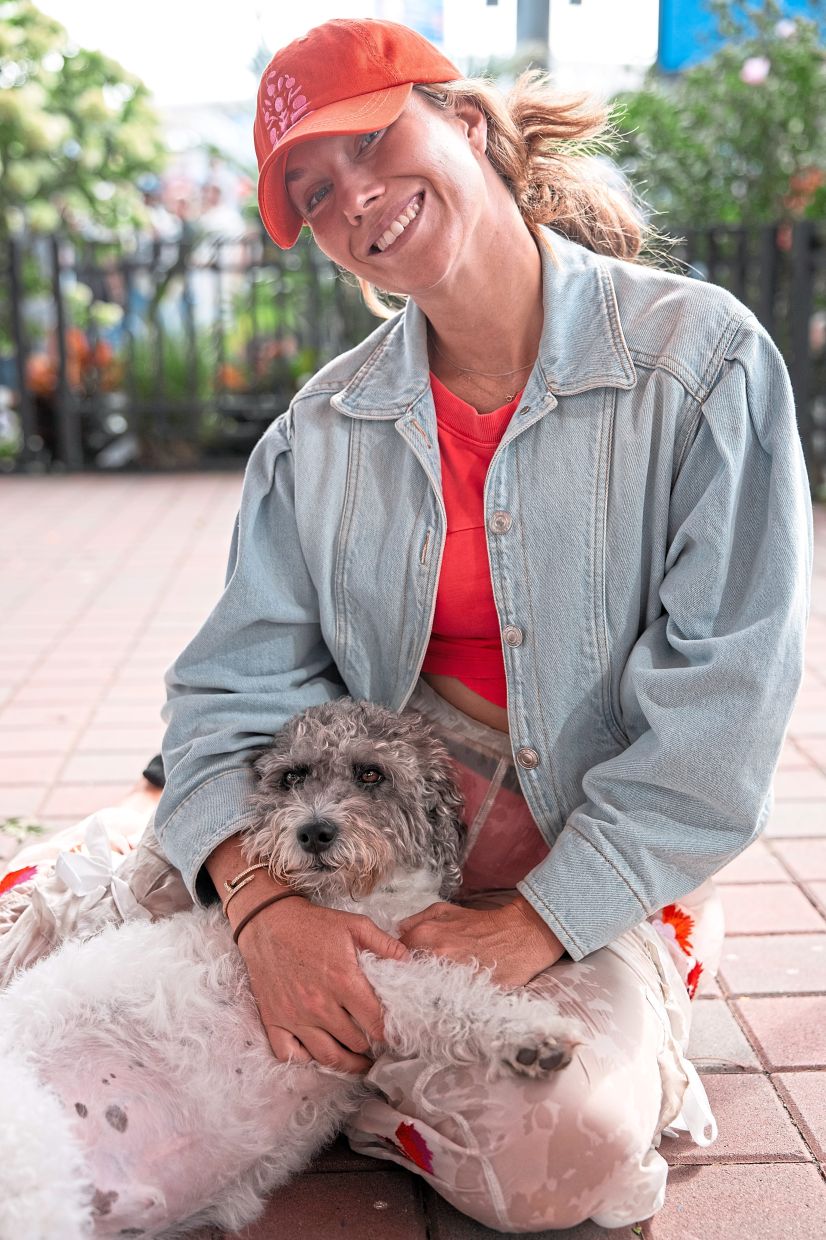
And after a hard day of work, in which he mostly watches Collins practice, a professional massage therapist works on his worn-out muscles so he can do it all again the next day.
“He’s very spoiled,” Collins, an American player who came into the tournament ranked 61st in the world, said in an interview. “I treat him like a prince.”
Professional tennis players travel the world with a team that typically consists of a coach, a fitness trainer, family and friends.
Some add in a four-legged companion, typically with less specific duties. For Collins, Quincy is an essential member of her team who accompanies her virtually everywhere she goes on the grounds at the USTA Billie Jean King National Tennis Centre.
The US Open is the most pet-friendly grand slam, according to several tennis players interviewed by The New York Times, making it an opportune two weeks for players to enjoy their pet’s company in a city with more than half a million licensed dogs.
All players’ pets are credentialed with their headshots printed on blue US Open badges attached to blue lanyards – just like the ones often seen dangling from players’ tennis bags. As such, they have access to most of the spaces used by players.
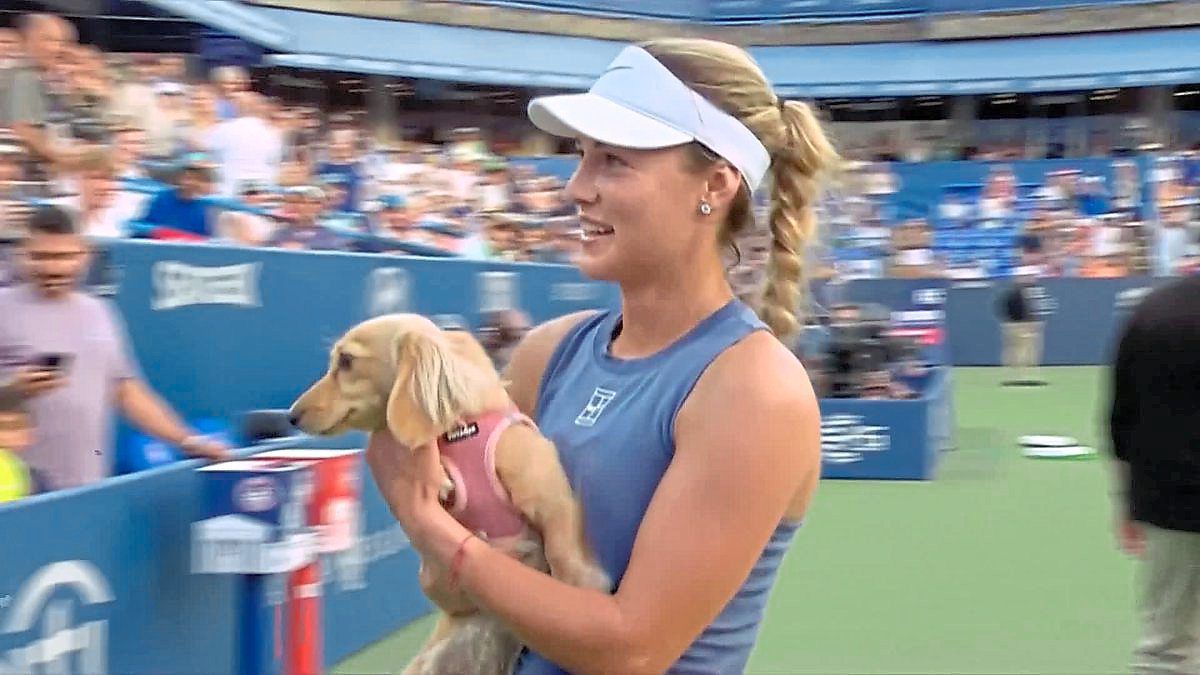
Anna Kalinskaya’s mini dachshund, Bella, can be spotted relaxing in the players’ lounge.
Marta Kostyuk’s Maltipoo, Mander, can be spotted on the practice courts. Quincy can be spotted in the gym while Collins trains.
“If I ever start to get overexerted,” Collins said, “he immediately tries to come up and interject and be like, ‘Boss, take a break. You’re getting really, really tired.’”
The United States Tennis Association said they ask players to keep their pets out of the locker room and the dining room, but those are not official rules in the player handbook, and the request is occasionally ignored.
“You’re asked not to bring them in the locker room, which is understandable, but everybody in the locker room likes dogs,” Collins said.
“It seems like everybody really loves animals, so I think that rule can get bent here and there,” she added.
The lax pet policy certainly aligns with a simple truism: Americans love dogs.
“If they’re a team member and part of the family, we’ll treat them like one,” said Daniel Pyser, a USTA spokesperson.
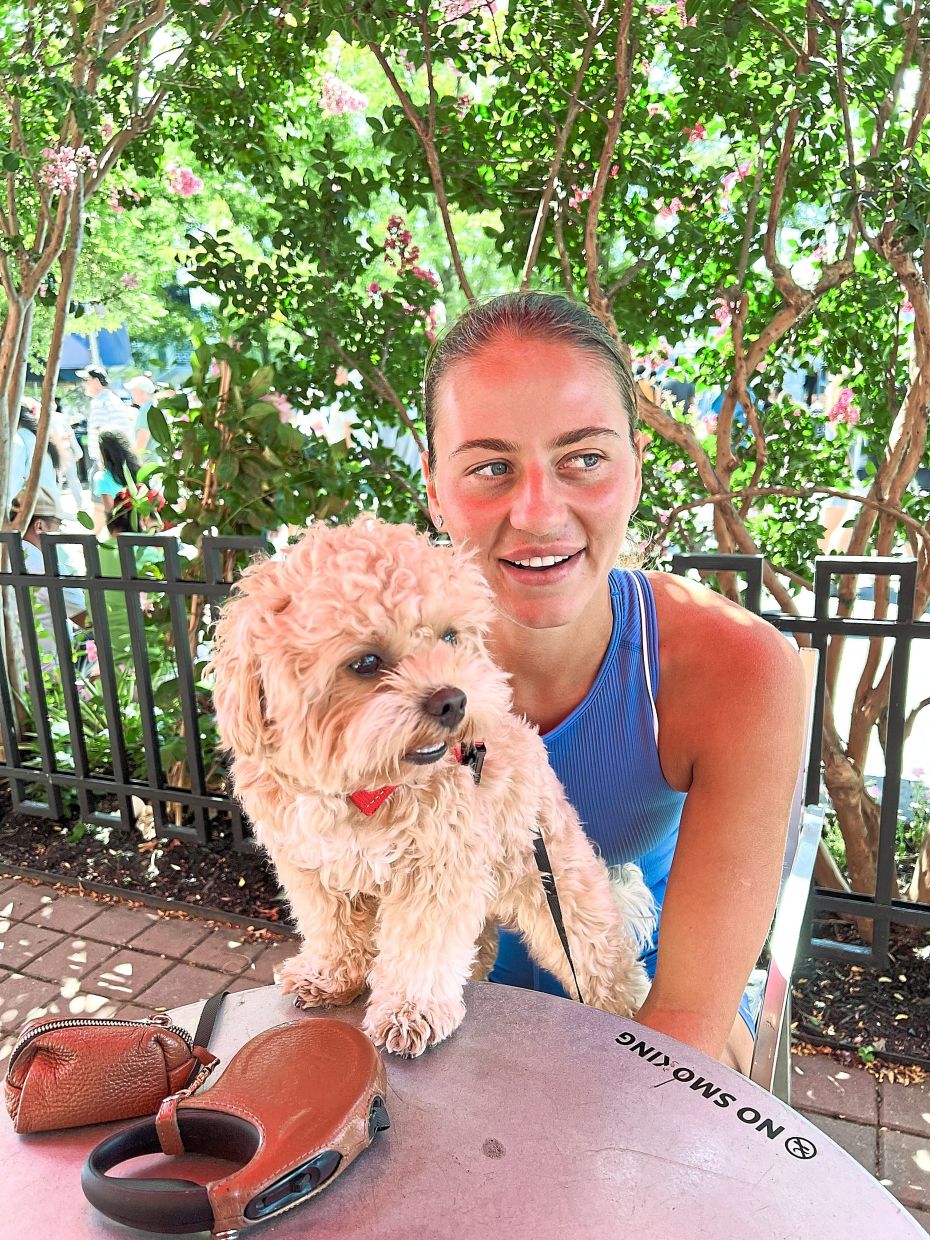
Mander propped his forepaws on a small outdoor table as he balanced his hind legs on Kostyuk, a Ukrainian tennis player.
On a windy Saturday afternoon in Flushing, the 1½ year-old Maltipoo looked content feeling the wind ruffle through his fluffy caramel coat, while Kostyuk looked content just to be there with him.
There is more space and more grass for Mander to enjoy at the US Open, and in the United States in general, Kostyuk said.
She compared it to the French Open, which takes place in Paris, where “you can bring dogs, but it has to be in a bag everywhere.”
She has not brought Mander with her to London for Wimbledon, a tournament that she said has a strict no-dog policy.
And she said Australia makes it difficult for overseas travellers to bring pets into the country, let alone to the Australian Open.
Dogs being part of a touring entourage for a women’s tennis player is nothing new.
Martina Navratilova, who won four US Open titles in the 1980s, travelled the world with K.D. (Killer Dog) for 16 years. K.D. would often sit on a pillow in the lounge during her matches.
Serena Williams’ Yorkshire terrier, Christopher “Chip” Rafael Nadal (yes, she named her dog after tennis star Rafael Nadal), was a regular presence in her player’s box during her matches, or on her lap when she watched her sister Venus play.
As tournaments grow longer, and the season stretches to nearly an entire calendar year, more players are adapting by bringing their furry friends on tour.
“You’re home less and less, so you just need to have something around you other than your team and tennis,” Kostyuk said.
Kalinskaya, a Russian tennis player, said in an interview that more female tennis players, in particular, were travelling with pets. She believes it has a positive effect on their mental health.
“I see also girls are more happy,” she said. “I see more joy.”
Above all, players say the best part of having a pet with them on tour is knowing that they will always be loved, with no strings attached. — NYT