‘‘ALL I need is a miracle’’, goes the 80s hit song by Mike and the Mechanics.
And the European Championship has provided one every 12 years since 1992.
Footballing fairytales don’t come any greater than on Europe’s biggest stage.
We revisit the three editions where unheralded sides made the impossible possible.
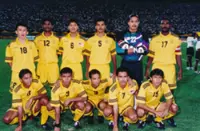
DANISH BOLT FROM THE BLUE (1992)
Denmark, the first kings of unexpected Euros glory, did not even qualify for the competition in Sweden.
The Danes were an eleventh-hour entry, after Yugoslavia were disqualified due to the country’s break-up and the ensuing warfare.
Coach Richard Moller Nielsen’s men made a far-from-convincing start in the eight-nation tournament. A 0-0 draw against England was followed by a 1-0 defeat by Sweden, leaving them with a do-or-die clash with France - managed by Michel Platini and boasting the presence of Eric Cantona.
Thus began the unlikely Danish charge - they stunned the fancied Les Bleus 2-1 with goals by Henrik Larsen and Lars Elstrup.
Midfielder Kim Vilfort memorably jested after the game: “We played without nerves, because we thought we’d be going home.”
Next up in the semi-final came holders Holland, looking mighty as favourites with the likes of Ruud Gullit, Marco van Basten and Frank Rijkaard.
In a show of Viking valour, the Danes battled to a 2-2 draw after 90 minutes with Larsen grabbing two more goals. A scoreless extra-time set the stage for a suspenseful shootout.
Van Basten, hero of Holland’s 1988 triumph, saw his penalty saved by Manchester United keeper Peter Schmeichel.
It was the only spot-kick failure and defender Kim Christofte went on to seal Denmark’s berth in the final, where eternal frontrunners Germany awaited.
Schmeichel turned on the heroics against the Germans, stupendously saving from Karl-Heinz Riedle, Stefan Reuter and Guido Buchwald as Denmark survived a blitzkrieg in the first quarter.
John Jensen’s bolt from the blue in the 18th minute - a spectacular strike from the right corner of the penalty area - rocked Germany and Berti Vogt’s soldiers desperately marched forward in search of the equaliser, but to no avail.
With 11 minutes left, it was Vilfort’s turn to provide the second shock. After eluding two markers, the playmaker fired a delicious left-foot shot that hit the bottom-left corner of the post before bouncing past goalkeeper Bodo Illgner.
An incredulous Vilfort was in dreamland as his delirious teammates piled on top of him - and the Danish fairytale was complete.
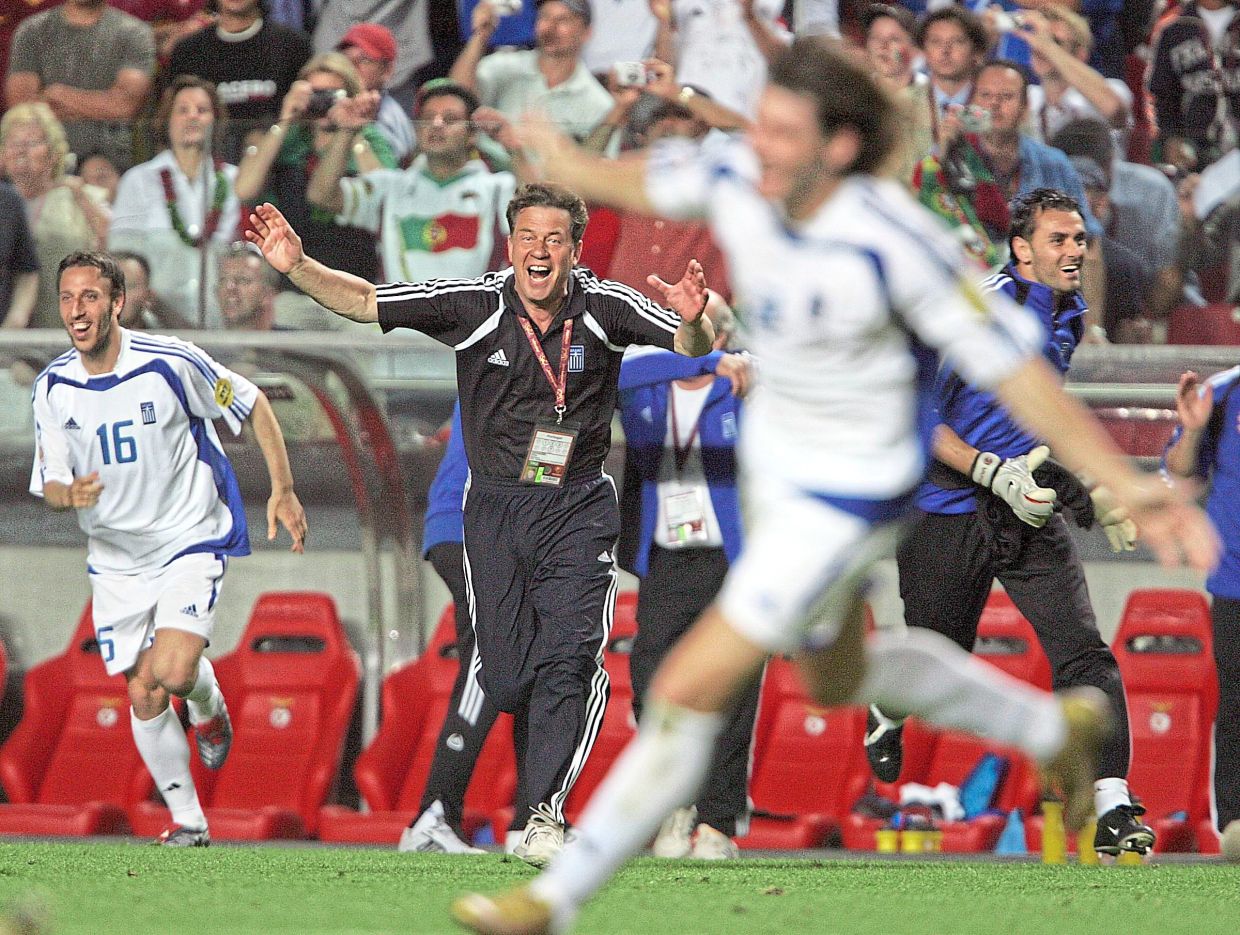
GREECE LIGHTNING STRIKES TWICE (2004)
TILL today, some purists still begrudge Greece for their against-all-odds success, recalling their boring, anti-football with a shake of their heads.
But the glorious Greeks of German coach Otto Rehhagel can care less. For them, it was a triumph of the Olympic spirit - Athens also hosted the Olympic Games that year - and Rehhagel’s success is one of the greatest tactical achievements on the big stage.
Perhaps their critics should have seen it coming. Greece already sounded an early warning, stunning hosts Portugal - featuring a 19-year-old Cristiano Ronaldo in his debut - 2-1 in the opening match.
But a dull 1-1draw with Spain, and a 2-1 loss to Russia did little to make Greece contender material, even after they entered the last eight.
The odds got heavier in the quarter-finals, as holders and world champions France loomed.
With a side still parading class acts like Zinedine Zidane, Thierry Henry, Robert Pires, Lilian Thuram and Bixente Lizarazu, nobody gave Rehhagel’s workman-like outfit a ghost of a chance.
Then came the mother of all sucker punches. A disciplined Greek backline kept the potent French strike force at bay, and Angelos Charisteas headed in an unlikely solitary goal in the 65th minute.
The stunner won them few fans. The Guardian called Greece ‘the only underdogs in history who everyone wants to see get beaten.’
French legend Michel Platini even said Greece were ‘’bad for business’’ as they ‘’asphyxiated’’ the attractive teams, encouraging other sides to follow suit.
True enough, the Greek tactical machine worked wonders again in the semi-final against the Czech Republic, the tournament’s most entertaining side.
Shutting down the attack that had won so many admirers, Greece struck another solitary goal, in extra-time, via Traianos Dellas to set up a showdown with Portugal.
The hosts were fired up to avenge their loss in the curtain raiser but in the end, the curtains came down with another clean sheet, and another 1-0 win for Greece. As a horrified silence descended on Lisbon, Athens erupted in joy. Final goal hero Charisteas said: “Tonight, I feel like a Greek god.” No one could deny him his sexy moment.
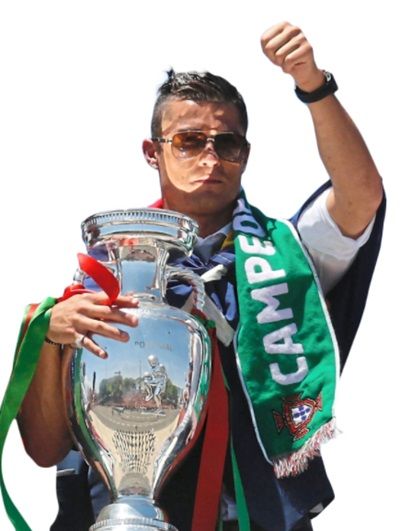
THE PASSION OF CRISTIANO (2016)
IN a tournament expanded to 24 teams, Portugal arrived in France as just one of the dark horses.
Heavily dependent on their consistently prolific captain Cristiano Ronaldo, the Portuguese failed to win a single game in their group, drawing all three against Iceland (1-1), Austria (0-0) and Hungary (3-3).
But thanks to the new format, coach Fernando Santos’ grinders still reached the last 16 as one of the four best third-placed teams.
Their football, though, hardly got better in the knockout stage. Ronaldo and Co had to resort to being marathon men - first in the last 16 against Croatia, whom they edged 1-0 after extra time, and then in the quarter-finals where a 1-1 draw with Poland had to be settled on penalties (5-3). So dull was Portugal’s progress that Santos’ side were even compared to the boring Greeks of 2004.
That criticism did help a little. Portugal gave a neater display in the semi-final against a Gareth Bale-inspired Wales, winning 2-0 in full time with a classic Ronaldo-headed goal the showcase.
Then came the final with hosts and favourites France, who had disposed of world champions Germany 2-0 in the last four.
What was supposed to be Ronaldo’s dream stage turned into a nightmare.
After only eight minutes, he suffered a knee injury due to a challenge by Dimitri Payet.
Ronaldo attempted to play on, but fell down twice before finally going down a third time and was replaced by Ricardo Quaresma in the 25th minute.
In a tale that can be titled ‘’The Passion of Cristiano’’, the grimacing legend left the field in tears. But his story was far from over.
Portugal’s all-time leading scorer returned to the dug-out and acted as a ‘’second coach’’, barking instructions to his teammates from the touchline as the game stretched into extra time.
When Santos brought on substitute Eder, not noted for scoring goals on the big stage, Ronaldo boldly told him: “You’re going in there and you’re going to score the winner!”
The words proved prophetic. With 11 minutes remaining, Eder cut inside and from 23m, struck a low shot that caught French keeper Hugo Lloris by surprise.
Portugal held on for their historic win and an ecstatic Ronaldo declared: “This is the happiest day of my life.” The world shared his joy. — Compiled by TONY YEE