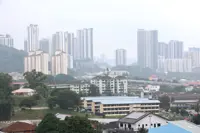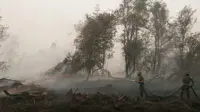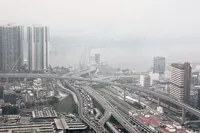
FOR over a decade, seasonally, Malaysians have been forced to breathe polluted air as transboundary haze blankets our skies.
As the Singapore Straits Times reported on Tuesday, measurements taken of air quality reveal PM2.5 is “the dominant pollutant during periods of transboundary haze”. PM2.5 is one of the most important environmental risk factors for lung cancer, second only to smoking in its global impact.
PM2.5 refers to microscopic airborne particles ≤2.5 micrometers in diameter (about 1/30th the width of a human hair). Because of their small size, these particles can overcome our upper airway defence and penetrate deep into our lungs, leading to chronic inflammation and various respiratory diseases, including lung cancer.
Therefore long-term cumulative exposure to the haze like what Malaysians have been exposed to over the past decade has to be regarded as a significant health hazard to society. This elevated risk of developing lung cancer must be taken seriously today, even though it may not manifest immediately but only years in the future.
Lung cancer remains a leading cause of cancer-related deaths in Malaysia. It is the second most prevalent cancer in men and the most common cause of cancer-related mortality. Among Malaysian women, it is the second most deadly cancer behind breast cancer.
Ambient air pollution, including the haze, is a well recognised risk factor for lung cancer, particularly in non-smokers. Every preventative measure possible to reduce the environmental risks of developing this disease should be taken.
Malaysia hosted the 17th Asean Health Ministers meeting from Sept 7 to 11. We must continue to play a pivotal role in dealing with this regional health challenge. Through leadership initiatives and political will, we can and must tackle this perennial human-made problem.
The health of our rakyat must not be trifled with and placed at the mercy of which way the wind blows.
PROF DR ANAND SACHITHANANDAN
Cardiothoracic surgeon
DR THO LYE MUN
Clinical oncologist
DR HILMI LOCKMAN
Consultant respiratory physician
This letter was written on behalf of the Lung Cancer Network Malaysia from Seoul at the 2026 World Conference on Lung Cancer.
Already a subscriber? Log in
Get 20% OFF The Star Digital Access
Cancel anytime. Ad-free. Unlimited access with perks.