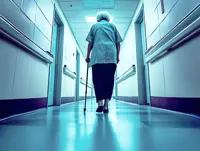
TODAY, on average, people live more than 73 years. The average life expectancy in Europe, Oceania, America and Japan is close to 80 years. In Malaysia, it is more than 74 years. How long will people born in 2040 and beyond live?
The more pressing question is to fathom the expected lifespan of those who are in their 40s or younger today. Looking at the trend of increasing life spans, it is not unlikely that they will live longer than those who were in their forties 20 years ago.
But longer life spans come with the cost of coping with an ageing population.
For instance, it is well known that the risk of developing dementia rises steeply over the age of 60. The simple strategy is to estimate the potential ratio of the aged population, then prepare the necessary infrastructure, including the required number of geriatricians and caregivers to provide support for the elderly.
While the rise of artificial intelligence might minimise the shortage of labour in the long run as workers age out, it will not solve the problem of dealing with the burden of a growing aged population in society, especially since there is a strong possibility that the elderly in the future might face different health complications than today’s seniors face.
Those who are in their forties today will belong to the elderly cohort by 2040 and beyond, and dealing with the elderly in that time will come with different sets of challenges. For instance, several health determinants are emerging among these current adults that were less prevalent among their earlier counterparts.
According to the Statistics Department, the number of marriages decreased by 12.5% between 2022 and 2023 – from 215,022 to 188,100.
Arguably, happy marriages are linked to a healthy life at an older age. Also, a life that includes family comes with an opportunity for family care of the elderly by the younger generation. Hence, those who do not have a family might face the issue of dealing in isolation with mental and physical health concerns in their old age.
Struggles with economic precarity, job security and workplace stress are more common among the current generation of youths and adults.
This array of continuous physical and psychological stress incubates the potential of noncommunicable diseases such as cardiovascular diseases as people age. In other words, those who are in their forties now and living a stressful life are expected to face challenging health issues in their old age.
Finally, the experience of Covid-19 must be considered: should there be another pandemic, it could be equally or more fatal for the elderly with or without the comorbidity of diabetes and cardiovascular diseases.
In summary, the elderly in 2040 and beyond might struggle more with cognitive impairment, non-infectious diseases, and, above all, psychological distress.
Therefore, the long-term policy to ensure good health for the aged population is not only about building infrastructure but also ensuring that the youth and adults of today live a healthy life that will let them age healthily.
At the same time, the possibility of fatalities among the elderly in the face of another pandemic must remain in sight as a backdrop of policy platforms.
PROF MOHAMMAD TARIQUR RAHMAN
Deputy executive director (Development, Research & Innovation)
International Institute of Public Policy and Management
Universiti Malaya
Already a subscriber? Log in
Get 20% OFF The Star Digital Access
Cancel anytime. Ad-free. Unlimited access with perks.