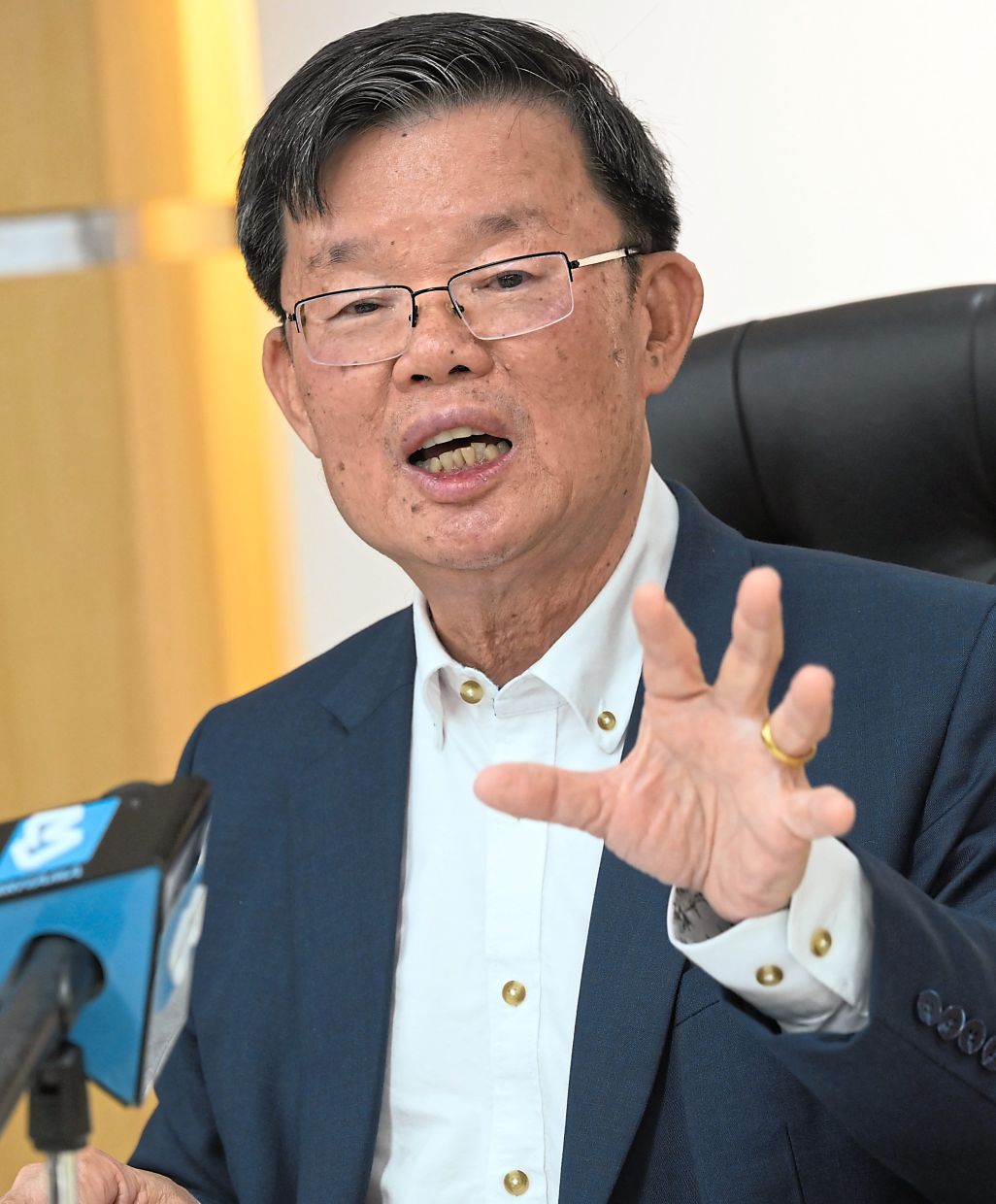
AS Chief Minister Chow Kon Yeow approaches his eighth year in office next month, his leadership legacy is increasingly defined by his willingness to make difficult and often unpopular decisions.
In his second term as the state’s chief executive, several major policy decisions have drawn public frustration and political backlash.
The first, in early 2024, involved the replacement of two critical 1,200mm valves and related components that had not been changed for over 50 years.
The exercise affected about 590,000 account users and caused significant inconvenience across the state.
For many households and businesses, the prolonged disruption was deeply frustrating.
Then came another large-scale scheduled water supply interruption last year to facilitate the final connection of the new RM8.7mil Sungai Perai River-Crossing Pipeline in Butterworth, along with 22 other infrastructure projects.
Again, public dissatisfaction was inevitable.
However, failing to replace ageing infrastructure would have posed far greater risks in the long term.
The same can be said of the water tariff hikes.
Under his administration and in his role as chairman of the Penang Water Supply Corporation, Penangites saw a water tariff increase in 2024, with another round scheduled for this July.
Unsurprisingly, the move was met with resistance. Water is a basic necessity and any increase will naturally trigger strong public reaction.
The hard truth is that the first band of domestic water tariffs (consumption of up to 20 cubic metres) had not been revised since 1993, while other bands had remained unchanged for nine years.
For years, Penang enjoyed some of the lowest water rates in the country, and even after the increase, it remains among the lowest.
For the first 20,000 litres, Penangites used to pay just 22 sen per 1,000 litres. Since February 2024, that rate has risen to 62 sen, an increase of 182%.
While politically convenient, keeping tariffs artificially low for too long also limited the state’s ability to reinvest in critical water infrastructure and long-term sustainability.
The issue was never whether an increase would happen, but when.
Likewise, the land tax revision sparked considerable controversy, particularly among affected landowners, even within Chow’s own political camp.
Some of his party colleagues openly criticised the move, reflecting the sensitivity of the issue.
In one case in Juru, the quit rent for a 0.32ha plot rose sharply from RM4 to RM8,991.
Yet, according to Chow, the last comprehensive land tax review was conducted in 1994, with revised charges imposed in 1996.
It should also be noted that the review came with rebates for certain categories of landowners.
In many ways, Chow inherited a system where necessary but unpopular adjustments had been repeatedly delayed.
The revised water tariffs, land tax reviews and infrastructure upgrades were overdue corrections.
The criticism, however, was not without merit, particularly in the case of land tax affecting certain categories of owners.
Increases that could have been introduced gradually over time, were instead felt more sharply.
A phased adjustment would have been easier for the public to absorb, both financially and psychologically.
Then came another major issue – Penang’s Consolidated Fund Account (AHD) declined from RM1.15bil in 2019 to just RM155.94mil at the end of 2024.
Critics were quick to pounce, accusing Chow of poor management and weak governance.
To be fair, the RM998.88mil in cumulative deficits from 2020 to 2024 funded direct assistance programmes, including i-Sejahtera, Covid-19 pandemic aid, grants for religious and vernacular schools, incentives for taxi and bus operators and subsidies for free shuttle bus and ferry services.
The pandemic alone accounted for about 18% of the total funds used for welfare programmes.
Chow has since pledged to rebuild the AHD to RM1bil before leaving office in 2028.
The balance has risen to RM397.71mil.
Among the revenue enhancement strategies, he said, the annual land and strata tax collections were projected to rise from RM140mil to RM350mil within five years.
Non-tax revenue, such as land premiums and transaction fees, is also expected to increase from RM300mil to between RM400mil and RM450mil.
In Chow’s case, it is a classic case of being “damned if you do and damned if you don’t”.
Some argue that, with this being his final term, he could have taken the easier route by leaving unpopular tax increases to his successor.
Instead, he chose to proceed, fully aware that the decisions would inconvenience the public and strain household finances.
For now, he appears to have chosen governance over convenience.
In politics, that is often the harder path.
Already a subscriber? Log in
Get 20% OFF The Star Digital Access
Cancel anytime. Ad-free. Unlimited access with perks.