
Over the past 20 years, the way we work has changed dramatically. What was once stable, long-term employment is increasingly replaced by short-term contracts, freelance jobs, and platform-based work.
For many, this shift has offered flexibility. But for far too many others, it has come at a cost we can no longer ignore. Because flexibility without security is not empowerment. It is exposure.
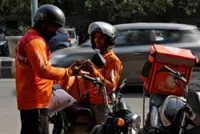
Gig workers today carry the full weight of uncertainty. They wake up not knowing what they will earn by the end of the day. They work without basic protection – no safety net, no real healthcare coverage, no guarantee that their efforts today will translate into stability tomorrow.
And increasingly, their livelihoods are shaped by algorithms they do not understand, and cannot challenge. We have allowed a system to grow where responsibility is diffused, but risk is concentrated, squarely on the worker.
Let us not pretend that all this is accidental.
The ambiguity between who is an “employee” and who is an “independent contractor” has been convenient for companies. It allows obligations to be minimised, even as profits grow. But for workers, that same ambiguity creates a dangerous gap, one where rights fall through the cracks.
As voices like Zohran Mamdani have argued in other contexts, the role of government is not simply to regulate from a distance, but to actively rebalance power where markets have tilted too far against ordinary people. That principle applies just as urgently here.
Governments cannot continue playing catch-up while workers are left to absorb the shocks of a rapidly evolving economy. We need clear legal definitions, stronger protections, and social safety nets that follow the worker, not the job title.
This includes practical, immediate steps. Malaysia has already begun moving in the right direction. The Gig Workers Act, now in force since March 31, is without doubt a pivotal success for the government.
It signals recognition, at last, that gig workers cannot continue to exist in a legal grey zone.
After all, hardly any success was achieved towards approving the Bill when Umno led the Federal Government. The Self-Employment Social Security Scheme (SESSS) under Sosco has long covered e-hailing and taxi drivers, but the new Act now makes registration compulsory for gig workers engaged through digital platforms.
Platform providers are required to deduct contributions from gig workers’ earnings and remit them to Socso on their behalf.
To ease this transition, Budget 2026 has allocated government subsidies covering 70% of SESSS contributions in the first year and 50% in the second year for first-time registrants in non-mandated sectors.
The new i-Saraan Plus scheme under EPF offers gig workers matching retirement contributions of up to RM600 a year, capped at RM6,000 over their working lifetime.
Together, these measures begin to address two long-standing gaps: protection against workplace injury and the absence of long-term retirement savings.
These are important first steps, but not a complete solution. For many gig workers, coverage remains limited in scope, awareness, and adequacy. Protection against workplace injury alone does not address the full spectrum of risks they face, such as income volatility, long-term financial security, or gaps in healthcare access.
The Act itself stops short of requiring platform operators to make their own matching contributions on behalf of workers, leaving the burden of social protection still largely on the workers’ shoulders. If their labour sustains a vital part of our urban economy, then their security must be treated as a public priority, not a partial safeguard.
What we need now is to build on this foundation: to expand coverage, strengthen enforcement, require genuine co-responsibility from platforms, and ensure social protection truly follows the worker across platforms and over time. If the nature of work has changed, then our policies must change with it.
And more fundamentally, we must ask ourselves: what are we really striving for?
If we continue to measure success purely by GDP per capita, we risk missing the bigger picture. Growth means very little if it is built on the backs of workers who cannot live with dignity. A nation cannot call itself successful when its people are trapped in cycles of insecurity.
The true measure of progress is whether we can secure the dignity of every man and woman who works. This is both an economic question and a moral one.
In line with Workers’ Day, let us be honest about where we stand. The rise of the gig economy did not just signal change. It warned us of what was coming. And today, we are living that reality. The question now is whether we have the political will to respond.
Because if we do nothing, this precarity will not remain at the margins. It will become the norm. And that is something we should never accept.
The views expressed here are the writer’s own.
Already a subscriber? Log in
Get 20% OFF The Star Digital Access
Cancel anytime. Ad-free. Unlimited access with perks.