Let’s get it right


ON paper, it’s a good plan, but the implementation is complicated and potentially fraught with many obstacles.

The government has announced that we are moving towards targeted subsidies, and essentially this would mean that those in the top 20 income group will no longer enjoy any subsidy for electricity or for petrol, among others.

Predictably there has been a public outcry over this move. But some of this criticism is justified because the announcement itself appears to have been done in a haphazard manner.

Piecemeal announcements from various parties, including the Deputy Finance Minister, the Economy Minister, the Domestic Trade and Cost of Living Minister and finally the Prime Minister have invited more questions than answers.

Subsidy rationalisation is a huge task for the government involving potential savings of billions of ringgit, but Malaysians are justified in asking about its implementation.

When will we see the actual delivery of these targeted subsidies? What is the mechanism that will be used to target this top tier group and conversely how will the B40 and M40 benefit from this? Finally, when are we going to see a real-world economic classification of the different groups?

These questions and more have not been answered satisfactorily.

Let’s start with the economic classification first. The current classification of B40, M40 and T20 is outdated and problematic. Based on the Department of Statistics Household Income and Basic Amenities Survey Report 2019, a median household income of RM12,586 is classified as T20.

Surely, a household of, say, five people who live in the Klang Valley with this income cannot be classified as T20. They would need to be in the M40 range. Yet, a family in, for example, Taiping earning a similar income can be considered T20 because the cost of living in Taiping is considerably cheaper than someone who works and lives in Kuala Lumpur.

To be fair, this disparity has been acknowledged. Economy Minister Rafizi Ramli says the government will adopt household net disposable income metrics to ensure better delivery of its socio-economic policies.

This change will be made in phases and will involve his ministry, among other government agencies.

“These brackets don’t reflect the actual (economic capability) of a household. There are other variables involved such as number of children and location,” he told a press conference last Friday.

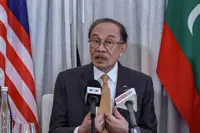
Rafizi also said the transition to the new approach will be strengthened through the introduction of Malaysia’s main database, or Pangkalan Data Utama (Padu), which was announced by Prime Minister Datuk Seri Anwar Ibrahim recently.

“With Padu, the data will be focused on the net disposable income (per household). We will have a clearer picture of comparable net disposable income (among) households and that will allow the government to define our programmes and target subsidies accordingly,” Rafizi added.

Padu appears to be a step in the right direction, but the new economic classifications must be announced first before targeted subsidies are implemented.

I don’t think many people will argue that the government is right to target the super-rich who have no business enjoying subsidies that should only go to lower-income households.

Subsidies have plagued our country for way too long. There are subsidies for sugar, oil, rice, you name it we have it. The government could potentially save RM80bil (the amount spent on subsidies in 2022). This is a huge sum which in turn could be used to help Malaysians who are struggling with the high cost of living.

There are a significant number of Malaysians who can afford to pay petrol and electricity at normal rates, and they are getting away with subsidies.

“It needs to be understood that there will be no increase for 90% of the people but there will be a tariff increase for households that use excessive electricity such as multiple air conditioners,” the Prime Minister told Parliament.

Again, on paper this is a good plan, because the government was able to save RM4bil between January and July last year when it removed electricity subsidies to companies and corporations.

But although identifying households with high electricity consumption (in the PM’s words, those that use “three fans and four air conditioners”) should be a relatively straightforward task for TNB, the challenge is to then define families from a large M40 household who consume a lot of electricity versus a smaller T20 household that consumes less. Who then should pay an increased tariff rate?

The implementation of targeted fuel subsidies for RON95 petrol and diesel is also complicated.

Do we identify a T20 consumer based on identification cards or based on the type of vehicle or engine capacity? Or perhaps those who enjoy subsidies will be given special discount cards?

It should be noted that the move to stop Singaporeans from filling their tanks in Johor with RON95 petrol has not been successful as the onus is on the petrol station operators to ensure that the foreign-registered vehicles only use RON97 petrol.

Ultimately, the effectiveness of the implementation of fuel subsidies will be called into question if enforcement is compromised.

Get 20% OFF The Star Digital Access

Monthly Plan

RM 13.90/month

RM 11.12/month

Billed as RM 11.12 for the 1st month, RM 13.90 thereafter.

Best Value

Annual Plan

RM 12.33/month

RM 9.87/month

Billed as RM 118.40 for the 1st year, RM 148 thereafter.

Follow us on our official WhatsApp channel for breaking news alerts and key updates!

Brian Martin

Brian Martin

Brian Martin is the managing editor of The Star.
Next In Columnists

Make Penang AI plan a bridge for majority
Giants fall, England survive – World Cup quarter-finals take shape
Who shapes global AI rules: Asean-China cooperation role
Why the Johor election is good for Malaysian democracy
Confessions of a durian season sinner
Looming threat to social security
More predictable than the World Cup
America at 250
Coexistence with wildlife key for public safety
Jitters all round in Johor

Others Also Read