ON his first full day in office in January 2017, Donald J. Trump withdrew the United States from the Trans-Pacific Partnership (TPP) agreement, which was one of the most important trade initiatives of the preceding Obama administration.
When Trump is inaugurated as president again next month, the possibility of the United States leaving the Indo-Pacific Economic Framework (IPEF) appears increasingly likely.

Back in November last year, when he was the frontrunner for the Republican presidential nomination, he told a rally in Iowa that he would “kill off” the IPEF, which he described as “TPP Two”.
To him, the regional trade deal would adversely affect American farmers and manufacturers by outsourcing labour to Asia.
This rhetoric mirrors his past criticisms of trade deals, which he often frames as detrimental to American jobs.
The IPEF, launched under Joe Biden’s administration in 2022, was conceived to counter China’s growing influence in the Asia Pacific region, particularly through its Belt and Road Initiative.
It involves 14 countries, including Australia, Brunei, Indonesia, Japan, Malaysia, New Zealand, Singapore, Thailand, Vietnam and India, representing about 40% of the world’s gross domestic product (GDP).
Unlike traditional free trade agreements, the IPEF focuses on digital trade, supply chain resilience, clean energy and anti-corruption measures.
However, its lack of a market access component – such as tariff eliminations – has drawn criticisms that it limits its appeal to member states.
If Trump decides to pull the United States out of the IPEF, its remaining members should take their cue from the TPP experience.When the United States exited from the TPP in 2017, the remaining 11 countries quickly renegotiated its terms, resulting in the Comprehensive and Progressive Agreement for Trans-Pacific Partnership (CPTTP).
This new configuration not only survived but thrived, attracting new interest from countries such as the United Kingdom, which will accede to CPTPP on Dec 15, thus expanding the pact’s influence.
Similarly, the IPEF could undergo a transformation. By amending provisions initially shaped by US priorities, the reworked framework could potentially attract new participants, including China, whose inclusion could significantly enhance regional supply chains.

Extending membership in the IPEF to smaller Asean economies such as Laos, Cambodia and Myanmar would also bolster the framework’s inclusivity, aligning with Asean’s vision of economic integration.
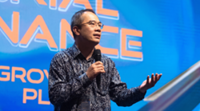
Asian Strategy and Leadership Institute chief executive officer Danial Rahman said Trump’s 2017 withdrawal from the TPP and preference for bilateralism gives rise to the possibility of the IPEF being dismantled.
“While frameworks like the CPTPP are valuable, the absence of US leadership participation limits their strategic weight, especially when this ‘new-old’ Trump administration takes shape.
“That is why Malaysia’s interest in BRICS deserves closer attention,” said Danial.
By engaging with BRICS, he said Malaysia would position itself as a bridge between the Global South and Asean, tapping into new growth opportunities while safeguarding economic resilience.
Originally comprising Brazil, Russia, India, China and South Africa, the BRICS group has recognised 13 nations, including Malaysia, as a partner country in October.
Presently, four Asean countries – Indonesia, Malaysia, Thailand and Vietnam – are part of BRICS.
Danial also said it would be interesting to see how the new Trump administration would react as Malaysia draws closer to BRICS.
“Therefore, Malaysia’s chairmanship of Asean assumes greater significance as regional blocs align themselves with Trump’s presidency, potentially shaping the next four years.”
Danial said Malaysia could leverage its chairmanship next year to advocate for deeper Asean economic integration.
Citing figures from the International Monetary Fund (IMF), he said this year, Asean has seen an average annual economic growth of about 5%.
“But the region is still facing significant disparities in development.”
He added that Prime Minister Datuk Seri Anwar Ibrahim had already floated the idea of an Asian Financial Institution, which could act as a regional stabiliser in the face of global economic shocks, a role similar to that of the IMF in the West.
The branding of Malaysia’s chairmanship of Asean next year will be crucial, said Danial, adding that the digital economy contributed 23.2% to Malaysia’s GDP in 2021, and it plans to increase this to 25.5% by next year.
“Malaysia could use this momentum to lead digitalisation conversations in Asean and emphasise issues such as artificial intelligence (AI) adoption, cybersecurity and digital financial inclusion,” he added.
Danial also said Malaysia is likely to use its Asean chairmanship next year to expand discussions around sustainability and energy transitions, which are two areas critical to Asean’s future.
“In 2022, renewable energy accounted for only 15% of Asean’s primary energy consumption, which would lag behind the target of 23% by 2025.
“As chair, Malaysia could lead efforts to harmonise policies on renewable energy investment and transition away from fossil fuels to position Asean as a key player in the global push towards net-zero emissions,” he added.
Former deputy international trade and industry minister Ong Kian Ming said the new Trump administration is likely to introduce aggressive tariff strategies and withdraw the United States from the IPEF.
“Malaysia and other trading nations should be very concerned about what Trump has said he will do on this front,” he said.
Ong said Malaysia should strengthen the markets within Asean and in other growing countries in the developing world, including BRICS.
“But that would take time, so in the meantime, we should try to find different areas where Asean can come together to engage with the United States as a grouping, without waiting for Trump to start increasing US tariffs on Asean countries,” he added.
Economist Shankaran Nambiar, in an opinion piece published on Channel News Asia titled “Will Malaysia build Asean with BRICS?”, said Anwar is sensitive to the economic injustice suffered by developing countries at the hands of large, developed economies.
“He shares the same ideological concerns as BRICS does. He probably does hope to convince Asean member states that they would benefit by being in the organisation,” he said.
Nambiar said Anwar has a good chance to raise the issue of BRICS among Asean countries when Malaysia chairs the annual summit next year.
“And if he does not mention BRICS, he will flag concerns about participation in global supply chains, trade discrimination, the outdated financial system, the inordinate power in the hands of the developed world, and the need to support multilateralism, as well as a more balanced world order,” he added.
This means that 2025 presents a rare window of opportunity for Malaysia to showcase its leadership in the region. It must capitalise on its Asean chairmanship so that the country can navigate through a geopolitically turbulent year.
Already a subscriber? Log in
Get 20% OFF The Star Digital Access
Cancel anytime. Ad-free. Unlimited access with perks.