
Ruling coalition GPS only 13 seats short of simple majority before polls
KUCHING: Gabungan Parti Sarawak (GPS) has already secured more than a third of the seats in the 13th Sarawak state election, even before a single ballot is cast.
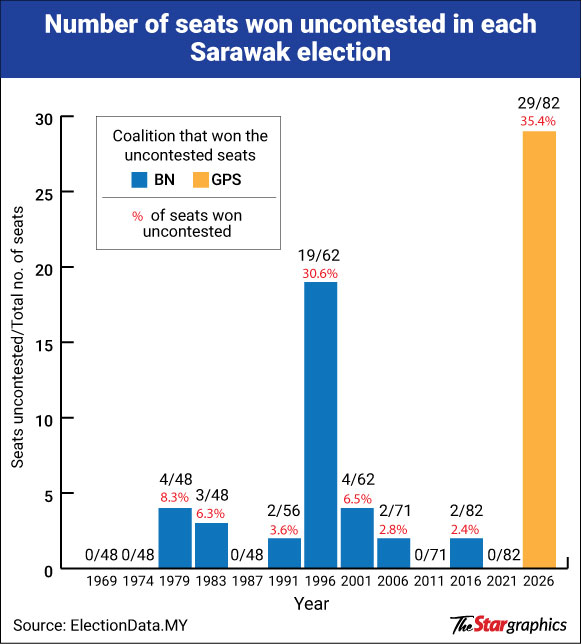
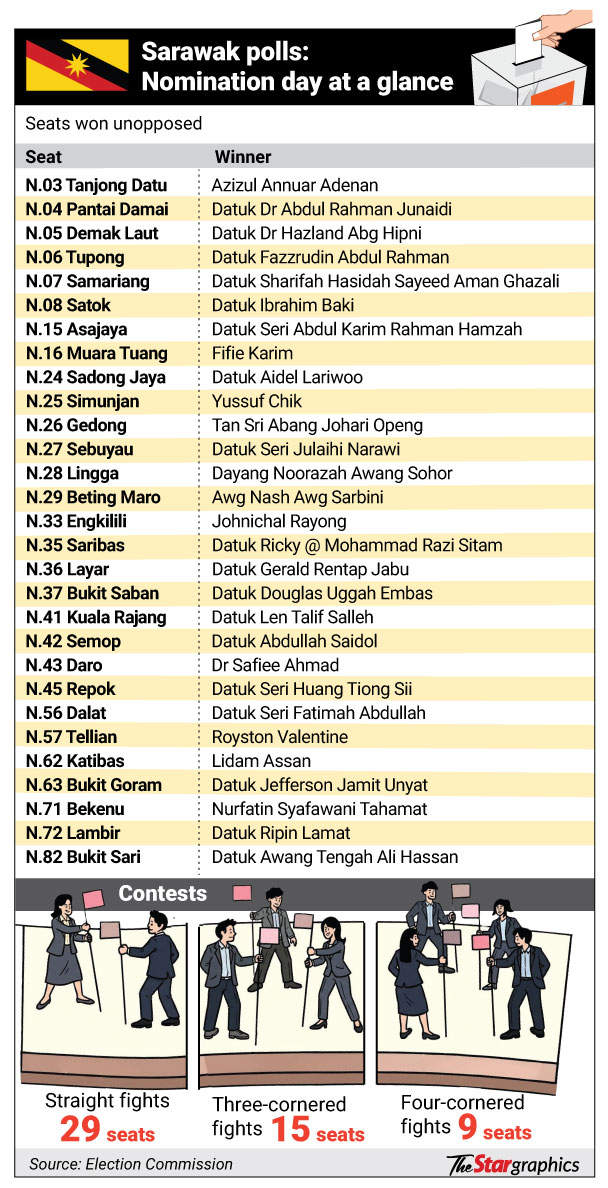
When nominations closed yesterday, candidates from the four-party ruling state coalition were declared unopposed winners in 29 of the 82 state constituencies.

Election Commission chairman Datuk Seri Ramlan Harun said this was the highest number of uncontested wins in Sarawak so far, after the 1996 state polls saw 19 unopposed candidates.
“This is part of democracy. Whoever wants to contest can do so.
“We only facilitate the process,” he told a press conference at Bangunan Sultan Iskandar here after nominations closed.
The figure falls short of the 42 seats needed for a simple majority in the 82-seat state legislative assembly, which had been widely speculated ahead of nomination day.
Universiti Malaya’s Prof Datuk Awang Azman Awang Pawi said GPS securing 29 seats unopposed on nomination day is a historic development, leaving the coalition needing only 13 more seats for a simple majority.
“This reflects three important political dynamics: the organisational strength of GPS, particularly PBB; the strategic withdrawal of several national political parties; and the limited organisational capacity of opposition parties to contest across Sarawak.
“However, winning unopposed should not automatically be equated with overwhelming popular endorsement, as voters in these constituencies do not have the opportunity to express their preferences through the ballot box,” he said.
Awang Azman said while these victories provide GPS with a substantial numerical advantage, they also raise important questions about democratic competitiveness, political accountability and the effectiveness of checks and balances in the next state assembly.
“The remaining 53 contested seats will therefore be important in assessing public sentiment, particularly in urban constituencies and Dayak-majority areas where local political dynamics remain significant.”
Political analyst Prof James Chin from the University of Tasmania said 29 unopposed wins still send a signal that the election is a popularity contest for GPS.
He noted that GPS had controlled more than 90% of the state legislature prior to its dissolution, after winning 76 seats in the 2021 polls and gaining three more from crossovers.
“They already had a monopoly for the last five years, so we should not be surprised that they won 29 seats unopposed this time,” he said.
Local electoral watchdog Persatuan Pemangkin Daya Masyarakat, also known as ROSE, said the 29 uncontested wins were a “significant number” representing about 35% of the total seats.
This raises concerns about the meaning of democracy and the choices available to voters in Sarawak, its president Geoffrey Tang said.
“When 29 constituencies have no contest, voters in those areas do not get the opportunity to go to the ballot box and choose between candidates.
“The winners may be legally elected, but there is no voting data to tell us how much public support they actually have,” he said.
While political parties have reasons for deciding where to contest, Tang questioned whether the current political environment provides enough competition and alternatives for voters.
He said elections were not just about winning seats but giving people a genuine opportunity to choose who represents them.
“With 53 seats still being contested, we hope voters will take this opportunity seriously, come out to vote and make their voices heard.
“At the end of the day, democracy is stronger when people have a choice, and when elected representatives know they must earn the support of the people.”