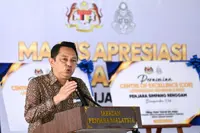
SEPANG: The Education Ministry will begin introducing dedicated classes for pupils with autism next year, as part of efforts to provide more focused support for children with special educational needs.
Education Ministry director-general Datuk Dr Mohd Azam Ahmad said the initiative was being developed in response to the increasing number of autism cases among children.
He said the decision to introduce dedicated autism classes was also based on recommendations from special education experts.
“Based on the views of experts in special education, autism requires a specific approach.
“We have initiatives for other categories, such as hearing and speech difficulties.
“But when we look at autism, the numbers appear to be increasing, and we need to give it more focused attention,” he said.
Meanwhile, Education Ministry deputy director-general (schools operations sector) Datuk Zainal Abas said the increase in special education enrolment was not solely linked to the admission of six-year-olds into Year One, as numbers had been rising annually.
He said 9,997 pupils had applied to enter special education classes at age seven, compared with 656 applicants aged six in national schools this year.
He said the ministry had two pathways for pupils with special educational needs: special education schools and inclusive education in mainstream schools through the Special Education Integration Programme (PPKI).
“Every year, with greater awareness among the public, more parents are becoming alert and sending their children for verification to determine whether they have special educational needs,” he said.
Zainal said the ministry established a special education planning framework last year, which included the construction of additional classrooms.
He said the ideal arrangement for a PPKI classroom was seven pupils, supported by one special education teacher and one teaching assistant.
“Ideally, there should be seven pupils in one classroom, but some of our classes currently have between seven and 10 pupils, with guidance from a special education teacher and a teaching assistant,” he said.
He said the ministry was also developing dedicated classes for pupils with autism, who are currently grouped with children with other learning needs, including those with Down syndrome and slower learning abilities, under the PPKI.
He said the move was aimed at providing a more targeted learning approach, as pupils with autism had different educational needs from other groups.
“The latest initiative is to establish dedicated classes for pupils with autism because their learning needs are slightly different from those of the other pupils,” he said.
The classes would complement the existing Permata programme, he added.
In a related development, Mohd Azam said that a special education sports school in Bandar Enstek, Negri Sembilan, was expected to begin admitting pupils next year.
Mohd Azam said the facility was almost complete, with only about 1% to 2% of construction work remaining before it could be handed over by the Public Works Department.
“The ministry is targeting to complete the handover this year, subject to the department’s readiness, while student placements will likely begin next year.
“The school will provide opportunities for children with special educational needs to develop their sporting abilities, including their potential to represent the country at the Paralympic Games,” he said.