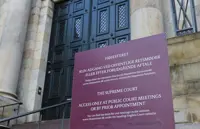
KUALA LUMPUR: The hearing for Harith Iskander's lawyers to discharge themselves from representing him in Datin Seri Rosmah Mansor's defamation lawsuit has stalled after the actor-comedian did not show up in court.
Lawyer Sangeet Kaur Deo told the High Court that they have tried to communicate with Harith Iskander via WhatsApp, email and personal service relating to the discharge application.
Previously, the High Court was informed on Nov 13 that Sangeet and co-counsel Harkiranjit Kaur were applying to discharge themselves from representing Harith Iskander.
Sangeet said at one time, Harith Iskander's helper received their document as he was not home.
Justice Arziah Mohamed Apandi said the court could not make an order of discharge when the defendant (Harith Iskander) was not present.
"I will fix a short date for the next hearing. Please do all reasonable effort that you can (to contact).
"Please ensure the defendant's presence or his reasonable feedback," the judge said.
The court then fixed Dec 4 for the next hearing date.
Lawyer Nur-Diana Ezlyn Hashim appeared for Rosmah in the proceedings.
When met later, Sangeet said they have not been able to get any instructions from Harith Iskander despite several attempts to reach him.
"I'm hoping to hear back from him," she told the press.
On June 9, Rosmah sued the comedian over his stand-up comedy which she claimed mocked and insulted her.
In her statement of claim, she said Harith performed a stand-up comedy show entitled “Harith Iskander: The Outspoken Comedy Tour” at the Swiss-Garden Hotel, Melaka, on Jan 17.
The wife of former prime minister Datuk Seri Najib Razak claimed that during the performance, Harith had personally and intentionally made a defamatory statement through a visual display about her before a large audience at the event.
She claimed during the performance, the defendant displayed images of scary mythological creatures in the Malaysian community, including ‘toyol’, ‘pontianak’ and ‘pocong’ and subsequently displayed the plaintiff’s image to the audience as part of the narrative in the joke.
The plaintiff contended that the defamatory statements were made with the intention to hurt the plaintiff’s reputation and good name and to insult her with body shaming, with the defendant’s action harming her reputation, good name, dignity and social standing.
She is seeking an unconditional apology from Harith and unspecified general, aggravated and exemplary damages as well as other reliefs deemed fit by the court.
In his statement of defence, Harith denied that his performance was malicious or defamatory to the plaintiff.
Harith said while the plaintiff’s reliance for the lawsuit was on two videos of his stand-up comedy uploaded on TikTok, the videos were not the entirety of the comedy show.
He said the incomplete videos were uploaded on the platform by a third party without his consent or knowledge, which was against the house rules during the show.