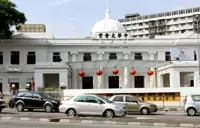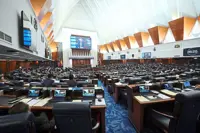
KUALA LUMPUR: Federal Territories Minister Hannah Yeoh said the RM1,000 premium approved for the Kuala Lumpur and Selangor Chinese Assembly Hall (KLSCAH) was imposed only after the association withdrew its initial appeal and submitted a revised application to change the land’s use from commercial to institutional.
She said the Federal Territories Kuala Lumpur Land Committee approved the revised application with a 99-year lease and a condition limiting the Jalan Maharajalela site to institutional use.
The approval did not grant KLSCAH a freehold title, although the association had initially sought one, Yeoh told the Dewan Rakyat during a Special Chamber debate on Monday (Nov 23).
She said KLSCAH initially applied on Sept 12 last year to extend its leasehold tenure to 99 years. Its existing title is due to expire on July 20, 2034.
An initial decision on Feb 20 this year imposed a premium of RM4.6mil, calculated under Rule 8A of the Federal Territories of Kuala Lumpur Land Rules 1995, when the land was still classified for commercial use.
“The RM4mil figure did not come from nowhere. It came from a calculation and there is a formula,” Yeoh said.
On March 3, KLSCAH appealed for the premium to be reduced to RM1,000 and sought to convert its title from leasehold to freehold, she said.
The Federal Territories Kuala Lumpur Land Committee deferred consideration of the appeal on April 23 and asked the Federal Territories Land and Mines Office to hold further discussions with the association, taking into account the building’s national heritage status.
Following the discussions on June 9, Yeoh said KLSCAH withdrew the appeal and instead applied for the land to be surrendered and re-alienated for use by a non-governmental organisation.
The association’s request was considered under Sections 197 and 76 of the National Land Code.
Yeoh said the committee approved the revised application on Sept 14, subject to a 99-year lease and an express condition that the land be used only for an institutional building.
“That was the Land Committee’s decision — 99 years for institutional use only,” she said.
She said the change from commercial to institutional use was the reason the nominal RM1,000 premium was applied under Rule 10 of the Federal Territories of Kuala Lumpur Land Rules 1995.
“Before their application was approved for RM1,000, the express condition of the land was for commercial use.
“They then surrendered the land and it was re-alienated for institutional use. When they applied for institutional use, this was the rule applied for RM1,000. That is the difference,” she said.
Yeoh said the RM1,000 nominal premium was not unique to KLSCAH, citing seven earlier cases involving associations and welfare bodies that had received the same rate under Rule 10.
KLSCAH’s building was gazetted as a national heritage site in 2007.
Yeoh said the institutional-use condition restricts commercial redevelopment at the site, including projects such as condominiums and shopping malls.
The debate was triggered by a motion from Kuala Terengganu MP Datuk Ahmad Amzad Hashim, who said he supported heritage conservation but wanted an explanation for the reduction from an estimated RM4.67mil to RM1,000.
He asked whether the original figure was based on a valuation by the Valuation and Property Services Department, whether a fresh valuation was conducted after the land-use condition was changed and what the revised value was.
Ahmad Amzad also sought the disclosure of the valuation report, guidelines used to approve the nominal premium, committee minutes, approval letter and the conditions and restrictions attached to the new title.
He asked whether KLSCAH’s rental income from its hall and event spaces was taken into account, whether the land could be used as collateral and what safeguards would prevent it from being converted to commercial use in future.
Pendang MP Datuk Awang Hashim questioned whether the proposal to amend the land-use condition had come from the minister.
Yeoh denied having the authority to alter, reduce or increase land premiums, saying land matters were governed by the National Land Code and decided by the Federal Territories Kuala Lumpur Land Committee.
“For land matters, everything is governed by the National Land Code and the Federal Territories Kuala Lumpur Land Committee is chaired by the Chief Secretary to the Government.
“I have no power,” she said.
Yeoh said the committee was chaired by the Chief Secretary to the Government and not the Federal Territories Minister.
She said its members included the Senior Deputy Chief Secretary of the Prime Minister’s Department, the Attorney General or a representative, the Treasury secretary-general or deputy, the director-general of lands and mines, the director-general of the Federal Territories Department and the Kuala Lumpur mayor.
Yeoh also highlighted that the Public Accounts Committee had previously recommended that the Federal Territories Minister chair the Land Committee.
She said MPs were now raising concerns about the possibility of ministerial interference in land premium decisions.
“The PAC says the Land Committee should be chaired by the Federal Territories Minister. Now, over the nominal premium issue, there are concerns that the minister may interfere or have the power to reduce the premium.
“If Parliament cannot make a clear decision, it will be difficult for us to make recommendations and carry out reforms,” she said.