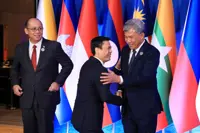
MANILA: As Asean sets its sights on 2045, Philippine President Ferdinand Marcos Jr. has raised questions over whether the regional bloc's institutions are prepared for an increasingly uncertain world, and if the benefits of its progress are reaching the people it was built to serve.
Speaking at the plenary opening session of the 49th Asean Summit on Sunday (Nov 15), Marcos said more than 100 outcome documents had been brought forward across the summit and related meetings following months of negotiations and coordination among member states and their partners.
However, he stressed the importance of ensuring that Asean's growing network of international partnerships translates into practical cooperation that benefits its people.
"We must ask ourselves not only where Asean is headed but what Asean must become, capable of achieving our destination," he said.
Also present during the session were Prime Minister Datuk Seri Anwar Ibrahim, other Asean leaders, as well as Brazilian President Luiz Inácio Lula Da Silva and Canadian Prime Minister Mark Carney.
Marcos said the Asean 2045 vision should not merely represent the region's aspirations for the next two decades, but serve as a blueprint for decisions being made today.
He said this required examining whether Asean's institutions could respond to a more complex security environment, while ensuring its economies remained competitive as technology, trade, energy requirements and supply chains evolved.
Equally important, he said, was ensuring that the gains of regional integration reached families and communities across Southeast Asia.
"Peace, prosperity and the well-being of our people are becoming increasingly connected," he said.
Marcos said the Philippines had organised its chairmanship around three priorities: peace and security anchors, prosperity corridors and people empowerment.
On regional security, he emphasised the importance of strengthening maritime cooperation and advancing negotiations towards an effective and substantive Code of Conduct in the South China Sea, consistent with international law, including the 1982 United Nations Convention on the Law of the Sea.
He also highlighted the need for stronger responses to disasters, climate risks and emerging transnational threats.
On economic cooperation, Marcos said the Philippines aimed to complete all 19 priority economic deliverables under its chairmanship by the end of 2026, including the signing of the Asean Digital Economy Framework Agreement.
He said efforts to build a more inclusive regional community must also focus on protecting vulnerable groups, strengthening families, preparing young people for the future and enabling older persons to live with dignity.
Marcos stressed that the three priorities should not be pursued separately, calling for closer cooperation among governments, businesses, civil society, academia and communities.
"Our partnerships should continue to advance Asean priorities, respond to the needs of our member states and turn political goodwill into practical cooperation," he said.
He also welcomed the expansion of Asean's international partnerships, including seven new high contracting parties to the Treaty of Amity and Cooperation in Southeast Asia.
Marcos said Asean must continue strengthening these relationships on the basis of mutual benefit while maintaining its central role in the regional architecture.
"The next task is to ensure that this network delivers greater benefits for our people," he said.