KUALA LUMPUR: Malaysia has sufficient food for at least six months and sees no need for emergency stockpiling measures despite concerns over potential disruptions to essential supplies, says Datuk Seri Dr Ahmad Zahid Hamidi.
The Deputy Prime Minister said the government continued to ensure national food security and adequate supplies of essential goods for Malaysians and others residing in the country.
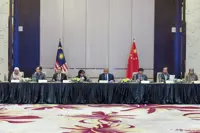
“We see no need for such measures because our food security and stock levels are sufficient for at least six months,” he told reporters after attending the Malaysia-China Cooperation Meeting on Investment, Trade and Economic Empowerment.
He was responding to reports that several countries had advised their citizens to stockpile food and essential supplies in preparation for possible emergencies.
He said Malaysia was not facing an emergency that would require the public to stock up on basic necessities.
“We are not in a state of emergency; we are far from such a situation,” he noted.
Countries were reportedly issuing preparedness guidelines, encouraging their citizens to keep emergency supplies of food, water and other essentials.
According to international media reports, the advisories were prompted by various global threats, including armed conflicts, extreme weather, power outages and cyberattacks.
Among the countries stepping up preparedness campaigns are France and Britain, which have advised households to maintain at least 72 hours, or three days, of essential supplies.
Meanwhile, the Deputy Prime Minister said a Chinese business delegation indicated intentions to invest US$15bil (RM61.9bil) across six high-potential sectors in Malaysia, including the semiconductor and halal industries.
He said the indication came after discussions with 58 Chinese businessmen who are here to explore investment opportunities and expand their operations.
“We are now focusing on high-value investments and high technology rather than labour intensive. In my opinion, this is something positive compared to previous investments,” he said, Bernama reported.
Ahmad Zahid said that for the electrical and electronics, and semiconductor sectors, Chinese investors view Malaysia as well-positioned in the international supply chain, in addition to the availability of skilled labour produced through technical and vocational education and training (TVET) programmes.
On the digital economy, the delegation is keen on exploring opportunities to develop data centres, cloud computing and artificial intelligence (AI).
However, Ahmad Zahid pointed out that Malaysia is currently not encouraging new data centres given the large number of existing facilities.
Instead, he urged investors to form partnerships with local companies or consider acquiring existing operations.
On food processing and halal products, he said several Chinese companies, including major dairy producers, are interested in sharing technology and expanding investments in food processing activities in Malaysia.
Companies in the health technology and pharmaceutical sectors also intend to make Malaysia a base for producing halal health products for export, particularly to the West Asian market, he added.
“Malaysia’s internationally- recognised halal certification is one of the main factors attracting these companies,” he said.