JOHOR BARU: The one-month delay in the opening of the Rapid Transit System (RTS) Link for public use until February is mainly to ensure it operates smoothly and without technical problems, says Transport Minister Anthony Loke.
He stressed that the project itself remained on track for completion by Dec 31, with public operations to begin in February after final evaluations and technical approvals by the authorities of both countries.
“This includes final assessments by independent safety consultants and technical approvals from Malaysia’s Land Public Transport Agency (Apad) and Singapore’s Land Transport Authority,” he said.
Loke said the decision was made after discussions with his Singaporean counterpart, adding that the authorities did not want to take unnecessary risks by rushing such an important cross-border public transport project.
“Although it is slightly delayed, we believe this is a good decision to ensure the system runs smoothly.
“We do not want to rush without a comprehensive assessment, which could result in technical problems,” he said at an event marking the expansion of the BAS.MY Johor Baru stage bus service here on Thursday (Oct 8).
On the specific start date of operations in February, Loke said an announcement would be made once approvals were obtained from the relevant agencies in both countries.
He added that they did not expect further delays, with the revised timeline acting as a buffer.
The Star had earlier reported that many daily commuters between Malaysia and Singapore, who had been looking forward to the RTS beginning operations on Jan 1, were disappointed by the delay and hoped there would be no further postponements.
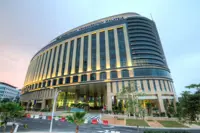
On his visit to the RTS project, Loke said there were no problems with the station or the Customs, Immigration and Quarantine (CIQ) building.
“Most of the physical work has been completed,” he said, adding that the remaining three months until December would focus on testing and commissioning.
Loke also said the federal government was committed to improving traffic dispersal once the RTS begins operations through short-, medium- and long-term measures.
“In the short term, we will immediately expand the BAS.MY stage bus service with 230 new buses.
“The government has agreed to continue the Stage Bus Service Transformation (SBST) programme for the next five years, with a substantial sum expected to be spent on the services,” he said.
Loke said that when the programme was launched four years ago, ridership stood at about 450,000 trips a month.
This increased to 1.06 million trips in December 2025, while January 2026 recorded a high of 1.28 million trips.
“The SBST programme in Johor has recorded the highest ridership among similar programmes implemented in major cities across the country, including in Sabah and Sarawak,” he said.
He said the additional buses were expected to reduce waiting times from about 30 minutes to 15 minutes.
Loke added that the operator would also need to consider shuttle services and the development of Jalan Jim Quee as a new bus hub.
Pedestrian walkways are also being developed along Jalan Jim Quee to the RTS station, as well as another walkway from the Bangunan Sultan Iskandar CIQ complex.
“We are also spending RM60mil on direct access for KTM commuter passengers to walk straight to the RTS station without having to exit JB Sentral,” he said.
In the longer term, Loke said the government planned to introduce an Elevated Autonomous Rapid Transit (E-ART) system to further improve public transport in Johor Baru.