KUALA LUMPUR: Malaysia and Japan strengthened their longstanding cooperation in sustainable solid waste management with the signing of a memorandum of cooperation (MOC) to support Malaysia’s transition towards a more sustainable and resource-efficient waste management system.
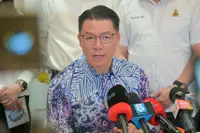
In a Facebook post yesterday, the Housing and Local Government Ministry said the MOC was signed following a courtesy call and bilateral meeting between Minister Nga Kor Ming and Japan’s State Minister of the Environment Shogo Azemoto at Parliament here yesterday.
In the statement, Nga said the renewed cooperation builds on more than a decade of collaboration between Malaysia and Japan in strengthening the country’s solid waste management system as the government eyes a 53% national recycling rate by 2035.
“Malaysia greatly appreciates Japan’s longstanding support since 2010. Among the outcomes of this cooperation was the Strategic Plan for Food Waste Management in Malaysia 2010-2016, and the Technical Guidelines for the Selection of Solid Waste Management Technologies in 2023.
“As new priorities emerge, it is timely to renew our cooperation to ensure continuity and further advance our shared objectives in sustainable waste management,” he said during the bilateral meeting.
According to Nga, Malaysia is pursuing a long-term strategy to transform solid waste management, including through the setting up of the National Circular Economy Council which aims to introduce the Circular Economy Blueprint for Solid Waste, the development of an extended producer responsibility policy and the utilisation of waste-to-energy technology.
“Both countries share a common objective of developing an efficient waste management ecosystem that promotes public well-being, strengthens resource circulation and supports the transition towards a low-carbon economy.
“Malaysia has set the goal to achieve carbon neutral economy by 2050 and we looks forward to translating this cooperation into more practical initiatives, particularly through capacity-building programmes, technology transfer and to equip our officials and technical personnel with stronger technical and operational expertise,” he said.